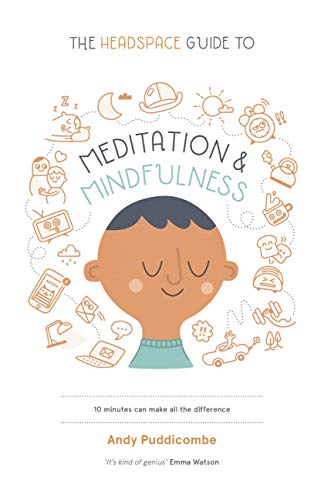
The Headspace Guide to Meditation and Mindfulness
by Andy Puddicombe
- Author:
- Andy Puddicombe
- Status:
- Done
- Format:
- eBook
- Genres:
- Nonfiction , Self Help , Psychology , Meditation , Health , Personal Development , Spirituality
- Pages:
- 272
- Highlights:
- 38
Highlights
Page 6
The more I spoke to people about the benefits of meditation, the more I found that many desperately wanted to find a way to relax, but were uncomfortable with the religious element that robes automatically imply. They simply wanted to find a way to cope with life, to deal with stress – in their work, their personal life, and in their own minds. They wanted to regain the sense of openness they remembered from childhood, that sense of appreciation in actually being alive. They weren’t looking for spiritual enlightenment, nor were they needing therapy. They just wanted to know how to ‘switch off’ when they got home from work, how to fall asleep at night, how to improve their relationships, how to feel less anxious, sad or angry. People wanted to know how to control their cravings, to give up their addictions, to get a bit more perspective on life. But most of all they wanted to know how to deal with that nagging feeling that all was not quite as it should be, or could be – that feeling that there must be more to life than this. The integration of meditation into everyday life was key to my decision to stop being a monk and to live instead as a lay-person.
Page 11
With increasing coverage of meditation and mindfulness in the media, many people seem to be in a hurry to define its purpose. But the truth is, you define the purpose by deciding how you choose to use it. When you learnt to ride a bike, I’m sure you were simply shown how to ride the bike, not how you should use that ability. Some use a bike to commute, for others it’s to hang out with friends, and for a very few cycling may even become a career. But the skill of being able to remain in the saddle is the same for each. So while somebody else might have taught you how to ride, you define what cycling means to you, how you use it, and how it best suits your lifestyle. And so it is with the skill of meditation. It can be applied to any aspect of life and the value of it is equal only to the value you place upon it.
Note: Neat analogy
Page 19
Mindfulness means to be present, in the moment, undistracted. It implies resting the mind in its natural state of awareness, which is free of any bias or judgment.
Page 20
So mindfulness means to be present. It means being ‘in the moment’, experiencing life directly as it unfolds, rather than being distracted, caught up and lost in thought. It’s not a contrived or temporary state of mind that you need to somehow create and maintain. On the contrary, it’s a way of stepping back and resting the mind in its natural state, free from the usual chaos.
Page 21
Meditation is simply a technique to provide you with the optimum conditions for practising the skill of mindfulness.
Page 23
That’s why I prefer the word ‘headspace’. It describes an underlying sense of peace, a feeling of fulfilment or unshakeable contentment, no matter what emotion might be in play at that time. Headspace is not a quality of mind dependent on surface emotions; this means it can be experienced just as clearly in periods of sadness or anger as it can in times of excitement and laughter. Essentially it’s ‘being OK’ with whatever thoughts you’re experiencing or emotions you’re feeling.
Page 24
This distinction between headspace and the emotion of happiness is an important one. For some reason we’ve come to believe that happiness should be the default setting in life and, therefore, anything different is somehow wrong. Based on this assumption we tend to resist the source of unhappiness – physically, mentally and emotionally. It’s usually at this stage that things get complicated. Life can begin to feel like a chore, and an endless struggle to chase and maintain that feeling of happiness. We get hooked on the temporary rush or pleasure of a new experience, whatever that is, and then need to feed it the whole time. It doesn’t matter whether we feed it with food, drink, drugs, clothes, cars, relationships, work, or even the peace and quiet of the countryside. If we become dependent on it for our happiness, then we’re trapped. What happens when we can’t have it any more? And what happens when the excitement wears off? For many, their entire life revolves around this pursuit of happiness. Yet how many people do you know who are truly happy? And by that I mean, how many people do you know who have that unshakeable sense of underlying headspace? Has this approach of chasing one thing after the next worked for you in terms of giving you headspace? It’s as if we rush around creating all this mental chatter in our pursuit of temporary happiness, without realising that all the noise is simply drowning out the natural headspace that is already there, just waiting to be acknowledged.
Note: Strong Buddhist vibes here. I agree with everything he’s saying. Because our expectations are constantly adjusted upwards, it’s hard to maintain your place on the happiness treadmill. Sometimes I will feel other emotions and that’s ok.
Page 26
I asked him what he’d done since losing his family and he described how he’d moved to this new area. He said that having no family, no home and no money had forced him to think very differently about life. In the end he’d chosen to live in a meditation centre, where he spent most of his time. I asked whether he thought that his time spent meditating had changed the way he felt about what had happened. He replied that it hadn’t changed the way he felt, but had instead changed his experience of those feelings. He said that while he still felt a great sense of loss and sadness at times, he perceived it differently. He described how he’d found a place beneath those thoughts and feelings where there was a sense of peace, of stillness and of calm. He said that it was the one thing that could never be taken away from him, that no matter what else happened to him in life, he would always have this place within himself to return to.
Page 27
But when it comes to the way you think and feel about those situations, the starting point is to acknowledge that it’s the mind itself that defines your experience. This is why training the mind is so important. By changing the way in which you see the world, you effectively change the world around you.
Page 27
I think often this point is misunderstood and people feel as though they have to give up their dreams and ambitions in life in order to practise meditation. But that’s not the case at all. There is something inherently human about striving to achieve something, and having a sense of purpose and direction in life is vital. But, if anything, meditation can be used to clarify and support that purpose, because what the practice will show you, in a very direct way, is that a lasting sense of happiness and sense of headspace is not dependent on these things. This will allow you to live with a greater sense of freedom and ease, confident in where you’re heading in life and yet not so attached to the outcome that an unexpected obstacle or unfavourable outcome will result in heartbreak and loss. It is a subtle yet profound shift in perspective.
Note: An unexpected obstacle or unfavourable outcome does not lead to heartbreak or loss
Page 28
Exercise 1: not doing Try it now. Without moving from where you’re sitting, just close the book and place it in your lap. You don’t need to sit in any particular way, but just gently close your eyes and sit for a minute or two. It’s no problem if lots of thoughts pop up, you can let them come and go for now, but see what it feels like to sit still, not doing anything, for just a minute or two.
Note: Mostly good, but a lot of thoughts that I had to gently bring myself back from.
Page 29
And this is how most people live their lives, moving from one distraction to the next. When they’re at work they’re too busy, too distracted, to be aware of how they really feel, so when they get home they’re suddenly confronted by lots of thoughts. If they manage to keep themselves occupied during the evening, then they may not even become aware of these thoughts until they go to bed at night. You know how it goes, you put your head on the pillow and it appears as though the mind suddenly goes into overdrive. Of course, the thoughts have been there all along, it’s just that without any distractions you become aware of them. Or it can be the other way around. Some people have such busy social lives or family lives that it’s not until they get to work that they become aware of just how frazzled they feel, of all the thoughts racing around in the mind.
Note: If I can’t sleep because some thoughts, I’ve found that writing it down helps.
Page 30
Exercise 2: the senses Take another two minutes to do this short exercise. As before, stay sitting exactly as you are right now. After putting the book down in your lap, gently focus on one of the physical senses, preferably sound or sight at this stage. I’d recommend using background sounds and closing your eyes, but as sounds can be a little unpredictable at times, you might prefer to keep your eyes open and gaze at a particular object in the room instead, or perhaps a point on the wall. Whichever sense you choose, try focusing on it for as long as possible, but in a very light and easy way. If you get distracted by thoughts or other physical senses, simply bring your attention back to the object of focus and continue as before.
Note: Did this on the tube. Listened to the sound of the train in the tunnel, pulling into the station, people talking, embarking and disembarking. Was able to focus, maybe because there was so much going on.
Page 33
Stress can make us do all kinds of funny things. It can lead to us saying things we wish we hadn’t, doing things we wish we hadn’t. It affects the way we feel about ourselves and the way in which we interact with others.
Page 34
By focusing less on your own worries and more on the potential happiness of others you actually create more headspace for yourself.
Page 34
In becoming more aware of everything and everyone, you inevitably become more aware of others. You start to notice how sometimes you might unintentionally (or even intentionally) push their buttons, or notice what causes them to push yours. You start to listen to what they’re actually saying, rather than thinking about what you’d like them to say or what you’re going to say next. And when these things begin to happen you’ll notice that your relationships with others really start to change. But so long as we’re immersed in our own thoughts the whole time, it’s very difficult to truly find time for others.
Page 35
No one aspect of this jigsaw is more, or less, important than the next. Imagine you’re given a beautiful classic car to look after. Now you’ve never driven a car before, never had any lessons, and the car is so unusual, so rare, that you’re not even too sure what all the different pedals, levers and buttons do. The approach to meditation is like learning how to drive the car. You don’t need to understand all the mechanics under the bonnet, but you need to know how to operate the various pedals, levers and buttons. You’ll also need to get used to the power of the car, your positioning on the road, and of course to the unpredictability of all the other cars around you. This is the approach.
Page 36
But this is no ordinary car, it’s a classic car, and so it requires that the engine is turned over on a regular basis in order for it to remain healthy, and for it to work at its optimum capacity next time you want to take it for a drive. If you’re not familiar with classic cars then this might sound a little strange, but it’s just what these old engines need once in a while. That’s where the meditation comes in, sitting down each day and without actually taking the car for a ride, you sit there and allow the engine to tick over at its own comfortable pace while you listen to it chugging away, becoming more familiar with how it sounds and how it feels. This is the practice.
Page 36
But then what good is a car if you never take it anywhere? And it’s the same with meditation. The purpose of learning meditation is not so that you can spend your life sitting on your backside with your eyes closed, but to integrate that familiarity of awareness into other areas of your life. This is the integration.
Page 37
When I set off for my very first monastery, I was convinced that meditation was all about stopping thoughts. I’d heard about this ‘quiet empty mind’, which could supposedly be achieved through meditation, and I was desperate to taste it. Sure, I’d had a glimpse or two over the years, but I imagined it as something never-ending, a bubble in which there was nothing but space, and through which nothing unpleasant could enter. I imagined it as a place that was free from thoughts and feelings. I’m not sure how I ever imagined it was possible to live without thoughts or feelings, but this is how I approached meditation from the beginning. But trying to create this bubble, to achieve this state of mind which I’d assumed I needed to reach to be meditating ‘properly’, is probably one of the most common misconceptions about meditation.
Page 43
meditation, within a mindful context, was not about stopping thoughts and controlling the mind. It was a process of giving up control, of stepping back, learning how to focus the attention in a passive way, while simply resting the mind in its own natural awareness. My teacher had explained how it was a skill, an art, knowing how to step back and how not to get continually sucked into the realm of endless, unproductive and often stressful thinking. I’d learned how the thoughts were autonomous and how no amount of force could prevent them from arising.
Page 47
Exercise 3: physical sensations Put the book down for another couple of minutes and try this short exercise. We return here to the idea of being at peace with whatever is on your mind. Whereas last time you were focusing on sounds or visual objects, this time try focusing on a physical sensation. It can be the sensation of the body pressing down on the chair beneath you, the soles of the feet against the floor, or even the sensation of your hands resting on the book. The advantage of focusing on the physical sensation of touch like this is that it’s very tangible, but you may well find that the mind still wanders a lot. If you do experience a very busy mind or a strong emotion of some kind, remember the idea of the blue sky, the possibility that perhaps underneath all those thoughts and feelings there might exist a place that is still, spacious and clear. So each time you realise the mind has wandered off and you’ve become distracted, just effortlessly move the attention back to the physical sensation.
Note: Pretty good. Especially with my feet under the electric blanket
Page 48
‘Have you ever seen a wild stallion broken in?’ he asked.
Note: This story resonated with me
Page 50
Eventually I had to concede that I was getting nowhere and so once again I arranged to see my teacher. As I explained the situation to him, he nodded away as if he’d heard the same thing a hundred times before. ‘It’s the same for everyone,’ he began. ‘We’re attracted to the things we like and we become attached to these things. We don’t want to give them up for anything. The only problem is, the more we chase after them the further away they appear. And the more we try to hold on to these pleasant feelings, the more fearful we become of losing them.’ It was true. In fact, in my meditation practice it had even become a bit of an obstacle, because every time I had a session in which I experienced what I considered to be positive feelings it simply raised my expectations. This meant that when I came to the next session, far from sitting there in the moment, I was trying to recreate an experience from earlier on. ‘At the same time as trying to hold on to the good things,’ he continued, ‘we’re also busy trying to get rid of all the unpleasant things. It doesn’t matter whether we’re trying to get rid of lots of thoughts, difficult emotions, or a painful feeling in the body, it’s all the same, it’s resistance. And as long as there’s resistance, there’s no room for acceptance. And as long as we don’t have acceptance, there’s no way of having a peaceful mind.’ It sounds so obvious when it’s put like this, doesn’t it? ‘Happiness is just happiness,’ he went on, ‘no big deal. It comes and it goes. Sadness is just sadness, no big deal. It comes and it goes. If you can give up your desire to always experience pleasant things, at the same time as giving up your fear of experiencing unpleasant things, then you’ll have a quiet mind.’
Page 53
Exercise 4: focusing on pleasant or unpleasant sensations Try it right now to see how it feels. Put the book down for a couple of minutes again and use a physical sensation to focus on as you gently close the eyes. Rather than using a neutral sensation as you did last time, focus on either a pleasant or unpleasant feeling in the body. For example, maybe you feel a lightness in your hands or feet, or perhaps you feel some tension in your shoulders. Normally you’d probably try to resist the feeling of discomfort and hold on to the feeling of comfort, but what happens when you reverse it and apply the principle of sharing pleasant feelings with others and sitting with difficult feelings on behalf of others? Does it change the experience? Remember, if you are focusing on a pleasant sensation try gently to maintain the attitude of sharing it with others as you focus on it. Equally, if you’re resting your attention on an unpleasant feeling, then try to lightly maintain the attitude of experiencing it or looking after it for someone you care about.
Page 65
Mindfulness is the willingness to rest in that natural state of awareness, resisting the temptation to judge whatever emotion comes up, and therefore neither opposing or getting carried away with a feeling. Meditation is simply the exercise that is going to give you the best conditions to practise being mindful of these emotions. And headspace is the result of applying this approach. Headspace does not mean being free from emotions, but rather existing in a place where you are at ease with whatever emotion is present.
Page 67
Exercise 5: being aware of your feelings We’re not always very good at recognising how we are feeling. That’s usually because we’re distracted by what we’re doing or what we’re thinking. But when you start to meditate you inevitably start to become more aware of how you feel – the variety of feelings, the intensity of feelings, the stubborn nature of some emotions, and the fleeting nature of others. How do you feel right now, for example? Put the book down for a couple of minutes and close your eyes. It can be useful to notice how your body feels first, as that can give you a clue as to what the underlying emotion is. Does it feel heavy or does it feel light? Is there a sense of stillness or of restlessness in the body? And is there a sense of restriction or spaciousness? Rather than rush to decide, apply the idea of gentle curiosity and take a good 20 to 30 seconds to answer each question. And how does the breath feel in the body – does it feel fast or slow, deep or shallow? Without trying to change it, take just a few moments to notice how it feels. By the end of the exercise you’ll most probably have a much better sense of how you feel emotionally. But don’t worry if not, as that’s perfectly normal at first and it will become more obvious with practice.
Page 68
My own modus operandi when I started was one of bullishness. I was not really that interested in what happened along the way, I just wanted to experience the ultimate fruit of meditation – that of enlightenment. I guess you could call it an ‘enlightenment or bust’ kind of attitude, where I was always focusing on a future goal rather than resting in the moment and enjoying all that life had to offer. It’s a common mistake to make in meditation, to search for some kind of experience or want to be rewarded with some sign of progress or fruition, but peace of mind or insight will always be illusive if we are trying too hard to find it.
Note: Journey, not the goal
Page 90
Think about it, how can there ever be a sense of ease resting in the present moment if the mind is hurriedly trying to get to a space and time in the future?
Note: Very important for me to remember
Page 93
Think how often your body is doing one thing and yet your mind is off doing something else. Perhaps you’re walking down the street, but your mind is already at home, planning the dinner or wondering what’s on television. It’s actually very rare that the body and mind are together at the same place and the same time. So this is an opportunity to settle into your environment, to be consciously aware of what you’re doing and where you are.
Page 106
I think it’s best to think of insight as drips of water filling a bucket, rather than any great thunderbolt that might transform your life instantaneously.
Page 108
What you’ll notice when you start to apply this approach to situations is that it has a very soothing effect on the mind. Not only are you present to experience everything you do (quite literally living life to the full), but it also feels very calming. And with calm comes clarity. You begin to see how and why you think and feel the way you do. You start to notice the patterns and tendencies of the mind. And what this does is to give you back the choice of how you live your life. Rather than being swept away by undermining or unproductive thoughts and emotions, you can respond in the way you’d actually like to.
Note: I read about this technique, use it, enjoy it and forget about it. Not sure why it doesn’t stick
Page 112
The man apparently fell quite silent, realising his misunderstanding of mind training. Like so many people, myself included, he’d thought that it was only possible to train the mind while sitting completely still in meditation. But mind training is so much more flexible than that. The practice of mindfulness shows us how we can apply the same quality of mind to everything we do. It doesn’t matter whether we live a very physical life or a sedentary life, there is just as much time to be aware cycling down the road as there is sitting in a chair at home. And nor does it matter what type of job we have. We all follow the same twenty-four-hour clock, so we all have the same amount of time to train in awareness. Whether we’re aware of the physical senses, our emotions, our thoughts, or the content of those thoughts, it’s all awareness and there is always time to be aware.
Page 113
Rather than thinking of just being mindful during your ten minutes of meditation each morning (and then trying to make it through the next twenty-three hours and fifty minutes of your day until you meditate again) maybe start to think of mindfulness in terms of something you can apply throughout your day. Remember, all it means is to give your full attention to whatever you’re doing, whenever you’re doing it. The implication of this is that it’s simply no longer possible to think about where you’d rather be, what you’d rather be doing, or wishing that things were different from the way they are (all the types of thinking that usually leave you feeling stressed out), because you’ll be present with whatever you’re doing instead.
Page 133
Noticing these things is fine. In fact, from a mindfulness perspective you could even say it’s good, because it means you are, temporarily outside of the realm of thought. The problem arises once you engage with the thing that’s grabbed your attention and when you then start to think about it, to create a story around it. Perhaps when a noisy car goes past it reminds you that you don’t like living in a busy place and you start dreaming of where you might like to live instead. Or maybe when you see something in the shop window you start to think how nice it would be to have it, only to then start thinking about your money troubles. Whatever it is that causes the mind to wander off, it’s a movement away from the present moment, away from the direct experience of life. It can sometimes feel as though we’re so busy remembering, planning and analysing life, that we forget to experience life – as it actually is, rather than how we think it should be.
Page 144
The more I practised this technique, the more I started to see a pattern. If the balance of focus and relaxation was just right, then what was essentially a very physical exercise felt truly effortless. You could say that there was an equal amount of awareness in body, speech and mind. But if that balance was not right, one or two of those aspects would suffer as a result. At those times, far from feeling effortless, it was as though I was walking through treacle. And simply adding more effort didn’t help at all. In fact, it only seemed to make it worse, even harder. As the weeks went by, I started to get a sense of how best to work with the mind on any given day – when to apply more effort, and when to ease my foot off the gas. And the mind became more willing too; it was getting used to this new way of focusing and was resisting a little less each day. Of course, the mind still wandered off sometimes, but it was easier to realise when it had, and to bring the attention back to the physical movement, the ability to speak coherently, and the visualisation of the image we’d studied.
Page 174
The thing with meditation is that it’s difficult to quantify or judge. As I mentioned earlier, there really is no such thing as good or bad meditation, just aware or unaware, distracted or undistracted. So if you were to judge it would have to be on that basis. But don’t feel you have to rate it compared to another session or, even worse, against someone else’s experience – meditation is just what it is.
Page 177
And remember, it’s not necessarily about seeing an increasing amount of focus and clarity every single day. It’s about noticing whatever is happening in the body and mind each time you sit down to meditate. Simply witnessing this transition, day after day, can in itself lead to a more relaxed way of seeing things, a greater willingness to accept and be part of change. We tend to identify very strongly with being a certain type of person, but when you do this exercise honestly, it makes you realise that actually we are much more than that one type of person. We’re always changing, one moment to the next, one day to the next. And when you see this clearly, it becomes more difficult to hold on to any fixed views of how you see yourself. The result is a feeling of more freedom, of no longer needing to follow the same habitual patterns or cling to a certain identity.