skip to content
Krishna Sundarram
RSS Feed
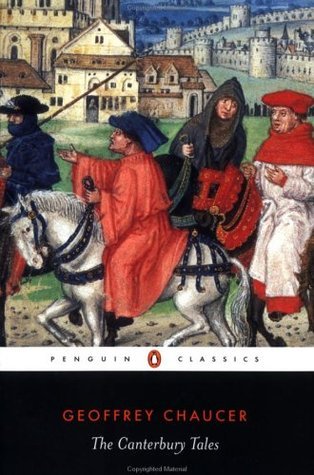
Canterbury Tales

Canterbury Tales

by Geoffrey Chaucer

Status:
Abandoned
Format:
eBook
ISBN:
0140424385
Highlights:
49

Highlights

Page 275

There was a Knight, a most distinguished man, Who from the day on which he first began To ride abroad had followed chivalry, Truth honour, generousness and courtesy.

Note: The Knight. Seems to have fought for Pierre de Lusignan, King of Cyprus in the 14th century

Page 307

There was a Yeoman with him at his side, No other servant; so he chose to ride. This Yeoman wore a coat and hood of green, And peacock-feathered arrows, bright and keen

Note: The Yeoman, an archer

Page 317

There also was a Nun, a Prioress, Her way of smiling very simple and coy. Her greatest oath was only ‘By St Loy!’ And she was known as Madam Eglantyne.

Note: AKA The Prioress

Page 340

Another Nun, the secretary at her cell, Was riding with her, and three Priests as well.

Page 341

A Monk there was, one of the finest sort Who rode the country; hunting was his sport. A manly man, to be an Abbot able; Many a dainty horse he had in stable.

Note: A worldly monk

Page 398

There was a Merchant with a forking beard And motley dress; high on his horse he sat, Upon his head a Flemish beaver hat And on his feet daintily buckled boots.

Note: The Merchant

Page 406

An Oxford Cleric, still a student though, One who had taken logic long ago, Was there; his horse was thinner than a rake, And he was not too fat, I undertake,

Note: The Cleric

Page 418

A Serjeant at the Law who paid his calls, Wary and wise, for clients at St Paul’s* There also was, of noted excellence. Discreet he was, a man to reverence,

Note: AKA The Man of Law

Page 429

There was a Franklin* with him, it appeared; White as a daisy-petal was his beard. A sanguine man, high-coloured and benign, He loved a morning sop of cake in wine.

Note: The Franklin, a non noble landowner

Page 445

A Haberdasher, a Dyer, a Carpenter, A Weaver and a Carpet-maker were Among our ranks, all in the livery Of one impressive guild-fraternity.

Page 454

They had a Cook with them who stood alone For boiling chicken with a marrow-bone, Sharp flavouring-powder and a spice for savour. He could distinguish London ale by flavour,

Note: The Cook

Page 459

There was a Skipper hailing from far west; He came from Dartmouth, so I understood. He rode a farmer’s horse as best he could, In a woollen gown that reached his knee.

Note: AKA The Shipman

Page 471

A Doctor too emerged as we proceeded; No one alive could talk as well as he did On points of medicine and of surgery, For, being grounded in astronomy,

Note: AKA The Physician

Page 481

He was well-versed in Aesculapius* too And what Hippocrates and Rufus knew And Dioscorides, now dead and gone, Galen and Rhazes, Hali, Serapion, Averroes, Avicenna, Constantine, Scotch Bernard, John of Gaddesden, Gilbertine. In his own diet he observed some measure; There were no superfluities for pleasure, Only digestives, nutritives and such. He did not read the Bible very much.

Note: Chaucer knew a lot

Page 491

A worthy woman from beside Bath city Was with us, somewhat deaf, which was a pity. In making cloth she showed so great a bent She bettered those of Ypres and of Ghent.

Note: AKA The Wife of Bath

Page 508

A holy-minded man of good renown There was, and poor, the Parson to a town, Yet he was rich in holy thought and work. He also was a learned man, a clerk,

Note: The Parson

Page 534

There was a Plowman with him there, his brother; Many a load of dung one time or other He must have carted through the morning dew. He was an honest worker, good and true,

Note: The Plowman

Page 543

There was a Reeve, also a Miller, there, A College Manciple from the Inns of Court, A papal Pardoner and, in close consort, A Church-Court Summoner, riding at a trot, And finally myself – that was the lot.

Page 546

The Miller was a chap of sixteen stone, A great stout fellow big in brawn and bone. He did well out of them, for he could go And win the ram at any wrestling show.

Note: The Miller

Page 558

The Manciple came from the Inner Temple; All caterers might follow his example In buying victuals; he was never rash Whether he bought on credit or paid cash.

Note: The Manciple, some kind of court official

Page 568

The Reeve* was old and choleric and thin; His beard was shaven closely to the skin, His shorn hair came abruptly to a stop Above his ears, and he was docked on top

Note: The Reeve, steward of an estate

Page 587

There was a Summoner* with us at that Inn, His face on fire, like a cherubin,* For he had carbuncles. His eyes were narrow, He was as hot and lecherous as a sparrow.

Note: The Summoner , who summoned people to ecclesiastical court

Page 613

He and a gentle Pardoner* rode together, A bird from Charing Cross of the same feather, Just back from visiting the Court of Rome. He loudly sang, ‘Come hither, love, come home!’

Note: The Pardoner, who sold indulgences

Page 617

Why, then, should you run away? And how can you resist right then? After all, you’ll only make your situation worse; you’ll make it more difficult for them to sort out the mistake. And it isn’t just that you don’t put up any-resistance; you even walk down the stairs on tiptoe, as you are ordered to do, so your neighbors won’t hear. At what exact point, then, should one resist? When one’s belt is taken away? When one is ordered to face into a corner? When one crosses the threshold of one’s home? An arrest consists of a series of incidental irrelevancies, of a multitude of things that do not matter, and there seems no point in arguing about any one of them individually—especially at a time when the thoughts of the person arrested are wrapped tightly about the big question: “What for?”—and yet all these incidental irrelevancies taken together implacably constitute the arrest.

Page 650

And Plato says, for those with power to read, ‘The word should be as cousin to the deed.’

Page 653

Our Host gave us great welcome; everyone Was given a place and supper was begun. He served the finest victuals you could think, The wine was strong and we were glad to drink. A very striking man our Host withal, And fit to be a marshal in a hall. His eyes were bright, his girth a little wide; There is no finer burgess in Cheapside. Bold in his speech, yet wise and full of tact, There was no manly attribute he lacked, What’s more he was a merry-hearted man. After our meal he jokingly began To talk of sport, and, among other things After we’d settled up our reckonings, He said as follows: ‘Truly, gentlemen, You’re very welcome and I can’t think when – Upon my word I’m telling you no lie – I’ve seen a gathering here that looked so spry, No, not this year, as in this tavern now. I’d think you up some fun if I knew how. And, as it happens, a thought has just occurred To please you, costing nothing, on my word. You’re off to Canterbury – well, God speed! Blessed St Thomas answer to your need! And I don’t doubt, before the journey’s done You mean to while the time in tales and fun. Indeed, there’s little pleasure for your bones Riding along and all as dumb as stones. So let me then propose for your enjoyment, Just as I said, a suitable employment. And if my notion suits and you agree And promise to submit yourselves to me Playing your parts exactly as I say Tomorrow as you ride along the way, Then by my father’s soul (and he is dead) If you don’t like it you can have my head! Hold up your hands, and not another word.’ Well, our opinion was not long deferred, It seemed not worth a serious debate; We all agreed to it at any rate And bade him issue what commands he would.

Note: A bit long winded

Page 674

‘My lords,’ he said, ‘now listen for your good, And please don’t treat my notion with disdain. This is the point. I’ll make it short and plain. Each one of you shall help to make things slip By telling two stories on the outward trip To Canterbury, that’s what I intend, And, on the homeward way to journey’s end Another two, tales from the days of old; And then the man whose story is best told, That is to say who gives the fullest measure Of good morality and general pleasure, He shall be given a supper, paid by all, Here in this tavern, in this very hall, When we come back again from Canterbury. And in the hope to keep you bright and merry I’ll go along with you myself and ride All at my own expense and serve as guide. I’ll be the judge, and those who won’t obey Shall pay for what we spend upon the way. Now if you all agree to what you’ve heard Tell me at once without another word, And I will make arrangements early for it.’ Of course we all agreed, in fact we swore it Delightedly, and made entreaty too That he should act as he proposed to do, Become our Governor in short, and be Judge of our tales and…

Note: So much enthu for a group activity haha

Page 711

The Knight’s Tale

Note: I rate it 1/5. It drags and drags. And I hate all the characters for their stupidity and regressive attitudes. Cha.

Worst part is that since I’ve made several attempts to read this book I’ve read this stupid story at least thrice.

Page 19

We need to transform all the “stuff” we’ve attracted and accumulated into a clear inventory of meaningful actions, projects, and usable information.

Page 856

Yet you would treacherously go about To love my lady, whom I love and serve And ever shall, till death cut my heart’s nerve. No, false Arcite! That you shall never do!

Note: Insufferable cunts both of them

Page 861

Arcita proudly answered back again: ‘You shall be judged as false,’ he said, ‘not me; And false you are, I tell you, utterly! I loved her as a woman before you. What can you say? Just now you hardly knew If she were girl or goddess from above! Yours is a mystical, a holy love, And mine is love as to a human being,

Note: This one is dumber than the other

Page 960

You lovers, here’s a question I would offer, Arcite or Palamon, which had most to suffer? The one can see his lady day by day, But he must dwell in prison, locked away. The other’s free, the world lies all before, But never shall he see his lady more. Judge as you please between them, you that can, For I’ll tell on my tale as I began.

Note: I hate them both. This story is a bit weird because women were obviously property in Ancient Greece while the story implies consent through romance

Page 977

But I shall take all day if I repeat All that he suffered for the first two years, In cruel torment and in painful tears At Thebes, in his home-country, as I said. Now as he lay one night asleep in bed The winged god Mercury, he thought, came near And stood before him, bidding him have good cheer.

Note: He uses Roman Gods throughout this story. Did Chaucer not know?

Page 867

The Miller’s Tale

Note: 3/5. The high point is the arse kiss. But otherwise pretty crude and not very funny.

Page 900

What can I add? The Miller had begun, He would not hold his peace for anyone, But told his churl’s tale his own way, I fear. And I regret I must repeat it here, And so I beg of all who are refined For God’s love not to think me ill-inclined Or evil in my purpose. I rehearse Their tales as told, for better or for worse, For else I should be false to what occurred. So if this tale had better not be heard, Just turn the page and choose another sort; You’ll find them here in plenty, long and short; Many historical, that will profess Morality, good breeding, saintliness. Do not blame me if you should choose amiss. The Miller was a churl, I’ve told you this, So was the Reeve, and other some as well, And harlotry was all they had to tell. Consider then and hold me free of blame; And why be serious about a game?

Note: Love this mea culpa, haha

Page 928

This carpenter had married a new wife Not long before, and loved her more than life. She was a girl of eighteen years of age. Jealous he was and kept her in the cage, For he was old and she was wild and young; He thought himself quite likely to be stung. He might have known, were Cato on his shelf, A man should marry someone like himself; A man should pick an equal for his mate. Youth and old age are often in debate. However, he had fallen in the snare, And had to bear his cross as others bear.

Note: True

Page 247

The Reeve’s Tale

Note: 4/5.

Reasonably funny. Especially as a response to the previous tale making fun of a carpenter.

Page 250

Nor did I see a soul it seemed to grieve Unless it might be Oswald, the old Reeve, For, as he was a carpenter by trade, He was a little angry still and made Grumbling remarks and scolded for a bit. ‘As I’m a man I’d pay you back for it,’

Page 392

‘A room?’ the miller said. ‘There isn’t any. There’s this, such as it is; we’ll share it then. My house is small, but you are learned men And by your arguments can make a place Twenty foot broad as infinite as space. Take a look round and see if it will do, Or make it bigger with your parley-voo.’

Note: One room houses were common at the time. I think this bit about making it larger is clever.

Page 560

The Man of Law’s Tale

Note: 1.5/5. Would be lower but it’s not worse than the knight’s tale

Page 574

‘Seneca and philosophers of old Bewail time’s loss more than the loss of gold: “Lost money is not lost beyond recall, But loss of time brings on the loss of all.”

Page 581

‘Host,’ he replied, ‘I’m willing, make no doubt. I never had a thought of backing out; Promise is debt, and as I am your debtor I’d like to keep my word, I can’t say better. Laws are for all, and he who seeks to lay them On others should by rights himself obey them. Our text demands it; but I make avow I can’t recall a pithy tale just now But Chaucer, clumsy as he is at times In metre and the cunning use of rhymes, Has told them in such English, I suppose, As he commands; for everybody knows That if he has not told them, my dear brother, In one book, he has told them in another. He has told more of lovers up and down Than even Ovid honoured with renown In his Epistles, which are very old. Why tell them all again since they’ve been told?

Page 682

Between their laws and customs; it was vain To ask a Christian prince to entertain Thoughts of alliance under the dispensation Mahomet blessedly had given their nation.

Note: There was an Emperor in Rome after the seventh century?

Page 945

They went to bed, as reason was and right, For wives, albeit very holy things, Are bound to suffer patiently at night Such necessary pleasures as the King’s, Or others’ who have wedded them with rings. Her holiness – well, she must do without it Just for a little, and that’s all about it.

Note: 14th century 🤷‍♂️

Page 115

‘God knows,’ he then proceeded to declare, ‘I never saw or heard in all my life Of such a virtuous woman anywhere As that boy’s mother – woman, maid or wife. And I’ll be bound she’d rather have a knife Thrust through her very heart than be impure; No one could egg her on to that, for sure.’

Note: Fuck this obsession with purity. Give it a rest ffs

Page 207

The Shipman’s Tale

Note: Not bad not great. 3/5.

Page 417

The Prioress’s Tale

Note: Absolute trash. This bigoted filth deserves a negative rating.

Page 449

In Asia once there was a Christian town In which, long since, a Ghetto used to be Where there were Jews, supported by the Crown For the foul lucre of their usury, Hateful to Christ and all his company. And through this Ghetto one might walk or ride For it was free and open, either side.

Note: Opens the tale with some casual bigotry.

Page 454

‘George, you won,’ said Guillam as they walked slowly towards the car. ‘Did I?’ said Smiley. ‘Yes. Yes, well I suppose I did.’