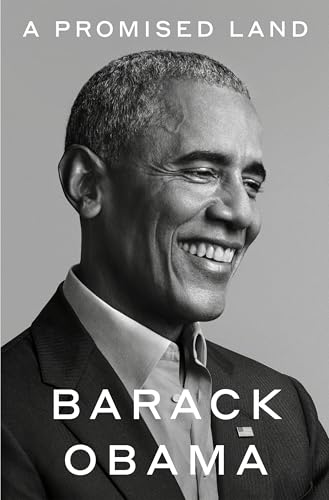
A Promised Land
by Barack Obama
- Author:
- Barack Obama
- Status:
- Done
- Format:
- eBook
- Reading Time:
- 34:29
- Genres:
- Nonfiction , Biography , Memoir , Politics , History , Autobiography
- Pages:
- 751
- Highlights:
- 188
Highlights
Page 573
I figured I could do all that in maybe five hundred pages. I expected to be done in a year. It’s fair to say that the writing process didn’t go exactly as I’d planned. Despite my best intentions, the book kept growing in length and scope—the reason why I eventually decided to break it into two volumes. I’m painfully aware that a more gifted writer could have found a way to tell the same story with greater brevity (after all, my home office in the White House sat right next to the Lincoln Bedroom, where a signed copy of the 272-word Gettysburg Address rests beneath a glass case). But each time that I sat down to write—whether it was to describe the early phases of my campaign, or my administration’s handling of the financial crisis, or negotiations with the Russians on nuclear arms control, or the forces that led to the Arab Spring—I found my mind resisting a simple linear narrative. Often, I felt obliged to provide context for the decisions I and others had made, and I didn’t want to relegate that background to footnotes or endnotes (I hate footnotes and endnotes).
Note: George RR Martin would sympathise
Page 602
I recognize that there are those who believe that it’s time to discard the myth—that an examination of America’s past and an even cursory glance at today’s headlines show that this nation’s ideals have always been secondary to conquest and subjugation, a racial caste system and rapacious capitalism, and that to pretend otherwise is to be complicit in a game that was rigged from the start. And I confess that there have been times during the course of writing this book, as I’ve reflected on my presidency and all that’s happened since, when I’ve had to ask myself whether I was too tempered in speaking the truth as I saw it, too cautious in either word or deed, convinced as I was that by appealing to what Lincoln called the better angels of our nature I stood a greater chance of leading us in the direction of the America we’ve been promised. I don’t know. What I can say for certain is that I’m not yet ready to abandon the possibility of America—not just for the sake of future generations of Americans but for all of humankind. For I’m convinced that the pandemic we’re currently living through is both a manifestation of and a mere interruption in the relentless march toward an interconnected world, one in which peoples and cultures can’t help but collide. In that world—of global supply chains, instantaneous capital transfers, social media, transnational terrorist networks, climate change, mass migration, and ever-increasing complexity—we will learn to live together, cooperate with one another, and recognize the dignity of others, or we will perish. And so the world watches America—the only great power in history made up of people from every corner of the planet, comprising every race and faith and cultural practice—to see if our experiment in democracy can work. To see if we can do what no other nation has ever done. To see if we can actually live up to the meaning of our creed.
Note: Love the honesty and hope
Page 617
If I remain hopeful, it’s because I’ve learned to place my faith in my fellow citizens, especially those of the next generation, whose conviction in the equal worth of all people seems to come as second nature, and who insist on making real those principles that their parents and teachers told them were true but perhaps never fully believed themselves. More than anyone, this book is for those young people—an invitation to once again remake the world, and to bring about, through hard work, determination, and a big dose of imagination, an America that finally aligns with all that is best in us.
Note: Beautiful
Page 630
In the earliest days of the White House, the executive offices and the First Family’s residence fit under one roof, and the West Colonnade was little more than a path to the horse stables. But when Teddy Roosevelt came into office, he determined that a single building couldn’t accommodate a modern staff, six boisterous children, and his sanity. He ordered construction of what would become the West Wing and Oval Office, and over decades and successive presidencies, the colonnade’s current configuration emerged: a bracket to the Rose Garden north and west—the thick wall on the north side, mute and unadorned save for high half-moon windows; the stately white columns on the west side, like an honor guard assuring safe passage.
Note: I can’t visualise this. Sad.
Page 689
Once, when she discovered I had been part of a group that was teasing a kid at school, she sat me down in front of her, lips pursed with disappointment. “You know, Barry,” she said (that’s the nickname she and my grandparents used for me when I was growing up, often shortened to “Bar,” pronounced “Bear”), “there are people in the world who think only about themselves. They don’t care what happens to other people so long as they get what they want. They put other people down to make themselves feel important. “Then there are people who do the opposite, who are able to imagine how others must feel, and make sure that they don’t do things that hurt people. “So,” she said, looking me squarely in the eye. “Which kind of person do you want to be?” I felt lousy. As she intended it to, her question stayed with me for a long time.
Note: Is it just me or this is supposed to be Trump
Page 727
But I wasn’t concerned only with race. It was class as well. Growing up in Indonesia, I’d seen the yawning chasm between the lives of wealthy elites and impoverished masses. I had a nascent awareness of the tribal tensions in my father’s country—the hatred that could exist between those who on the surface might look the same. I bore daily witness to the seemingly cramped lives of my grandparents, the disappointments they filled with TV and liquor and sometimes a new appliance or car. I noticed that my mother paid for her intellectual freedom with chronic financial struggles and occasional personal chaos, and I became attuned to the not-so-subtle hierarchies among my prep school classmates, mostly having to do with how much money their parents had. And then there was the unsettling fact that, despite whatever my mother might claim, the bullies, cheats, and self-promoters seemed to be doing quite well, while those she considered good and decent people seemed to get screwed an awful lot.
Page 739
The reading habit was my mother’s doing, instilled early in my childhood—her go-to move anytime I complained of boredom, or when she couldn’t afford to send me to the international school in Indonesia, or when I had to accompany her to the office because she didn’t have a babysitter. Go read a book, she would say. Then come back and tell me something you learned.
Note: This woman is remarkable
Page 752
Much of what I read I only dimly understood; I took to circling unfamiliar words to look up in the dictionary, although I was less scrupulous about decoding pronunciations—deep into my twenties I would know the meaning of words I couldn’t pronounce.
Note: I don’t know if he’s trying to get us to connect with him. But if he is, he’s succeeding
Page 795
In the gray light of a Manhattan winter and against the overarching cynicism of the times, my ideas, spoken aloud in class or over coffee with friends, came off as fanciful and far-fetched. And I knew it. In fact, it’s one of the things that may have saved me from becoming a full-blown crank before I reached the age of twenty-two; at some basic level I understood the absurdity of my vision, how wide the gap was between my grand ambitions and anything I was actually doing in my life. I was like a young Walter Mitty; a Don Quixote with no Sancho Panza.
Note: Self aware.
Now I’m interested in finding out who Walter Mitty was
Page 817
And yet the pride in being American, the notion that America was the greatest country on earth—that was always a given. As a young man, I chafed against books that dismissed the notion of American exceptionalism; got into long, drawn-out arguments with friends who insisted the American hegemon was the root of oppression worldwide. I had lived overseas; I knew too much. That America fell perpetually short of its ideals, I readily conceded. The version of American history taught in schools, with slavery glossed over and the slaughter of Native Americans all but omitted—that, I did not defend. The blundering exercise of military power, the rapaciousness of multinationals—yeah, yeah, I got all that. But the idea of America, the promise of America: this I clung to with a stubbornness that surprised even me. “We hold these truths to be self-evident, that all men are created equal”—that was my America. The America Tocqueville wrote about, the countryside of Whitman and Thoreau, with no person my inferior or my better; the America of pioneers heading west in search of a better life or immigrants landing on Ellis Island, propelled by a yearning for freedom. It was the America of Thomas Edison and the Wright brothers, making dreams take flight, and Jackie Robinson stealing home. It was Chuck Berry and Bob Dylan, Billie Holiday at the Village Vanguard and Johnny Cash at Folsom State Prison—all those misfits who took the scraps that others overlooked or discarded and made beauty no one had seen before. It was the America of Lincoln at Gettysburg, and Jane Addams toiling in a Chicago settlement home, and weary GIs at Normandy, and Dr. King on the National Mall summoning courage in others and in himself. It was the Constitution and the Bill of Rights, crafted by flawed but brilliant thinkers who reasoned their way to a system at once sturdy and capable of change.
Note: Great passage.
But why Edison? Not a good pick
I like “flawed but brilliant” rather than the other way round
Page 846
I came to love the men and women I worked with: the single mom living on a ravaged block who somehow got all four children through college; the Irish priest who threw open the church doors every evening so that kids had an option other than gangs; the laid-off steelworker who went back to school to become a social worker. Their stories of hardship and their modest victories confirmed for me again and again the basic decency of people. Through them, I saw the transformation that took place when citizens held their leaders and institutions to account, even on something as small as putting in a stop sign on a busy corner or getting more police patrols. I noticed how people stood up a little straighter, saw themselves differently, when they learned that their voices mattered. Through them, I resolved the lingering questions of my racial identity. For it turned out there was no single way to be Black; just trying to be a good man was enough.
Note: Pure poetry
Page 915
In classroom discussions, my hand kept shooting up, earning me some well-deserved eye rolls. I couldn’t help it; it was as if, after years of locking myself away with a strange obsession—like juggling, say, or sword swallowing—I now found myself in circus school.
Page 106
I suppose there are useful lessons to draw from that first campaign. I learned to respect the nuts and bolts of politics, the attention to detail required, the daily grind that might prove the difference between winning and losing. It confirmed, too, what I already knew about myself: that whatever preferences I had for fair play, I didn’t like to lose.
Note: Honest
Page 120
And I thought about my mother and sister alone in that hospital room, and me not there, so busy with my grand pursuits. I knew I could never get that moment back. On top of my sorrow, I felt a great shame.
Page 164
“That was a hell of a speech,” he said, chewing on an unlit cigar. “Made some good points.” “Thanks.” “Might have even changed a lot of minds,” he said. “But you didn’t change any votes.” With that, he signaled to the presiding officer and watched with satisfaction as the green lights signifying “aye” lit up the board. That was politics in Springfield: a series of transactions mostly hidden from view, legislators weighing the competing pressures of various interests with the dispassion of bazaar merchants, all the while keeping a careful eye on the handful of ideological hot buttons—guns, abortion, taxes—that might generate heat from their base. It wasn’t that people didn’t know the difference between good and bad policy. It just didn’t matter. What everyone in Springfield understood was that 90 percent of the time the voters back home weren’t paying attention. A complicated but worthy compromise, bucking party orthodoxy to support an innovative idea—that could cost you a key endorsement, a big financial backer, a leadership post, or even an election.
Page 181
One day, while I was standing in the rotunda after a bill I’d introduced went down in flames, a well-meaning lobbyist came up and put his arm around me. “You’ve got to stop beating your head against the wall, Barack,” he said. “The key to surviving this place is understanding that it’s a business. Like selling cars. Or the dry cleaner down the street. You start believing it’s more than that, it’ll drive you crazy.”
Note: I wonder how much he came to believe this. This book suggests he didn’t but that might it be the case
Page 294
As I gave the future more thought, one thing became clear: The kind of bridge-building politics I imagined wasn’t suited to a congressional race. The problem was structural, a matter of how district lines were drawn: In an overwhelmingly Black district like the one I lived in, in a community that had long been battered by discrimination and neglect, the test for politicians would more often than not be defined in racial terms, just as it was in many white, rural districts that felt left behind. How well will you stand up to those who are not like us, voters asked, those who have taken advantage of us, who look down on us? You could make a difference from such a narrow political base; with some seniority, you could secure better services for your constituents, bring a big project or two back to your home district, and, by working with allies, try to influence the national debate. But that wouldn’t be enough to lift the political constraints that made it so difficult to deliver healthcare for those who most needed it, or better schools for poor kids, or jobs where there were none; the same constraints that Bobby Rush labored under every day. To really shake things up, I realized, I needed to speak to and for the widest possible audience. And the best way to do that was to run for a statewide office—like, for example, the U.S. Senate.
Note: The voters ask fair questions
Page 589
Unlike the state legislature, where many members were content to keep their heads down, often not knowing what the hell was going on, my new colleagues were well briefed and not shy with their opinions, which caused committee meetings to drag on interminably and made me far more sympathetic to those who’d suffered through my own verbosity in law school and Springfield.
Note: Lmaaao. Love his humour
Page 651
Now, in 2005, intelligence reports indicated that extremist groups like al-Qaeda were scouring poorly guarded outposts throughout the former Soviet bloc, searching for remaining nuclear, chemical, and biological materials. Dick and I began discussing how to build on the existing Nunn-Lugar framework to further protect against such threats. Which is how in August that year I found myself with Dick on a military jet, headed for a weeklong visit to Russia, Ukraine, and Azerbaijan. Though the need to monitor Nunn-Lugar’s progress had made such visits routine for Dick, this was my first official foreign trip, and over the years I had heard stories about congressional junkets—the less than strenuous schedules, the lavish dinners and shopping sprees. If that was supposed to be the deal, though, Dick had not gotten the memo. Despite being in his seventies, he maintained a relentless pace. After a day full of meetings with Russian officials in Moscow, we flew a couple of hours southeast to Saratov and then drove another hour to visit a secret nuclear storage site where American funding had helped upgrade the security surrounding Russian missiles. (We were also treated to a meal of borscht and a type of fish gelatin, which Dick gamely ate while I spread it around my plate like a six-year-old.)
Note: It’s just such good writing. He speaks well of everyone. His jokes are always at his expense.
Page 708
Flying back to the United States, I couldn’t shake the thought of those kids paying the price for the arrogance of men like Dick Cheney and Donald Rumsfeld, who’d rushed us into war based on faulty information and refused, still, to fully consider the consequences. The fact that more than half of my Democratic colleagues had approved this fiasco filled me with an altogether different kind of worry. I questioned what might happen to me the longer I stayed in Washington, the more embedded and comfortable I became. I saw now how it could happen—how the incrementalism and decorum, the endless positioning for the next election, and the groupthink of cable news panels all conspired to chip away at your best instincts and wear down your independence, until whatever you once believed was utterly lost.
Page 722
The truth is, I’ve never been a big believer in destiny. I worry that it encourages resignation in the down-and-out and complacency among the powerful. I suspect that God’s plan, whatever it is, works on a scale too large to admit our mortal tribulations; that in a single lifetime, accidents and happenstance determine more than we care to admit; and that the best we can do is to try to align ourselves with what we feel is right and construct some meaning out of our confusion, and with grace and nerve play at each moment the hand that we’re dealt.
Note: Agree 💯
Page 747
Already, a number of my fellow Democratic senators—Joe Biden, Chris Dodd, Evan Bayh, and, of course, Hillary Clinton—had laid the groundwork for a possible run. Some had run before; all had been preparing for years and had a seasoned cadre of staff, donors, and local officials lined up to help. Unlike me, most could point to a record of meaningful legislative accomplishments. And I liked them. They had treated me well, broadly shared my views on the issues, and were more than capable of running an effective campaign and, beyond that, an effective White House. If I was becoming convinced that I could excite voters in ways that they couldn’t—if I suspected that only a wider coalition than they could build, a different language than they used, could shake up Washington and give hope to those in need—I also understood that my favored status was partly an illusion, the result of friendly media coverage and an over-stoked appetite for anything new. The infatuation could reverse itself in an instant, I knew, the rising star transformed into the callow youth, presumptuous enough to think he could run the country less than halfway through his first term.
Page 941
I shook myself out of the reverie. “Right,” I said. “Why me?” I mentioned several of the reasons we’d talked about before. That I might be able to spark a new kind of politics, or get a new generation to participate, or bridge the divisions in the country better than other candidates could. “But who knows?” I said, looking around the table. “There’s no guarantee we can pull it off. Here’s one thing I know for sure, though. I know that the day I raise my right hand and take the oath to be president of the United States, the world will start looking at America differently. I know that kids all around this country—Black kids, Hispanic kids, kids who don’t fit in—they’ll see themselves differently, too, their horizons lifted, their possibilities expanded. And that alone … that would be worth it.” The room was quiet. Marty smiled. Valerie was tearing up. I could see different members of the team conjuring it in their minds, the swearing in of the first African American president of the United States. Michelle stared at me for what felt like an eternity. “Well, honey,” she said finally, “that was a pretty good answer.”
Page 980
Looking at the footage from that day, it’s hard not to get swept up in the nostalgia that still holds sway over my former staff and supporters—the feeling that we were kick-starting a magical ride; that over the course of two years we would catch lightning in a bottle and tap into something essential and true about America. But while the crowds, the excitement, the media attention of that day, all foreshadowed my viability in the race, I have to remind myself that nothing felt easy or predestined at the time, that again and again it felt as if our campaign would go entirely off the rails, and that, at the outset, it seemed not just to me but to many who were paying attention that I wasn’t a particularly good candidate. In many ways, my problems were a direct outgrowth of the buzz we’d generated, and the expectations that came with it. As Axe explained, most presidential campaigns by necessity start small—“Off-Broadway,” he called it; small crowds, small venues, covered by local networks and small papers, where the candidate and his or her team could test lines, smooth out kinks, commit a pratfall, or work through a bout of stage fright without attracting much notice. We didn’t have that luxury. From day one, it felt like the middle of Times Square, and under the glare of the spotlight my inexperience showed.
Page 990
My staff’s biggest fear was that I’d make a “gaffe,” the expression used by the press to describe any maladroit phrase by the candidate that reveals ignorance, carelessness, fuzzy thinking, insensitivity, malice, boorishness, falsehood, or hypocrisy—or is simply deemed to veer sufficiently far from conventional wisdom to make said candidate vulnerable to attack. By this definition, most humans will commit five to ten gaffes a day, each of us counting on the forbearance and goodwill of our family, co-workers, and friends to fill in the blanks, catch our drift, and generally assume the best rather than the worst in us.
Note: Sad but true
Page 007
But my care with words raised another issue on the campaign trail: I was just plain wordy, and that was a problem. When asked a question, I tended to offer circuitous and ponderous answers, my mind instinctively breaking up every issue into a pile of components and subcomponents. If every argument had two sides, I usually came up with four. If there was an exception to some statement I just made, I wouldn’t just point it out; I’d provide footnotes. “You’re burying the lede!” Axe would practically shout after listening to me drone on and on and on. For a day or two I’d obediently focus on brevity, only to suddenly find myself unable to resist a ten-minute explanation of the nuances of trade policy or the pace of Arctic melting. “What d’ya think?” I’d say, pleased with my thoroughness as I walked offstage. “You got an A on the quiz,” Axe would reply. “No votes, though.”
Note: Haha
Page 104
Asked about how I’d handle multiple terrorist attacks, I discussed the need to coordinate federal help but neglected to mention the obvious imperative to go after the perpetrators. For the next several minutes, Hillary and the others took turns pointing out my oversight. Their tones were somber, but the gleam in their eyes said, Take that, rookie. Afterward, Axe was gentle in his postgame critique. “Your problem,” he said, “is you keep trying to answer the question.” “Isn’t that the point?” I said. “No, Barack,” Axe said, “that is not the point. The point is to get your message across. What are your values? What are your priorities? That’s what people care about. Look, half the time the moderator is just using the question to try to trip you up. Your job is to avoid the trap they’ve set. Take whatever question they give you, give ’em a quick line to make it seem like you answered it … and then talk about what you want to talk about.” “That’s bullshit,” I said. “Exactly,” he said.
Note: If only he had seen Zootopia
Page 113
I was frustrated with Axe and even more frustrated with myself. But I realized his insight was hard to deny after watching a replay of the debate. The most effective debate answers, it seemed, were designed not to illuminate but to evoke an emotion, or identify the enemy, or signal to a constituency that you, more than anyone else on that stage, were and would always be on their side. It was easy to dismiss the exercise as superficial. Then again, a president wasn’t a lawyer or an accountant or a pilot, hired to carry out some narrow, specialized task. Mobilizing public opinion, shaping working coalitions—that was the job. Whether I liked it or not, people were moved by emotion, not facts. To elicit the best rather than the worst of those emotions, to buttress those better angels of our nature with reason and sound policy, to perform while still speaking the truth—that was the bar I needed to clear.
Page 277
Even after I left Greenwood, for the rest of the day, every so often, I’d point to someone on my staff and ask, “You fired up?” Eventually it became a campaign rallying cry. And that, I suppose, was the part of politics that would always give me the most pleasure: the part that couldn’t be diagrammed, that defied planning or analytics. The way in which, when it works, a campaign—and by extension a democracy—proved to be a chorus rather than a solo act.
Note: Chorus rather than solo.
Page 301
Another foreign policy argument arose just a few days later, when during a speech I mentioned that if I had Osama bin Laden in my sights within Pakistani territory, and the Pakistani government was unwilling or unable to capture or kill him, I would take the shot. This shouldn’t have been particularly surprising to anyone; back in 2003, I had premised my opposition to the Iraq War partly on my belief that it would distract us from destroying al-Qaeda. But such blunt talk ran counter to the Bush administration’s public position; the U.S. government maintained the dual fiction that Pakistan was a reliable partner in the war against terrorism and that we never encroached on Pakistani territory in the pursuit of terrorists. My statement threw Washington into a bipartisan tizzy, with Joe Biden, the chair of the Senate Foreign Relations Committee, and Republican presidential candidate John McCain both expressing the view that I was not ready to be president.
Page 349
And Favs delivered. In that critical moment of our campaign, with only modest input from me, this guy just a few years out of college had produced a great speech, one that did more than show the distinction between me and my rivals, between Democrats and Republicans. It outlined the challenges we faced as a nation, from war to climate change to the affordability of healthcare, and the need for new and clear leadership, noting that the party had historically been strongest with leaders who led “not by polls, but by principle … not by calculation, but by conviction.” It was true to the moment, true to my aspirations for getting into politics, and true, I hoped, to the aspirations of the country.
Note: Same as “I was elected to lead, not to follow”
Page 387
On the flight to Des Moines, I tried to appreciate the frustrations Hillary must have been feeling. A woman of enormous intelligence, she had toiled, sacrificed, endured public attacks and humiliations, all in service of her husband’s career—while also raising a wonderful daughter. Out of the White House, she had carved a new political identity, positioning herself with skill and tenacity to become the prohibitive favorite to win the presidency. As a candidate, she was performing almost flawlessly, checking every box, winning most debates, raising scads of money. And now, to find herself suddenly in a close contest with a man fourteen years younger, who hadn’t had to pay the same dues, who didn’t carry the same battle scars, and who seemed to be getting every break and every benefit of the doubt? Honestly, who wouldn’t be aggravated?
Page 473
The first happened during the lone debate before the primary when, midway through, the moderator asked Hillary how she felt when people said she was not “likable.” Now, this was the type of question that drove me nuts on several levels. It was trivial. It was unanswerable—what’s a person supposed to say to something like that? And it was indicative of a double standard that Hillary specifically and women politicians in general had to put up with, in which they were expected to be “nice” in ways that were never deemed relevant to their male counterparts.
Note: He empathises with her struggles
Page 571
Toot showed me how to balance a checkbook and resist buying stuff I didn’t need. She was the reason why, even in my most revolutionary moments as a young man, I could admire a well-run business and read the financial pages, and why I felt compelled to disregard overly broad claims about the need to tear things up and remake society from whole cloth. She taught me the value of working hard and doing your best even when the work was unpleasant, and about fulfilling your responsibilities even when doing so was inconvenient. She taught me to marry passion with reason, to not get overly excited when life was going well, and to not get too down when it went badly.
Page 599
Inside the campaign, Plouffe and Axe listened to the concerns of Black and Latino team members, whether someone wanted to tweak a television ad (“Can we include at least one Black face other than Barack’s?” Valerie gently asked at one point) or was reminding us to work harder to recruit more senior staff of color. (On this score, at least, the world of experienced, high-level political operatives wasn’t so different from that of other professions, in that young people of color consistently had less access to mentors and networks—and couldn’t afford to accept the unpaid internships that might put them on the fast track to run national campaigns. This was one thing I was determined to help change.) But Plouffe, Axe, and Gibbs made no apologies for de-emphasizing any topic that might be labeled a racial grievance, or split the electorate along racial lines, or do anything that would box me in as “the Black candidate.” To them, the immediate formula for racial progress was simple—we needed to win. And this meant gaining support not just from liberal white college kids but also from voters for whom the image of me in the White House involved a big psychological leap.
Page 645
Of course, that was part of the reason I was running, wasn’t it—to help us break free of such constraints? To reimagine what was possible? I wanted to be neither a supplicant, always on the periphery of power and seeking favor from liberal benefactors, nor a permanent protester, full of righteous anger as we waited for white America to expiate its guilt. Both paths were well trodden; both, at some fundamental level, were born of despair.
Page 729
John Lewis, had indicated that he was inclined to endorse Hillary. John had become a good friend—he’d taken great pride in my election to the Senate, rightly seeing it as part of his legacy—and I knew he was tortured by the decision. As I listened to him explain his reasoning over the phone, how long he had known the Clintons, how Bill’s administration had supported many of his legislative priorities, I chose not to press him too hard. I could imagine the pressure this kind and gentle man was under, and I also recognized that, at a time when I was asking white voters to judge me on the merits, a raw appeal to racial solidarity would feel like hypocrisy.
Page 809
While campaigning, Michelle—whose great-great-grandfather had been born into slavery on a South Carolina rice plantation—would hear well-meaning Black women suggesting that losing an election might be better than losing a husband, the implication being that if I was elected, I was sure to be shot. Hope and change were a luxury, folks seemed to be telling us, exotic imports that would wilt in the heat.
Page 821
As I walked onstage in an auditorium in Columbia to give our victory speech, I could feel the pulse of stomping feet and clapping hands. Several thousand people had packed themselves into the venue, though under the glare of television lights, I could see only the first few rows—college students mostly, white and Black in equal measure, some with their arms interlocked or draped over one another’s shoulders, their faces beaming with joy and purpose. “Race doesn’t matter!” people were chanting. “Race doesn’t matter! Race doesn’t matter!” I spotted some of our young organizers and volunteers mixed in with the crowd. Once again, they’d come through, despite the naysayers. They deserved a victory lap, I thought to myself, a moment of pure elation. Which is why, even as I quieted the crowd and dove into my speech, I didn’t have the heart to correct those well-meaning chanters—to remind them that in the year 2008, with the Confederate flag and all it stood for still hanging in front of a state capitol just a few blocks away, race still mattered plenty, as much as they might want to believe otherwise.
Page 864
What I couldn’t fully appreciate yet was just how malleable this technology would prove to be; how quickly it would be absorbed by commercial interests and wielded by entrenched powers; how readily it could be used not to unify people but to distract or divide them; and how one day many of the same tools that had put me in the White House would be deployed in opposition to everything I stood for. Such insights would come later.
Page 966
The excitement was fun and at times deeply touching, but it was also a little unnerving. At some basic level people were no longer seeing me, I realized, with all my quirks and shortcomings. Instead, they had taken possession of my likeness and made it a vessel for a million different dreams. I knew a time would come when I would disappoint them, falling short of the image that my campaign and I had helped to construct.
Page 103
“You go into some of these small towns in Pennsylvania,” I said, “and, like a lot of small towns in the Midwest, the jobs have been gone now for twenty-five years and nothing’s replaced them. And they fell through the Clinton administration and the Bush administration, and each successive administration has said that somehow these communities are going to regenerate and they have not.” So far so good. Except I then added, “So it’s not surprising then that they get bitter, they cling to guns or religion or antipathy toward people who aren’t like them, or anti-immigrant sentiment, or anti-trade sentiment as a way to explain their frustrations.” I can provide the exact quote here, because in the audience that night was a freelance writer who was recording me. To her mind, my answer risked reinforcing negative stereotypes some Californians already had about working-class white voters and was therefore worth blogging about on Huffington Post. (It’s a decision I respect, by the way, though I wish she had talked to me about it before writing the story. This is what separates even the most liberal writers from their conservative counterparts—the willingness to flay politicians on their own side.) Even today, I want to take that sentence back and make a few simple edits. “So it’s not surprising then that they get frustrated,” I would say in my revised version, “and they look to the traditions and way of life that have been constants in their lives, whether it’s their faith, or hunting, or blue-collar work, or more traditional notions of family and community. And when Republicans tell them we Democrats despise these things—or when we give these folks reason to believe that we do—then the best policies in the world don’t matter to them.”
Note: Flay politicians on their own side
Page 123
Maybe I’m overstating the consequences of that night. Maybe things were bound to play out as they did, and what nags at me is the simple fact that I screwed up and don’t like being misunderstood. And maybe I’m bothered by the care and delicacy with which one must state the obvious: that it’s possible to understand and sympathize with the frustrations of white voters without denying the ease with which, throughout American history, politicians have redirected white frustration about their economic or social circumstances
Page 243
Among the various Republicans who had competed for the presidential nomination, I had always considered John McCain to be most worthy of the prize. I had admired him from afar before I got to Washington—not only for his service as a navy pilot and the unimaginable courage he’d shown during five and a half harrowing years as a POW, but because of the contrarian sensibility and willingness to buck Republican Party orthodoxy on issues like immigration and climate change that he’d shown in his 2000 presidential campaign. While we were never close in the Senate, I often found him insightful and self-deprecating, quick to puncture pretension and hypocrisy on both sides of the aisle. McCain did enjoy being something of a press corps darling (“my constituency,” he once called them), never passing up a chance to be on the Sunday morning news shows, and among his colleagues he had a well-earned reputation for volatility—quick to explode over small disagreements, his pallid face reddening, his reedy voice rising at the first sign of a perceived slight. But he wasn’t an ideologue. He respected not only the customs of the Senate but also the institutions of our government and our democracy. I never saw him display the race-tinged nativism that regularly infected other Republican politicians, and on more than one occasion, I’d seen him display real political courage. Once, as the two of us stood in the well of the Senate waiting for a vote, John had confided to me that he couldn’t stand a lot of the “crazies” in his own party. I knew this was part of his shtick—privately playing to Democrats’ sensibilities while voting with his caucus about 90 percent of the time. But the disdain he expressed for the far-right wing of his party wasn’t an act. And in an increasingly polarized climate, the political equivalent of a holy war, McCain’s modest heresies, his unwillingness to profess the true faith, carried a real cost. The “crazies” in his party mistrusted him, they considered him a RINO—Republican in Name Only—and he was regularly attacked by the Rush Limbaugh crowd. Unfortunately for McCain, it was precisely these voices of the hard Right that were exciting the core GOP voters most likely to vote in presidential primaries, rather than the business-friendly, strong-on-defense, socially moderate Republicans McCain appealed to and was most comfortable with. And as the Republican primary wore on, and McCain sought to win over some of the very people he professed to despise—as he abandoned any pretense of fiscal rectitude in favor of even bigger tax cuts than the Bush tax cuts he’d once voted against, and hedged his position on climate change to accommodate fossil fuel interests—I sensed a change taking place in him. He seemed pained, uncertain—the once jaunty, irreverent warrior transformed into a cranky Washington insider, lassoed to an incumbent president with an approval rating around 30 percent and a hugely unpopular war. I wasn’t sure I could beat the 2000…
Page 363
The conversation was cordial, and I couldn’t blame Petraeus for wanting to finish the mission. If I were in your shoes, I told him, I’d want the same thing. But a president’s job required looking at a bigger picture, I said, just as he himself had to consider trade-offs and constraints that officers under his command did not. As a nation, how should we weigh an additional two or three years in Iraq at a cost of nearly $10 billion a month against the need to dismantle Osama bin Laden and core al-Qaeda operations in northwestern Pakistan? Or against the schools and roads not built back home? Or the erosion of readiness should another crisis arise? Or the human toll exacted on our troops and their families? General Petraeus nodded politely and said he looked forward to seeing me after the election. As our delegation took its leave that day, I doubted I’d persuaded him of the wisdom of my position any more than he had persuaded me.
Note: Good that he isn’t painting his Iraq strategy as the one true way
Page 546
Sarah Palin—the forty-four-year-old governor of Alaska and an unknown when it came to national politics—was, above all, a potent disrupter. Not only was she young and a woman, a potential groundbreaker in her own right, but she also had a story you couldn’t make up: She’d been a small-town basketball player and pageant queen who’d bounced among five colleges before graduating with a journalism degree. She’d worked for a while as a sportscaster before getting elected mayor of Wasilla, Alaska, and then taking on the state’s entrenched Republican establishment and beating the incumbent governor in 2006. She’d married her high school sweetheart, had five kids (including a teenage son about to be deployed to Iraq and a baby with Down syndrome), professed a conservative Christian faith, and enjoyed hunting moose and elk during her spare time. Hers was a biography tailor-made for working-class white voters who hated Washington and harbored the not entirely unjustified suspicion that big-city elites—whether in business, politics, or the media—looked down on their way of life. If the New York Times editorial board or NPR listeners questioned her qualifications, Palin didn’t care. She offered their criticism as proof of her authenticity, understanding (far earlier than many of her critics) that the old gatekeepers were losing relevance, that the walls of what was considered acceptable in a candidate for national office had been breached, and that Fox News, talk radio, and the budding power of social media could provide her with all the platforms she needed to reach her intended audience.
Note: How much of this is aimed at trump
Page 571
Palin’s nomination was troubling on a deeper level. I noticed from the start that her incoherence didn’t matter to the vast majority of Republicans; in fact, anytime she crumbled under questioning by a journalist, they seemed to view it as proof of a liberal conspiracy. I was even more surprised to witness prominent conservatives—including those who’d spent a year dismissing me as inexperienced, and who’d spent decades decrying affirmative action, the erosion of intellectual standards, and the debasement of Western culture at the hands of multiculturalists—suddenly shilling for Palin, tying themselves into knots as they sought to convince the public that in a vice presidential candidate, the need for basic knowledge of foreign policy or the functions of the federal government was actually overrated. Sarah Palin, like Reagan, had “good instincts,” they said, and once installed, she’d grow into the job. It was, of course, a sign of things to come, a larger, darker reality in which partisan affiliation and political expedience would threaten to blot out everything—your previous positions; your stated principles; even what your own senses, your eyes and ears, told you to be true.
Note: Again Trump
Page 688
I wanted people to understand that there was a precedent for bold government action. FDR had saved capitalism from itself, laying the foundation for a post–World War II boom. I often talked about how strong labor laws had helped build a thriving middle class and a thriving domestic market, and how—by driving out unsafe products and fraudulent schemes—consumer protection laws had actually helped legitimate businesses prosper and grow. I explained how strong public schools and state universities and a GI Bill had unleashed the potential of generations of Americans and driven upward mobility. Programs like Social Security and Medicare had given those same Americans a measure of stability in their golden years, and government investments like those in the Tennessee Valley Authority and the interstate highway system had boosted productivity and provided the platform for countless entrepreneurs. I was convinced we could adapt these strategies to current times. Beyond any specific policy, I wanted to restore in the minds of the American people the crucial role that government had always played in expanding opportunity, fostering competition and fair dealing, and making sure the marketplace worked for everybody. What I hadn’t counted on was a major financial crisis.
Page 711
For the public, it was tempting to see all this as a righteous comeuppance for greedy bankers and hedge fund managers; to want to stand by as firms failed and executives who’d drawn $20 million bonuses were forced to sell off their yachts, jets, and homes in the Hamptons. I’d encountered enough Wall Street executives personally to know that many (though not all) lived up to the stereotype: smug and entitled, conspicuous in their consumption, and indifferent to the impact their decisions might have on everyone else. The trouble was that in the midst of a financial panic, in a modern capitalist economy, it was impossible to isolate good businesses from bad, or administer pain only to the reckless or unscrupulous. Like it or not, everybody and everything was connected.
Page 736
That morning, Monday, September 15, Lehman Brothers, a $639 billion company, had announced it was filing for bankruptcy. The fact that the Treasury Department had not intervened to prevent what would be the largest bankruptcy filing in history signaled that we were entering a new phase in the crisis. “We can expect a very bad market reaction,” he said. “And the situation is likely to get worse before it gets better.” He explained why both Treasury and the Fed had determined that Lehman was too weak to prop up and that no other financial institution was willing to take on its liabilities. President Bush had authorized Paulson to brief both me and John McCain because further emergency actions would need bipartisan political support. Paulson hoped that both campaigns would respect and respond appropriately to the severity of the situation. You didn’t need a pollster to know that Paulson was right to be worried about the politics. We were seven weeks from a national election. As the public learned more about the enormity of the crisis, the idea of spending billions of taxpayer dollars to bail out reckless banks would surely rank in popularity somewhere between a bad case of shingles and Osama bin Laden.
Note: Wonder what Trump would have said
Page 781
Nevertheless, I did my best to stay true to the commitment I’d made to Paulson, instructing my team to refrain from making public comments that might jeopardize the Bush administration’s chances at getting Congress to approve a rescue package. Along with our in-house economic advisors, Austan Goolsbee and Jason Furman, I had begun consulting with an ad hoc advisory group that included former Federal Reserve chairman Paul Volcker, former Clinton Treasury secretary Larry Summers, and legendary investor Warren Buffett. All had lived through major financial crises before, and each confirmed that this one was of a different order of magnitude. Without swift action, they told me, we faced the very real possibility of economic collapse: millions more Americans losing their homes and their life savings, along with Depression-era levels of unemployment.
Note: He was the right man and the right time. And he doesn’t get enough credit for that.
Page 867
The president opened with a brief appeal for unity before turning the meeting over to Paulson, who updated us on current market conditions and explained how TARP funds would be used to buy up bad mortgages (“toxic assets,” as they were called) from the banks, thereby shoring up balance sheets and restoring market confidence. “If Hank and Ben think this plan is going to work,” Bush said after they were finished, “then that’s what I’m for.” In accordance with protocol, the president next called on Speaker Pelosi. Rather than take the floor herself, though, Nancy politely informed the president that the Democrats would have me speak first, on their behalf. It had been Nancy and Harry’s idea that I serve as their point person, and I was grateful for it. Not only did it ensure that I wouldn’t be outflanked by McCain during the deliberations, but it signaled that my fellow Democrats saw their political fortunes as wrapped up with mine. The move seemed to catch the Republicans by surprise, and I couldn’t help noticing the president giving Nancy one of his patented smirks—as a shrewd politician, he recognized a deft maneuver when he saw one—before nodding my way. For the next several minutes, I spoke about the nature of the crisis, the details of the emerging legislation, and the remaining points on oversight, executive compensation, and homeowner relief that Democrats believed still needed to be addressed. Noting that both Senator McCain and I had publicly pledged not to play politics with the financial rescue effort, I told the president that Democrats would deliver their share of the votes needed for passage. But I warned that if there was any truth to reports that some Republican leaders were backing away and insisting on starting from scratch with a whole new plan, it would inevitably bog down negotiations, and “the consequences would be severe.” Bush turned to McCain and said, “John, since Barack had a chance to speak, I think it’s only fair if I let you go next.” Everyone looked at McCain, whose jaw tightened. He appeared to be on the verge of saying something, thought better of it, and briefly fidgeted in his chair. “I think I’ll just wait for my turn,” he said finally. There are moments in an election battle, as in life, when all the possible pathways save one are suddenly closed; when what felt like a wide distribution of probable outcomes narrows to the inevitable. This was one of those moments. Bush looked at McCain with a raised eyebrow, shrugged, and called on John Boehner. Boehner said he wasn’t talking about starting from scratch but just wanted some modifications—including a plan he had trouble describing, which involved the federal government insuring banks’ losses rather than purchasing their assets. I asked Paulson if he’d looked at this Republican insurance proposal and determined whether it would work. Paulson said firmly that he had and it wouldn’t. Richard Shelby, the ranking member on the Senate Banking Committee, interjected to…
Note: Holy fucking shit. What a story.
Page 974
ON SEPTEMBER 29, three days after the debate at Ole Miss, Bush’s TARP legislation fell thirteen votes short of passage in the House of Representatives, with two-thirds of Democrats voting in support of it and two-thirds of Republicans voting against it. The Dow Jones immediately sustained a terrifying 778-point drop, and after a pounding in the press and no doubt a flood of calls from constituents watching their retirement accounts evaporate, enough members of both parties flipped to pass an amended version of the rescue package several days later. Greatly relieved, I called Hank Paulson to congratulate him for his efforts. But while TARP’s passage would prove to be critical in saving the financial system, the whole episode did nothing to reverse the public’s growing impression that the GOP—and by extension their nominee for president—couldn’t be trusted to responsibly handle the crisis.
Note: How the fuck did they get the reputation of being good on the economy
Page 004
most voters seemed to view Joe as not much more than a distraction from the serious business of electing the next president. Most voters, but not all. For those who got their news from Sean Hannity and Rush Limbaugh, Joe the Plumber fit neatly into some larger narrative involving Reverend Wright; my alleged fealty to radical community organizer Saul Alinsky; my friendship with my neighbor Bill Ayers, who’d once been a leader of the militant group the Weather Underground; and my shadowy Muslim heritage. For these voters, I was no longer just a left-of-center Democrat who planned to broaden the social safety net and end the war in Iraq. I was something more insidious, someone to be feared, someone to be stopped. To deliver this urgent, patriotic message to the American people, they increasingly looked to their most fearless champion, Sarah Palin.
Page 049
It became a running joke between me and the team: “Are we sure we want to win this thing? It’s not too late to throw it.” Marty expressed a more ethnic version of the same sentiment: “Two hundred and thirty-two years and they wait until the country’s falling apart before they turn it over to the brother!”
Note: 😂😂😂
Page 165
Resolute desk—a gift from Queen Victoria in 1880, ornately carved from the hull of a British ship that a U.S. whaling crew helped salvage after a catastrophe, full of hidden drawers and nooks and with a central panel that pops open, delighting any child who has a chance to crawl through it.
Note: Quiz question!
Page 202
Only once did he say something that surprised me. We were talking about the financial crisis and Secretary Paulson’s efforts to structure the rescue program for the banks now that TARP had passed through Congress. “The good news, Barack,” he said, “is that by the time you take office, we’ll have taken care of the really tough stuff for you. You’ll be able to start with a clean slate.” For a moment, I was at a loss for words. I’d been talking to Paulson regularly and knew that cascading bank failures and a worldwide depression were still distinct possibilities. Looking at the president, I imagined all the hopes and convictions he must have carried with him the first time he walked into the Oval Office as president-elect, no less dazzled by its brightness, no less eager than I was to change the world for the better, no less certain that history would judge his presidency a success. “It took a lot of courage on your part to get TARP passed,” I said finally. “To go against public opinion and a lot of people in your own party for the sake of the country.” That much at least was true. I saw no point in saying more.
Page 247
Axe and Plouffe, both of whom knew Rahm well and had seen him in action, were thrilled when he accepted the job. But not all of my supporters were as enthusiastic. Hadn’t Rahm supported Hillary? a few groused. Didn’t he represent the same old triangulating, Davos-attending, Wall Street–coddling, Washington-focused, obsessively centrist version of the Democratic Party we had been running against? How can you trust him? These were all variations on a question that would recur in the coming months: What kind of president did I intend to be? I had pulled off a neat trick during the campaign, attracting support from independents and even some moderate Republicans by promising bipartisanship and an end to slash-and-burn politics while maintaining the enthusiasm of those on the left. I had done so not by telling different people what they wanted to hear but by stating what I felt to be the truth: that in order to advance progressive policies like universal healthcare or immigration reform, it was not only possible but necessary to avoid doctrinaire thinking; to place a premium on what worked and listen respectfully to what the other side had to say.
Note: AOC thinks RE is a “divisive pick” in 2020
Page 394
Just one remaining potential appointee caused any kind of stir. I wanted Hillary Clinton to be my secretary of state. Observers put forth various theories about my rationale for choosing Hillary: that I needed to unify a still-divided Democratic Party, that I was worried about her second-guessing me from her seat in the Senate, that I had been influenced by Doris Kearns Goodwin’s book Team of Rivals and was self-consciously mimicking Lincoln by placing a former political opponent in my cabinet. But really it was simpler than that. I thought Hillary was the best person for the job. Throughout the campaign, I had witnessed her intelligence, preparation, and work ethic. Whatever her feelings toward me, I trusted her patriotism and commitment to duty. Most of all, I was convinced that at a time when diplomatic relations around the world were either strained or suffering from chronic neglect, having a secretary of state with Hillary’s star power, relationships, and comfort on the world stage would give us added bandwidth in a way that nobody else could.
Note: Interesting. I thought it was the price of her cooperation
Page 614
Ted also became a favorite of my young speechwriting team, generously offering advice and occasionally commenting on drafts of their speeches. Since he had co-authored Kennedy’s inaugural address (“Ask not what your country can do for you …”), they asked him once what had been the secret to writing one of the four or five greatest speeches in American history. Simple, he said: Whenever he and Kennedy sat down to write, they told themselves, “Let’s make this good enough to be in a book of the great speeches someday.” I don’t know if Ted was trying to inspire my team or just mess with their heads.
Note: 😅
Page 667
I signed my first bill into law on my ninth day in office: the Lilly Ledbetter Fair Pay Act. The legislation was named after an unassuming Alabaman who, deep into a long career at the Goodyear Tire & Rubber Company, had discovered that she’d routinely been paid less than her male counterparts. As discrimination cases go, it should have been a slam dunk, but in 2007, defying all common sense, the Supreme Court had disallowed the lawsuit. According to Justice Samuel Alito, Title VII of the Civil Rights Act required Ledbetter to have filed her claim within 180 days of when the discrimination first occurred—in other words, six months after she received her first paycheck, and many years before she actually discovered the pay disparity. For over a year, Republicans in the Senate had blocked corrective action (with President Bush promising to veto it if it passed). Now, thanks to quick legislative work by our emboldened Democratic majorities, the bill sat on a small ceremonial desk in the East Room.
Note: As of today I can’t explain why someone would vote against this bill. How do they justify it to themselves? Like “oh no, if this passes, we’ll have to treat women equally!”
Page 699
Moreover, economies typically recovered much more slowly from recessions triggered by financial crises than from those caused by fluctuations in the business cycle. In the absence of quick and aggressive intervention by the federal government, Larry calculated, the chances of a second Great Depression were “about one in three.”
Page 709
Our conversation therefore focused on fiscal stimulus, or, in layperson’s terms, having the government spend more money. Though I hadn’t majored in economics, I was familiar enough with John Maynard Keynes, one of the giants of modern economics and a theoretician of the causes of the Great Depression. Keynes’s basic insight had been simple: From the perspective of the individual family or firm, it was prudent to tighten one’s belt during a severe recession. The problem was that thrift could be stifling; when everyone tightened their belts at the same time, economic conditions couldn’t improve. Keynes’s answer to the dilemma was just as simple: A government needed to step in as the “spender of last resort.” The idea was to pump money into the economy until the gears started to turn again, until families grew confident enough to trade in old cars for new ones and innovative companies saw enough demand to start making new products again. Once the economy was kick-started, the government could then turn off the spigot and recoup its money through the resulting boost in tax revenue. In large part, this was the principle behind FDR’s New Deal, which took shape after he took office in 1933, at the height of the Great Depression. Whether it was young men in the Civilian Conservation Corps put to work building trails in America’s national parks, or farmers receiving government payments for surplus milk, or theater troupes performing as part of the Works Progress Administration, the New Deal’s programs helped unemployed Americans get desperately needed paychecks and companies sustain themselves with government orders for steel or lumber, all of which helped bolster private enterprise and stabilize the faltering economy.
Note: Good explanation
Page 773
In the days leading up to the inauguration, I had read several books on FDR’s first term and the implementation of the New Deal. The contrast was instructive, though not in a good way for us. By the time Roosevelt was elected in 1932, the Great Depression had been wreaking havoc for more than three years. A quarter of the country was unemployed, millions were destitute, and the shantytowns that dotted the American landscape were commonly referred to as “Hoovervilles”—a fair reflection of what people thought of Republican president Herbert Hoover, the man FDR was about to replace. So widespread was the hardship, so discredited were Republican policies, that when a new bout of bank runs occurred during what was then a four-month transition between presidencies, FDR made a point of rebuffing Hoover’s efforts to enlist his help. He wanted to make sure that in the public’s mind, his presidency marked a clean break, untarnished by past blunders. And when, in a stroke of luck, the economy showed signs of life just a month after he took office (before his policies had been even put into effect), FDR was happy not to share the credit with the previous administration. We, on the other hand, were not going to have the benefit of such clarity. After all, I had already made the decision to help President Bush with his necessary though wildly unpopular response to the banking crisis, placing my hand on the proverbial bloody knife.
Note: He did the right thing at a cost to his popularity
Page 786
And despite the turmoil of the previous months, despite the horrific headlines of early 2009, nobody—not the public, not Congress, not the press, and (as I’d soon discover) not even the experts—really understood just how much worse things were about to get. Government data at the time was showing a severe recession, but not a cataclysmic one. Blue-chip analysts predicted that the unemployment rate would top out at 8 or 9 percent, not even imagining the 10 percent mark it would eventually reach. When, several weeks after the election, 387 mostly liberal economists had sent a letter to Congress, calling for a robust Keynesian stimulus, they’d put the price tag at $300 to $400 billion—about half of what we were about to propose, and a good indicator of where even the most alarmist experts had the economy pegged. As Axelrod described it, we were about to ask the American public to spend close to a trillion dollars on sandbags for a once-in-a-generation hurricane that only we knew was coming. And once the money was spent, no matter how effective the sandbags proved to be, a whole lot of folks would be flooded out anyway. “When things are bad,” Axe said, walking next to me as we left the December meeting, “no one cares that ‘things could have been worse.’ ” “You’re right,” I agreed. “We’ve got to level-set people’s expectations,” he said. “But if we scare them or the markets too much, that will just add to the panic and do more economic damage.” “Right again,” I said. Axe shook his head dolefully. “It’s going to be one hell of a midterm election,” he said.
Note: There is no way to prove without AB test that this was necessary or effective
Page 801
THERE WAS A pervasive nostalgia in Washington, both before I was elected and during my presidency, for a bygone era of bipartisan cooperation on Capitol Hill. And the truth is that throughout much of the post–World War II era, the lines separating America’s political parties really had been more fluid. By the 1950s, most Republicans had accommodated themselves to New Deal–era health and safety regulations, and the Northeast and the Midwest produced scores of Republicans who were on the liberal end of the spectrum when it came to issues like conservation and civil rights. Southerners, meanwhile, constituted one of the Democratic Party’s most powerful blocs, combining a deep-rooted cultural conservatism with an adamant refusal to recognize the rights of African Americans, who made up a big share of their constituency. With America’s global economic dominance unchallenged, its foreign policy defined by the unifying threat of communism, and its social policy marked by a bipartisan confidence that women and people of color knew their place, both Democrats and Republicans felt free to cross party lines when required to get a bill passed. They observed customary courtesies when it came time to offer amendments or bring nominations to a vote and kept partisan attacks and hardball tactics within tolerable bounds. The story of how this postwar consensus broke down—starting with LBJ’s signing of the Civil Rights Act of 1964 and his prediction that it would lead to the South’s wholesale abandonment of the Democratic Party—has been told many times before. The realignment Johnson foresaw ended up taking longer than he had expected. But steadily, year by year—through Vietnam, riots, feminism, and Nixon’s southern strategy; through busing, Roe v. Wade, urban crime, and white flight; through affirmative action, the Moral Majority, union busting, and Robert Bork; through assault weapons bans and the rise of Newt Gingrich, gay rights and the Clinton impeachment—America’s voters and their representatives became more and more polarized. Political gerrymandering fortified these trends, as both parties, with the help of voter profiles and computer technology, drew congressional districts with the explicit aim of entrenching incumbency and minimizing the number of competitive districts in any given election. Meanwhile, the splintering of the media and the emergence of…
Note: Great tldr on polarisation in America
Page 877
Of the four key leaders, I knew Harry best, but I’d had my share of interactions with McConnell during my few years in the Senate. Short, owlish, with a smooth Kentucky accent, McConnell seemed an unlikely Republican leader. He showed no aptitude for schmoozing, backslapping, or rousing oratory. As far as anyone could tell, he had no close friends even in his own caucus; nor did he appear to have any strong convictions beyond an almost religious opposition to any version of campaign finance reform. Joe told me of one run-in he’d had on the Senate floor after the Republican leader blocked a bill Joe was sponsoring; when Joe tried to explain the bill’s merits, McConnell raised his hand like a traffic cop and said, “You must be under the mistaken impression that I care.” But what McConnell lacked in charisma or interest in policy he more than made up for in discipline, shrewdness, and shamelessness—all of which he employed in the single-minded and dispassionate pursuit of power. Harry couldn’t stand him.
Note: McConnell intro
Page 884
Boehner was a different animal, an affable, gravel-voiced son of a bartender from outside Cincinnati. With his chain-smoking and perpetual tan, his love of golf and a good merlot, he felt familiar to me, cut from the same cloth as many of the Republicans I’d gotten to know as a state legislator in Springfield—regular guys who didn’t stray from the party line or the lobbyists who kept them in power but who also didn’t consider politics a blood sport and might even work with you if it didn’t cost them too much politically. Unfortunately these same human qualities gave Boehner a tenuous grip on his caucus; and having experienced the humiliation of being stripped of a leadership post as a result of insufficient fealty to Newt Gingrich in the late 1990s, he rarely deviated from whatever talking points his staff had prepared for him, at least not in public. Unlike the relationship between Harry and McConnell, however, there was no real enmity between Speaker Nancy Pelosi and Boehner, just mutual frustration—on Nancy’s part because of Boehner’s unreliability as a negotiating partner and his frequent inability to deliver votes; on Boehner’s part because Nancy generally outmaneuvered him.
Note: Boehner intro
Page 893
Boehner wasn’t the first to be outflanked by the Speaker. On the surface, Nancy, in her designer suits, matching shoes, and perfectly coiffed hair, looked every bit the wealthy San Francisco liberal she was. Though she could talk a mile a minute, she wasn’t particularly good on TV at the time, with a tendency to deliver Democratic nostrums with a practiced earnestness that called to mind an after-dinner speech at a charity gala. But politicians (usually men) underestimated Nancy at their own peril, for her ascent to power had been no fluke. She’d grown up in the East, the Italian American daughter of Baltimore’s mayor, tutored from an early age in the ways of ethnic ward bosses and longshoremen, unafraid to play hardball politics in the name of getting things done. After moving to the West Coast with her husband, Paul, and staying home to raise their five kids while he built a successful business, Nancy eventually put her early political education to good use, rising steadily through the ranks of the California Democratic Party and Congress to become the first female Speaker in American history. She didn’t care that Republicans made her their favorite foil; nor was she fazed by the…
Note: Pelosi intro
Page 925
It was, however, the comments from Harry, Mitch, Nancy, and John, delivered with teeth-clenching civility and requiring a bit of deciphering, that gave me and Joe our best sense of the real state of play. “Well, Mr. President-Elect,” said Nancy, “I think the American people are pretty clear that you inherited a terrible mess. Just terrible. And of course our caucus is prepared to do the responsible thing to clean up this mess that you inherited. But I just hope our friends on the other side of the aisle remember how it was the Democrats, including you, Mr. President-Elect, who stepped up to the plate … Despite what we all know was bad politics … it was Democrats who were willing to help President Bush with TARP. I hope our Republican friends take the same responsible approach in what, as you said, is a very critical moment.” Translation: Don’t think for a minute that we won’t be reminding the American people every single chance we get that Republicans caused the financial crisis. “Our caucus won’t like it,” Harry said, “but we don’t have much choice, so we’ll just have to get it done, okay?” Translation: Don’t expect Mitch McConnell to lift a finger to help. “Well, we’re happy to listen, but with all due respect, I don’t think the American people are looking for more big spending and bailouts,” Boehner said. “They’re tightening their belts, and they expect us to do the same.” Translation: My caucus will crucify me if I say anything that sounds cooperative. “I can’t tell you there’s much of an appetite for what you’re proposing, Mr. President-Elect,” McConnell said, “but you’re welcome to come to our weekly luncheon to make your case.” Translation: You must be under the mistaken impression that I care. On our way down the stairs after the meeting was over, I turned to Joe. “Well, that could have been worse,” I said. “Yeah,” Joe said. “No fistfights broke out.” I laughed. “See there? That’s progress!”
Note: Sublime! Love his translations! 😅
Page 970
My team did throw me one bone when it came to freedom: I was able to keep my BlackBerry—or, rather, I was given a new, specially modified device, approved only after several weeks of negotiations with various cybersecurity personnel. With it, I could send and receive emails, though only from a vetted list of twenty or so contacts, and the internal microphone and headphone jack had been removed, so that the phone function didn’t work. Michelle joked that my BlackBerry was like one of those play phones you give toddlers, where they get to press buttons and it makes noises and things light up but nothing actually happens.
Page 019
We became especially close to our regular crew of chefs and butlers, with whom we had daily contact. As with my valets, all of them were Black, Latino, or Asian American, and all but one were men (Cristeta Comerford, a Filipina American, had been recently appointed as the White House’s executive chef, the first woman to hold the job). And while they were uniformly glad to have well-paying, secure jobs with good benefits, it was hard to miss in their racial makeup the vestiges of an earlier time, when social rank had clear demarcations and those who occupied the office of president felt most comfortable in their privacy when served by those they assumed were not their equals—and, therefore, could not judge them.
Note: This didn’t occur to me
Page 024
The most senior butlers were a pair of big, round-bellied Black men with sly senses of humor and the wisdom that comes from having a front-row seat to history. Buddy Carter had been around since the tail end of the Nixon presidency, first caring for visiting dignitaries at Blair House and then moving to a job in the residence. Von Everett had been around since Reagan. They spoke of previous First Families with appropriate discretion and genuine affection. But without saying much, they didn’t hide how they felt about having us in their care. You could see it in how readily Von accepted Sasha’s hugs or the pleasure Buddy took in sneaking Malia an extra scoop of ice cream after dinner, in the easy rapport they had talking to Marian and the pride in their eyes when Michelle wore a particularly pretty dress. They were barely distinguishable from Marian’s brothers or Michelle’s uncles, and in that familiarity they became more, not less, solicitous, objecting if we carried our own plates into the kitchen, alert to even a hint of what they considered substandard service from anyone on the residence staff. It would take us months of coaxing before the butlers were willing to swap their tuxedos for khakis and polo shirts when serving us meals. “We just want to make sure you’re treated like every other president,” Von explained. “That’s right,” Buddy said. “See, you and the First Lady don’t really know what this means to us, Mr. President. Having you here …” He shook his head. “You just don’t know.”
Page 051
Just one thing was missing: Republican support. From the start, none of us had been particularly optimistic about getting a big chunk of Republican votes, especially in the aftermath of billions already spent on financial rescue. Most House Republicans had voted against TARP despite significant pressure from a president of their own party. Those who had voted for it continued to face withering criticism from the Right, and there was a growing belief within Republican circles that one of the reasons they had done so badly in successive elections was that they’d allowed President Bush to lead them astray from conservative, small-government principles.
Note: Wow talk about taking the wrong lesson
Page 101
“Mr. President, why doesn’t this bill do anything about all those Democratic-sponsored laws that forced banks to give mortgages to unqualified borrowers and were the real cause of the financial crisis?” (Applause.) “Mr. President, I’ve got a book here for you that shows the New Deal didn’t end the Depression but actually made things worse. Do you agree that the Democrats’ so-called stimulus is just repeating those mistakes and will leave a sea of red ink for future generations to clean up?” (Applause.) “Mr. President, will you get Nancy Pelosi to put her partisan bill aside and start over with the truly open process that the American people are demanding?” (Cheers, applause, a few hoots.) On the Senate side, the setting felt less stilted. Joe and I were invited to sit around a table with the forty or so senators in attendance, many of them our former colleagues. But the substance of the meeting was not much different, with every Republican who bothered to speak singing from the same hymnal, describing the stimulus package as a pork-filled, budget-busting, “special-interest bailout” that Democrats needed to scrap if they wanted any hope of cooperation. On the ride back to the White House, Rahm was apoplectic, Phil despondent. I told them it was fine, that I’d actually enjoyed the give-and-take. “How many Republicans do you think might still be in play?” I asked. Rahm shrugged. “If we’re lucky, maybe a dozen.” That proved optimistic. The next day, the Recovery Act passed the House 244 to 188 with precisely zero Republican votes. It was the opening salvo in a battle plan that McConnell, Boehner, Cantor, and the rest would deploy with impressive discipline for the next eight years: a refusal to work with me or members of my administration, regardless of the circumstances, the issue, or the consequences for the country.
Note: Well, their strategy worked 🤷♂️
Page 124
Such lessons weren’t lost on McConnell and Boehner. They understood that any help they offered my administration in mounting an effective, sustained government response to the crisis would only be to my political benefit—and would tacitly acknowledge the bankruptcy of their own anti-government, anti-regulation rhetoric. If, on the other hand, they fought a rearguard action, if they generated controversy and threw sand in the gears, they at least had a chance to energize their base and slow me and the Democrats down at a time when the country was sure to be impatient. In executing their strategy, Republican leaders had a couple of things going for them—starting with the nature of modern news coverage. From my time in the Senate and on the campaign trail, I’d gotten to know most of the national political reporters, and on the whole, I found them to be smart, hardworking, ethical, and committed to getting their facts straight. At the same time, conservatives weren’t wrong to think that in their personal attitudes the majority of news reporters probably fell at the more liberal end of the political spectrum. This would seem to make these reporters unlikely accomplices in McConnell’s and Boehner’s plans. But whether out of fear of appearing biased, or because conflict sells, or because their editors demanded it, or because it was the easiest way to meet the deadlines of a twenty-four-hour, internet-driven news cycle, their collective approach to reporting on Washington followed a depressingly predictable script: Report what one side says (quick sound bite included). Report what the other side says (opposing sound bite, the more insulting the better). Leave it to an opinion poll to sort out who’s right.
Note: McConnell is a genius
Page 139
In those first few weeks, though, with our White House communications team barely in place, we could still be surprised. Not just by the GOP’s willingness to peddle half-truths or outright lies about the contents of the Recovery Act (the claim that we were planning to spend millions on a Mob Museum in Las Vegas, for example, or that Nancy Pelosi had included $30 million to save an endangered mouse), but by the willingness of the press to broadcast or publish these whoppers as straight news. With enough badgering from us, an outlet might eventually run a story that fact-checked Republican claims. Rarely, though, did the truth catch up to the initial headlines. Most Americans—already trained to believe that the government wasted money—didn’t have the time or inclination to keep up with the details of the legislative process or who was or wasn’t being reasonable in negotiations. All they heard was what the Washington press corps told them—that Democrats and Republicans were fighting again, politicians were splurging, and the new guy in the White House was doing nothing to change it. Of course, efforts to discredit the Recovery Act still depended on the ability of GOP leaders to keep their members in line. At a minimum, they needed to make sure the stimulus package didn’t get enough support from stray Republicans to be deemed “bipartisan,” since (as McConnell would later explain) “when you hang the bipartisan tag on something, the perception is that differences have been worked out.” Their task was made easier now that the majority of GOP members hailed from districts or states that were solidly Republican. Their base of voters, fed a steady diet of Fox News, talk radio, and Sarah Palin speeches, was in no mood for compromise; in fact, the biggest threat to these representatives’ reelection prospects came from primary challengers who might accuse them of being closet liberals. Rush Limbaugh had already castigated Republicans like McCain for saying that with the election over, they now hoped for my success. “I hope Obama fails!” the talk radio show host had thundered. Back in early 2009, most Republican elected officials didn’t consider it wise to be quite that blunt in public (it was a different story in private, as we would later learn). But even those politicians who didn’t share Limbaugh’s sentiments knew that with that single statement, he was effectively channeling—and shaping—the views of a sizable chunk of their voters.
Note: McConnell understands politics so well
Page 166
As for those Republicans who were still tempted to cooperate with me despite lobbying from constituents, donors, and conservative media outlets, good old-fashioned peer pressure usually did the trick. During the transition, I had met with Judd Gregg, a capable, decent GOP senator from New Hampshire, and offered to make him commerce secretary—part of my effort to deliver on my promise of bipartisan governance. He’d readily accepted, and in early February, we announced his nomination. With Republican opposition to the Recovery Act growing more boisterous by the day, though, as McConnell and the rest of leadership worked him over in caucus meetings and on the Senate floor and former First Lady Barbara Bush reportedly stepped in to dissuade him from joining my administration, Judd Gregg lost his nerve. A week after we’d announced his nomination, he called to withdraw.
Note: Sad
Page 304
Still, it was hard to take any satisfaction from individual cases. I knew that each letter represented the desperation of millions across the country, people counting on me to save their jobs or their homes, to restore whatever sense of security they had once felt. No matter how hard my team and I worked, no matter how many initiatives we put into place or how many speeches I gave, there was no getting around the damning, indisputable facts. Three months into my presidency, more people were suffering than when I began, and no one—including me—could be sure relief was in sight.
Page 372
Santelli went on to declare that “our Founding Fathers, people like Benjamin Franklin and Jefferson, what we’re doing in this country now is making them roll over in their graves.” Somewhere in mid-monologue, he suggested “a Chicago tea party in July” to put a stop to big-government giveaways. It was hard for me not to dismiss the whole thing for what it was: a mildly entertaining shtick intended not to inform but to fill airtime, sell ads, and make the viewers of Squawk Box feel like they were real insiders—not one of the “losers.” Who, after all, was going to take such half-baked populism seriously? How many Americans considered the traders at the Chicago Merc representative of the country—traders who still had jobs precisely because the government had stepped in to keep the financial system afloat? In other words, it was bullshit. Santelli knew it. The CNBC anchors bantering with him knew it. And yet it was clear that the traders, at least, fully embraced what Santelli was peddling. They didn’t appear chastened by the fact that the game they played had been rigged up and down the line, if not by them then by their employers, the real high rollers in wood-paneled boardrooms. They didn’t seem concerned by the fact that for every “loser” who had bought more house than he could afford, there were twenty folks who had lived within their means but were now suffering the fallout from Wall Street’s bad bets. No, these traders were genuinely aggrieved, convinced that they were about to get screwed at the hands of the government. They thought they were the victims. One had even leaned into Santelli’s mic and declared our housing program a “moral hazard”—deploying an economic term that had entered the popular lexicon, used to explain how policies that shielded banks from their mounting losses might end up encouraging even more financial recklessness in the future. Only now the same term was being wielded to argue against help for families who, through no fault of their own, were about to lose their homes.
Note: Start of the Tea Party
Page 387
It was a familiar trick, I thought to myself, the kind of rhetorical sleight of hand that had become a staple of conservative pundits everywhere, whatever the issue: taking language once used by the disadvantaged to highlight a societal ill and turning it on its ear. The problem is no longer discrimination against people of color, the argument goes; it’s “reverse racism,” with minorities “playing the race card” to get an unfair advantage. The problem isn’t sexual harassment in the workplace; it’s humorless “feminazis” beating men over the head with their political correctness. The problem is not bankers using the market as their personal casino, or corporations suppressing wages by busting unions and offshoring jobs. It’s the lazy and shiftless, along with their liberal Washington allies, intent on mooching off the economy’s real “makers and the doers.” Such arguments had nothing to do with facts. They were impervious to analysis. They went deeper, into the realm of myth, redefining what was fair, reassigning victimhood, conferring on people like those traders in Chicago that most precious of gifts: the conviction of innocence, as well as the righteous indignation that comes with it.
Note: Haha, aggrieved conservative snowflakes
Page 396
I WOULD OFTEN think back to that Santelli clip, which foreshadowed so many of the political battles I’d face during my presidency. For there was at least one sideways truth in what he’d said: Our demands on the government had changed over the past two centuries, since the time the Founders had chartered it. Beyond the fundamentals of repelling enemies and conquering territory, enforcing property rights and policing issues that property-holding white men deemed necessary to maintain order, our early democracy had largely left each of us to our own devices. Then a bloody war was fought to decide whether property rights extended to treating Blacks as chattel. Movements were launched by workers, farmers, and women who had experienced firsthand how one man’s liberty too often involved their own subjugation. A depression came, and people learned that being left to your own devices could mean penury and shame. Which is how the United States and other advanced democracies came to create the modern social contract. As our society grew more complex, more and more of the government’s function took the form of social insurance, with each of us chipping in through our tax dollars to protect ourselves collectively—for disaster relief if our house was destroyed in a hurricane; unemployment insurance if we lost a job; Social Security and Medicare to lessen the indignities of old age; reliable electricity and phone service for those who lived in rural areas where utility companies wouldn’t otherwise make a profit; public schools and universities to make education more egalitarian. It worked, more or less. In the span of a generation and for a majority of Americans, life got better, safer, more prosperous, and more just. A broad middle class flourished. The rich remained rich, if maybe not quite as rich as they would have liked, and the poor were fewer in number, and not as poor as they’d otherwise have been. And if we sometimes debated whether taxes were too high or certain regulations were discouraging innovation, whether the “nanny state” was sapping individual initiative or this or that program was wasteful, we generally understood the advantages of a society that at least tried to offer a fair shake to everyone and built a floor beneath which nobody could sink. Maintaining this social compact, though, required trust. It required that we see ourselves as bound together…
Note: The best passage of the book so far. A succinct explanation of the social contract of modern societies.
Page 482
A few days later, in another Oval Office meeting, Tim and Larry outlined three basic options. The first, most prominently advocated by FDIC chair and Bush holdover Sheila Bair, involved a reprise of Hank Paulson’s original idea for TARP, which was to have the government set up a single “bad bank” that would buy up all the privately held toxic assets, thereby cleansing the banking sector. This would allow investors to feel some form of trust and banks to start lending again. Not surprisingly, the markets liked this approach, since it effectively dumped future losses in the lap of taxpayers. The problem with the “bad bank” idea, though, as both Tim and Larry pointed out, was that no one knew how to fairly price all the toxic assets currently on the banks’ books. If the government paid too much, it would amount to yet another massive taxpayer bailout with few strings attached. If, on the other hand, the government paid too little—and with an estimated $1 trillion in toxic assets still out there, fire-sale prices would be all the government could afford—the banks would have to swallow massive losses right away and would almost certainly go belly-up anyway. In fact, it was precisely because of these pricing complications that Hank Paulson had abandoned the idea back at the start of the crisis. We had a second possibility, one that on the surface seemed cleaner: to temporarily nationalize those systemically significant financial institutions that—based on the current market price of their assets and liabilities—were insolvent and then force them to go through a restructuring similar to a bankruptcy proceeding, including making shareholders and bondholders take “haircuts” on their holdings and potentially replacing both management and boards. This option fulfilled my desire to “tear the Band-Aid off” and fix the system once and for all, rather than letting the banks limp along in what was sometimes referred to as a “zombie” state—technically still in existence but without enough capital or credibility to function. It also had the benefit of satisfying what Tim liked to refer to as “Old Testament justice”—the public’s understandable desire to see those who’d done wrong punished and shamed. As usual, though, what looked like the simplest solution wasn’t so simple. Once the government nationalized one bank, stakeholders at every other bank would almost certainly dump their holdings as fast as they could, fearing that their institution would be next. Such runs would likely trigger the need to nationalize the next-weakest bank, and the one after that, and the one after that, in what would become a cascading government takeover of America’s financial sector. Not only would that cost a whole lot of money; it also would require the U.S. government to manage these institutions for as long as it took to eventually sell them off. And while we were busy contending with a million inevitable lawsuits (filed not just by Wall Street types but also by pension funds and…
Note: Great summary of the options available to save the financial industry.
Page 629
Not all her frustrations were new. For as long as we’d been together, I’d watched my wife struggle the way many women did, trying to reconcile her identity as an independent, ambitious professional with a desire to mother our girls with the same level of care and attentiveness that Marian had given her. I had always tried to encourage Michelle in her career, never presuming that household duties were her province alone; and we’d been lucky that our joint income and a strong network of close-by relatives and friends had given us advantages that many families didn’t have. Still, this wasn’t enough to insulate Michelle from the wildly unrealistic and often contradictory social pressures that women with children absorbed from the media, their peers, their employers, and, of course, the men in their lives.
Note: Troubles of working women
Page 706
All this would have been more than enough to keep my blood pressure rising. What made it worse was the clueless attitude of the Wall Street executives whose collective asses we were pulling out of the fire. Just before I took office, for example, the leaders of most of the major banks had gone ahead and authorized more than a billion dollars in year-end bonuses for themselves and their lieutenants, despite having already received TARP funds to prop up their stock prices. Not long after, Citigroup execs somehow decided it was a good idea to order a new corporate jet. (Because this happened on our watch, someone on Tim’s team was able to call the company’s CEO and browbeat him into canceling the order.) Meanwhile, bank executives bristled—sometimes privately, but often in the press—at any suggestion that they had in any way screwed up, or should be subject to any constraints when it came to running their business. This last bit of chutzpah was most pronounced in the two savviest operators on Wall Street, Lloyd Blankfein of Goldman Sachs and Jamie Dimon of JPMorgan Chase, both of whom insisted that their institutions had avoided the poor management decisions that plagued other banks and neither needed nor wanted government assistance. These claims were true only if you ignored the fact that the solvency of both outfits depended entirely on the ability of the Treasury and the Fed to keep the rest of the financial system afloat, as well as the fact that Goldman in particular had been one of the biggest peddlers of subprime-based derivatives—and had dumped them onto less sophisticated customers right before the bottom fell out. Their obliviousness drove me nuts. It wasn’t just that Wall Street’s attitude toward the crisis confirmed every stereotype of the über-wealthy being completely out of touch with the lives of ordinary people. Each tone-deaf statement or self-serving action also made our job of saving the economy that much harder. Already, some Democratic constituencies were asking why we weren’t being tougher on the banks—why the government wasn’t simply taking them over and selling off their assets, for example, or why none of the individuals who had caused such havoc had gone to jail. Republicans in Congress, unburdened by any sense of responsibility for the mess they’d help create, were more than happy to join in on the grilling. In testimony before various congressional committees, Tim (who was now routinely labeled as a “former Goldman Sachs banker” despite having never worked for Goldman and having spent nearly his entire career in public service) would explain the need to wait for the stress-test results. My attorney general, Eric Holder, would later point out that as egregious as the behavior of the banks may have been leading up to the crisis, there were few indications that their executives had committed prosecutable offenses under existing statutes—and we were not in the business of charging people with crimes just to garner good…
Note: Great summary of why even today liberals hate Obama for letting the banks get away with it
Page 767
All in all, I was feeling pretty good about the day’s work. Until, that is, someone brought up the issue of the AIG bonuses. It seemed that AIG—which had thus far taken more than $170 billion in TARP funds and still needed more—was paying its employees $165 million in contractually obligated bonuses. Worse yet, a big chunk of the bonuses would go to the division directly responsible for leaving the insurance giant wildly overexposed in the subprime derivative business. AIG’s CEO, Edward Liddy (who himself was blameless, having only recently agreed to take the helm at the company as a public service and was paying himself just a dollar a year), recognized that the bonuses were unseemly. But according to Tim, Liddy had been advised by his lawyers that any attempt to withhold the payments would likely result in successful lawsuits by the AIG employees and damage payments potentially coming in at three times the original amount. To cap it off, we didn’t appear to have any governmental authority to stop the bonus payments—in part because the Bush administration had lobbied Congress against the inclusion of “claw-back” provisions in the original TARP legislation, fearing that it would discourage financial institutions from participating. I looked around the room. “This is a joke, right? You guys are just messing with me.” Nobody laughed. Axe started arguing that we had to try to stop the payments, even if our efforts were unsuccessful. Tim and Larry began arguing back, acknowledging the whole thing was terrible but saying that if the government forced a violation of contracts between private parties, we’d do irreparable damage to our market-based system. Gibbs chimed in to suggest that morality and common sense trumped contract law. After a few minutes, I cut everyone off. I instructed Tim to keep looking at ways we might keep AIG from dispensing the bonuses (knowing full well he’d probably come up empty). Then I told Axe to prepare a statement condemning the bonuses that I could deliver the next day (knowing full well that nothing I said would help lessen the damage). Then I told myself that it was still the weekend and I needed a martini. That was another lesson the presidency was teaching me: Sometimes it didn’t matter how good your process was. Sometimes you were just screwed, and the best you could do was have a stiff drink—and light up a cigarette.
Note: Honestly what could anyone have done differently here.
Page 790
The following week, I decided to convene a White House meeting with the CEOs of the top banks and financial institutions, hoping to avoid any further surprises. Fifteen of them showed up, all men, all looking dapper and polished, and they all listened with placid expressions as I explained that the public had run out of patience, and that given the pain the financial crisis was causing across the country—not to mention the extraordinary measures the government had taken to support their institutions—the least they could do was show some restraint, maybe even sacrifice. When it was the executives’ turn to respond, each one offered some version of the following: (a) the problems with the financial system really weren’t of their making; (b) they had made significant sacrifices, including slashing their workforces and reducing their own compensation packages; and (c) they hoped that I would stop fanning the flames of populist anger, which they said was hurting their stock prices and damaging industry morale. As proof of this last point, several mentioned a recent interview in which I’d said that my administration was shoring up the financial system only to prevent a depression, not to help a bunch of “fat cat bankers.” When they spoke, it sounded like their feelings were hurt. “What the American people are looking for in this time of crisis,” one banker said, “is for you to remind them that we’re all in this together.” I was stunned. “You think it’s my rhetoric that’s made the public angry?” Taking a deep breath, I searched the faces of the men around the table and realized they were being sincere. Much like the traders in the Santelli video, these Wall Street executives genuinely felt picked on. It wasn’t just a ploy. I tried then to put myself in their shoes, reminding myself that these were people who had no doubt worked hard to get where they were, who had played the game no differently than their peers and were long accustomed to adulation and deference for having come out on top. They gave large sums to various charities. They loved their families. They couldn’t understand why (as one would later tell me) their children were now asking them whether they were “fat cats,” or why no one was impressed that they had reduced their annual compensation from $50 or $60 million to $2 million, or why the president of the United States wasn’t treating them as true partners and accepting, just to take one example, Jamie Dimon’s offer to send over some of JPMorgan’s top people to help the administration design our proposed regulatory reforms. I tried to understand their perspective, but I couldn’t.
Note: Hahahaha. Their feelings were hurt! 😅
Page 873
“Mr. President,” he said, “I’m not an economist, and I don’t know how to run a car company. But I do know we’ve spent the last three months trying to prevent a second Great Depression. And the thing is, in a lot of these towns that depression has already arrived. We cut Chrysler off now and we might as well be signing a death warrant for every spot you see on the map. Each one has thousands of workers counting on us. The kind of people you met on the campaign trail … losing their healthcare, their pensions, too old to start over. I don’t know how you walk away from them. I don’t think that’s why you ran for president.” I stared at the points on the map, more than twenty in all, spread across Michigan, Indiana, and Ohio, my mind wandering back to my earliest days as an organizer in Chicago, when I’d meet with laid-off steelworkers in cold union halls or church basements to discuss their community concerns. I could remember their bodies heavy under winter coats, their hands chapped and callused, their faces—white, Black, brown—betraying the quiet desperation of men who’d lost their purpose. I hadn’t been able to help them much then; their plants had already closed by the time I’d arrived, and people like me had no leverage over the distant executives who’d made those decisions. I’d entered politics with the notion that I might someday be able to offer something more meaningful to those workers and their families. And now here I was. I turned to Rattner and Bloom and told them to get Chrysler on the phone. If, with our help, the company could negotiate a deal with Fiat, I said, and deliver a realistic, hardheaded business plan to emerge from a structured bankruptcy within a reasonable time frame, we owed those workers and their communities that chance.
Note: See, this is good. But if he had chosen the other way, I feel like he would be telling us he had no choice and letting Chrysler go bankrupt was the only logical choice.
This book is partly about telling us the choices he made and partly about justifying those choices as optimal given the circumstances and what he knew at that time.
Page 945
MORE THAN A DECADE has passed since those perilous days at the start of my presidency, and although the details are hazy for most Americans, my administration’s handling of the financial crisis still generates fierce debate. Viewed narrowly, it’s hard to argue with the results of our actions. Not only did the U.S. banking sector stabilize far sooner than any of its European counterparts; the financial system and the overall economy returned to growth faster than those of just about any other nation in history after such a significant shock. If I had predicted on the day of my swearing in that within a year the U.S. financial system would have stabilized, almost all TARP funds would be fully repaid (having actually made rather than cost taxpayers money), and the economy would have begun what would become the longest stretch of continuous growth and job creation in U.S. history, the majority of pundits and experts would have questioned my mental fitness—or assumed I was smoking something stronger than tobacco. For many thoughtful critics, though, the fact that I had engineered a return to pre-crisis normalcy is precisely the problem—a missed opportunity, if not a flat-out betrayal. According to this view, the financial crisis offered me a once-in-a-generation chance to reset the standards for normalcy, remaking not just the financial system but the American economy overall. If only I had broken up the big banks and sent some white-collar culprits to jail; if only I had put an end to outsized pay packages and Wall Street’s heads-I-win, tails-you-lose culture, then maybe today we’d have a more equitable system that served the interests of working families rather than a handful of billionaires. I understand such frustrations. In many ways, I share them. To this day, I survey reports of America’s escalating inequality, its reduced upward mobility and still-stagnant wages, with all the consequent anger and distortions such trends stir in our democracy, and I wonder whether I should have been bolder in those early months, willing to exact more economic pain in the short term in pursuit of a permanently altered and more just economic order. The thought nags at me. And yet even if it were possible for me to go back in time and get a do-over, I can’t say that I would make different choices. In the abstract, all the various alternatives and missed opportunities that the critics offer up sound plausible, simple plot points in a morality tale. But when you dig into the details, each of the options they propose—whether nationalization of the banks, or stretching the definitions of criminal statutes to prosecute banking executives, or simply letting a portion of the banking system collapse so as to avoid moral hazard—would have required a violence to the social order, a wrenching of political and economic norms, that almost certainly would have made things worse. Not worse for the wealthy and powerful, who always have a way of landing on their feet. Worse for…
Note: Honestly agree. I can’t say I would have done anything differently.
Those who say they would have are sociopaths. They would mourn for a single lost job or home, but they’d take a million lost jobs as a statistic. They speak with the comfort of hindsight, knowing that things worked out great. They weren’t taking the decision or responsibility for the consequences. They think they’re Fidel or Che, wanting to remake society, but actually they’re more like Pol Pot.
Page 082
At times, friction between the new and the old guard inside my foreign policy team would spill into the open. When it did, the media tended to attribute it to a youthful impertinence among my staff and a lack of basic understanding about how Washington worked. That wasn’t the case. In fact, it was precisely because staffers like Denis did know how Washington worked—because they’d witnessed how the foreign policy bureaucracy could slow-walk, misinterpret, bury, badly execute, or otherwise resist new directions from a president—that they would often end up butting heads with the Pentagon, State Department, and CIA.
Page 204
IN LATER ACCOUNTS of our Afghanistan deliberations, Gates and others would peg Biden as one of the ringleaders who poisoned relations between the White House and the Pentagon. The truth was that I considered Joe to be doing me a service by asking tough questions about the military’s plans. Having at least one contrarian in the room made us all think harder about the issues—and I noticed that everyone was a bit freer with their opinions when that contrarian wasn’t me.
Page 232
Not only did the Pakistan military (and in particular its intelligence arm, ISI) tolerate the presence of Taliban headquarters and leadership in Quetta, near the Pakistani border, but it was also quietly assisting the Taliban as a means of keeping the Afghan government weak and hedging against Kabul’s potential alignment with Pakistan’s archrival, India. That the U.S. government had long tolerated such behavior from a purported ally—supporting it with billions of dollars in military and economic aid despite its complicity with violent extremists and its record as a significant and irresponsible proliferator of nuclear weapons technology in the world—said something about the pretzel-like logic of U.S. foreign policy.
Note: Tell em what you really think Barry!
Page 318
Later, toward the end of my presidency, The New York Times would run an article about my visits to the military hospitals. In it, a national security official from a previous administration opined that the practice, no matter how well intentioned, was not something a commander in chief should do—that visits with the wounded inevitably clouded a president’s capacity to make clear-eyed, strategic decisions. I was tempted to call that man and explain that I was never more clear-eyed than on the flights back from Walter Reed and Bethesda. Clear about the true costs of war, and who bore those costs. Clear about war’s folly, the sorry tales we humans collectively store in our heads and pass on from generation to generation—abstractions that fan hate and justify cruelty and force even the righteous among us to participate in carnage. Clear that by virtue of my office, I could not avoid responsibility for lives lost or shattered, even if I somehow justified my decisions by what I perceived to be some larger good.
Note: He’s not Deng
Page 377
AMERICA HAD HELD a dominant position on the world stage for the better part of the past seven decades. In the wake of World War II, with the rest of the world either impoverished or reduced to rubble, we had led the way in establishing an interlocking system of initiatives, treaties, and new institutions that effectively remade the international order and created a stable path forward: The Marshall Plan to rebuild Western Europe. The North Atlantic Treaty Organization (NATO) and the Pacific alliances to serve as a bulwark against the Soviet Union and bind former enemies into an alignment with the West. Bretton Woods, the International Monetary Fund, the World Bank, and the General Agreement on Tariffs and Trade (GATT) to regulate global finance and commerce. The United Nations and related multilateral agencies to promote the peaceful resolution of conflicts and cooperation on everything from disease eradication to protection of the oceans. Our motivations for erecting this architecture had hardly been selfless. Beyond helping to assure our security, it pried open markets to sell our goods, kept sea-lanes available for our ships, and maintained the steady flow of oil for our factories and cars. It ensured that our banks got repaid in dollars, our multinationals’ factories weren’t seized, our tourists could cash their traveler’s checks, and our international calls would go through. At times, we bent global institutions to serve Cold War imperatives or ignored them altogether; we meddled in the affairs of other countries, sometimes with disastrous results; our actions often contradicted the ideals of democracy, self-determination, and human rights we professed to embody. Still, to a degree unmatched by any superpower in history, America chose to bind itself to a set of international laws, rules, and norms. More often than not, we exercised a degree of restraint in our dealings with smaller, weaker nations, relying less on threats and coercion to maintain a global pact. Over time, that willingness to act on behalf of a common good—even if imperfectly—strengthened rather than diminished our influence, contributing to the system’s overall durability, and if America was not always universally loved, we were at least respected and not merely feared.
Page 452
Merkel, the daughter of a Lutheran pastor, had grown up in Communist East Germany, keeping her head down and earning a PhD in quantum chemistry. Only after the Iron Curtain fell did she enter politics, methodically moving up the ranks of the center-right Christian Democratic Union party with a combination of organizational skill, strategic acumen, and unwavering patience. Merkel’s eyes were big and bright blue and could be touched by turns with frustration, amusement, or hints of sorrow. Otherwise, her stolid appearance reflected her no-nonsense, analytical sensibility. She was famously suspicious of emotional outbursts or overblown rhetoric, and her team would later confess that she’d been initially skeptical of me precisely because of my oratorical skills. I took no offense, figuring that in a German leader, an aversion to possible demagoguery was probably a healthy thing.
Note: Merkel intro
Page 527
But even so, the Chinese were in no hurry to seize the reins of the international world order, viewing it as a headache they didn’t need. Wen had little to say about how to manage the financial crisis going forward. From his country’s standpoint, the onus was on us to figure it out. This was the thing that would strike me not just during the London summit but at every international forum I attended while president: Even those who complained about America’s role in the world still relied on us to keep the system afloat. To varying degrees, other countries were willing to pitch in—contributing troops to U.N. peacekeeping efforts, say, or providing cash and logistical support for famine relief. Some, like the Scandinavian countries, consistently punched well above their weight. But otherwise, few nations felt obliged to act beyond narrow self-interest; and those that shared America’s basic commitment to the principles upon which a liberal, market-based system depended—individual freedom, the rule of law, strong enforcement of property rights and neutral arbitration of disputes, plus baseline levels of governmental accountability and competence—lacked the economic and political heft, not to mention the army of diplomats and policy experts, to promote those principles on a global scale. China, Russia, and even genuine democracies like Brazil, India, and South Africa still operated on different principles. For the BRICS, responsible foreign policy meant tending to one’s own affairs. They abided by the established rules only insofar as their own interests were advanced, out of necessity rather than conviction, and they appeared happy to violate them when they thought they could get away with it. If they assisted another country, they preferred to do so on a bilateral basis, expecting some benefit in return. These nations certainly felt no obligation to underwrite the system as a whole. As far as they were concerned, that was a luxury only a fat and happy West could afford.
Page 573
As expected, Medvedev stuck closely to the official talking points. He blamed the Georgian government for precipitating the crisis and insisted that Russia had acted only to protect Russian citizens from violence. He dismissed my argument that the invasion and continued occupation violated Georgia’s sovereignty and international law, and he pointedly suggested that, unlike U.S. forces in Iraq, Russian forces had genuinely been greeted as liberators. Hearing all this, I remembered what the dissident writer Aleksandr Solzhenitsyn once said about politics during the Soviet era, that “the lie has become not just a moral category but a pillar of the State.”
Note: Quoting Solzhenitsyn
Page 621
Only later would I learn that Republicans and conservative news outlets had seized upon this unremarkable statement, one made in an effort to show modesty and good manners, as evidence of weakness and insufficient patriotism on my part. Pundits began to characterize my interactions with other leaders and citizens of other nations as “Obama’s Apology Tour,” although they could never point to any actual apologies. Evidently my failure to lecture foreign audiences on American superiority, not to mention my willingness to acknowledge our imperfections and take the views of other countries into account, was somehow undermining. It was another reminder of how splintered our media landscape had become—and how an increasingly poisonous partisanship no longer stopped at the water’s edge. In this new world, a foreign policy victory by every traditional standard could be spun as a defeat, at least in the minds of half the country; messages that advanced our interests and built goodwill abroad could lead to a host of political headaches back home.
Note: Biden will have to give actual apologies. I wonder how that will go down.
Page 741
“In some ways, the Soviets simplified who the enemy was,” Havel said. “Today, autocrats are more sophisticated. They stand for election while slowly undermining the institutions that make democracy possible. They champion free markets while engaging in the same corruption, cronyism, and exploitation as existed in the past.” He confirmed that the economic crisis was strengthening the forces of nationalism and populist extremism across the continent, and although he agreed with my strategy to reengage Russia, he cautioned that the annexation of Georgian territory was just the most overt example of Putin’s efforts to intimidate and interfere throughout the region. “Without attention from the U.S.,” he said, “freedom here and across Europe will wither.”
Page 765
OUR ENTIRE NATIONAL SECURITY TEAM spent the next four days absorbed by the drama unfolding on the open seas off Somalia. The quick-thinking crew of the cargo-carrying Maersk Alabama had managed to disable the ship’s engine before the pirates boarded, and most of its members had hidden in a secure room. Their American captain, a courageous and levelheaded Vermonter named Richard Phillips, meanwhile, had stayed on the bridge. With the 508-foot ship inoperable and their small skiff no longer seaworthy, the Somalis decided to flee on a covered lifeboat, taking Phillips as a hostage and demanding a $2 million ransom. Even as one of the hostage-takers surrendered, negotiations to release the American captain went nowhere. The drama only heightened when Phillips attempted escape by jumping overboard, only to be recaptured. With the situation growing more tense by the hour, I issued a standing order to fire on the Somali pirates if at any point Phillips appeared to be in imminent danger. Finally, on the fifth day, we got the word: In the middle of the night, as two of the Somalis came out into the open and the other could be seen through a small window holding a gun to the American captain, Navy SEAL snipers took three shots. The pirates were killed. Phillips was safe.
Note: He ruined this movie for me. Thanks Obama.
Page 786
But as al-Qaeda had scattered and gone underground, metastasizing into a complex web of affiliates, operatives, sleeper cells, and sympathizers connected by the internet and burner phones, our national security agencies had been challenged to construct new forms of more targeted, nontraditional warfare—including operating an arsenal of lethal drones to take out al-Qaeda operatives within the territory of Pakistan. The National Security Agency, or NSA, already the most sophisticated electronic-intelligence-gathering organization in the world, employed new supercomputers and decryption technology worth billions of dollars to comb cyberspace in search of terrorist communications and potential threats. The Pentagon’s Joint Special Operations Command, anchored by Navy SEAL teams and Army Special Forces, carried out nighttime raids and hunted down terrorist suspects mostly inside—but sometimes outside—the war zones of Afghanistan and Iraq. And the CIA developed new forms of analysis and intelligence gathering.
Note: He’s going to do some mental gymnastics to justify this
Page 805
In the immediate aftermath of 9/11, President Bush had done some things right, including swiftly and consistently trying to tamp down anti-Islamic sentiment in the United States—no small feat, especially given our country’s history with McCarthyism and Japanese internment—and mobilizing international support for the early Afghan campaign. Even controversial Bush administration programs like the Patriot Act, which I myself had criticized, seemed to me potential tools for abuse more than wholesale violations of American civil liberties.
Note: Potential tools of abuse my ass. It was being abused.
Page 809
The way the Bush administration had spun the intelligence to gain public support for invading Iraq (not to mention its use of terrorism as a political cudgel in the 2004 elections) was more damning. And, of course, I considered the invasion itself to be as big a strategic blunder as the slide into Vietnam had been decades earlier. But the actual wars in Afghanistan and Iraq hadn’t involved the indiscriminate bombing or deliberate targeting of civilians that had been a routine part of even “good” wars like World War II; and with glaring exceptions like Abu Ghraib, our troops in theater had displayed a remarkable level of discipline and professionalism.
Note: Apart from the bad stuff we were pretty good
Page 906
Saudi Arabia had always been different. Abdulaziz Ibn Saud, the nation’s first monarch and the father of King Abdullah, had begun his reign in 1932 and been deeply wedded to the teachings of the eighteenth-century cleric Muhammad bin Abd al-Wahhab. Abd al-Wahhab’s followers claimed to practice an uncorrupted version of Islam, viewing Shiite and Sufi Islam as heretical and observing religious tenets that were considered conservative even by the standards of traditional Arab culture: public segregation of the sexes, avoidance of contact with non-Muslims, and the rejection of secular art, music, and other pastimes that might distract from the faith. Following the post–World War I collapse of the Ottoman Empire, Abdulaziz consolidated control over rival Arab tribes and founded modern Saudi Arabia in accordance with these Wahhabist principles. His conquest of Mecca—birthplace of the prophet Muhammad and the destination for all Muslim pilgrims seeking to fulfill the Five Tenets of Islam—as well as the holy city of Medina provided him with a platform from which to exert an outsized influence over Islamic doctrine around the world. The discovery of Saudi oil fields and the untold wealth that came from it extended that influence even further. But it also exposed the contradictions of trying to sustain such ultraconservative practices in the midst of a rapidly modernizing world. Abdulaziz needed Western technology, know-how, and distribution channels to fully exploit the kingdom’s newfound treasure and formed an alliance with the United States to obtain modern weapons and secure the Saudi oil fields against rival states. Members of the extended royal family retained Western firms to invest their vast holdings and sent their children to Cambridge and Harvard to learn modern business practices. Young princes discovered the attractions of French villas, London nightclubs, and Vegas gaming rooms. I’ve wondered sometimes whether there was a point when the Saudi monarchy might have reassessed its religious commitments, acknowledging that Wahhabist fundamentalism—like all forms of religious absolutism—was incompatible with modernity, and used its wealth and authority to steer Islam onto a gentler, more tolerant course. Probably not. The old ways were too deeply embedded, and as tensions with fundamentalists grew in the late 1970s, the royals may have accurately concluded that religious reform would lead inevitably to uncomfortable political and economic reform as well. Instead, in order to avoid the kind of revolution that had established an Islamic republic in nearby Iran, the Saudi monarchy struck a bargain with its most hard-line clerics. In exchange for legitimizing the House of Saud’s absolute control over the nation’s economy and government (and for being willing to look the other way when members of the royal family succumbed to certain indiscretions), the clerics and religious police were granted authority to regulate daily social interactions, determine…
Note: Saudi intro. He gives good summaries. At least, nothing he’s said so far in his tldr disagrees with what I know.
Page 975
In the early 1950s, a charismatic and urbane army colonel named Gamal Abdel Nasser had orchestrated a military overthrow of the Egyptian monarchy and instituted a secular, one-party state. Soon after, he nationalized the Suez Canal, overcoming attempted military interventions by the British and French, which made him a global figure in the fight against colonialism and far and away the most popular leader in the Arab world. Nasser went on to nationalize other key industries, initiate domestic land reform, and launch huge public works projects, all with the goal of eliminating vestiges of both British rule and Egypt’s feudal past. Overseas, he actively promoted a secular, vaguely socialist pan-Arab nationalism, fought a losing war against the Israelis, helped form the Palestinian Liberation Organization (PLO) and the Arab League, and became a charter member of the Non-Aligned Movement, which ostensibly refused to take sides in the Cold War but drew the suspicion and ire of Washington, in part because Nasser was accepting economic and military aid from the Soviets. He also ruthlessly cracked down on dissent and the formation of competing political parties in Egypt, particularly targeting the Muslim Brotherhood, a group that sought to establish an Islamic government through grassroots political mobilization and charitable works, but also included members who occasionally turned to violence. So dominant was Nasser’s authoritarian style of governance that even after his death in 1970, Middle Eastern leaders sought to replicate it. Lacking Nasser’s sophistication and ability to connect with the masses, though, men like Syria’s Hafez al-Assad, Iraq’s Saddam Hussein, and Libya’s Muammar Gaddafi would maintain their power largely through corruption, patronage, brutal repression, and a constant if ineffective campaign against Israel. After Nasser’s successor, Anwar Sadat, was assassinated in 1981, Hosni Mubarak took control using roughly the same formula, with one notable difference: Sadat’s signing of a peace accord with Israel had made Egypt a U.S. ally, leading successive American administrations to overlook the regime’s increasing corruption, shabby human rights record, and occasional anti-Semitism. Flush with aid not just from the United States but from the Saudis and other oil-rich Gulf states, Mubarak never bothered to reform his country’s stagnant economy, which now left a generation of disaffected young Egyptians unable to find work.
Note: India also took aid from the Soviets. I guess NAM was just being aligned with the soviets but playing a little hard to get.
Page 015
IN LATER YEARS, critics and even some of my supporters would have a field day contrasting the lofty, hopeful tone of the Cairo speech with the grim realities that would play out in the Middle East during my two terms in office. For some, it showed the sin of naïveté, one that undermined key U.S. allies like Mubarak and thus emboldened the forces of chaos. For others, the problem was not the vision set forth in the speech but rather what they considered my failure to deliver on that vision with effective, meaningful action. I was tempted to answer, of course—to point out that I’d be the first to say that no single speech would solve the region’s long-standing challenges; that we’d pushed hard on every initiative I mentioned that day, whether large (a deal between the Israelis and the Palestinians) or small (the creation of training programs for would-be entrepreneurs); that the arguments I made in Cairo were ones I’d still make. But in the end, the facts of what happened are the facts, and I’m left with the same set of questions I first wrestled with as a young organizer. How useful is it to describe the world as it should be when efforts to achieve that world are bound to fall short? Was Václav Havel correct in suggesting that by raising expectations, I was doomed to disappoint them? Was it possible that abstract principles and high-minded ideals were and always would be nothing more than a pretense, a palliative, a way to beat back despair, but no match for the more primal urges that really moved us, so that no matter what we said or did, history was sure to run along its predetermined course, an endless cycle of fear, hunger and conflict, dominance and weakness? Even at the time, doubts came naturally to me, the sugar high of the speech quickly replaced with thoughts of all the work awaiting me back home and the many forces arrayed against what I hoped to do.
Note: The fundamental paradox of Obama. He wanted to do so much but did so little compared to that.
Page 045
All of it was forgotten now, none of it mattered, the pharaoh, the slave, and the vandal all long turned to dust. Just as every speech I’d delivered, every law I passed and decision I made, would soon be forgotten. Just as I and all those I loved would someday turn to dust.
Note: I am Ozymandias, King of Kings
Page 226
WHEN I THINK back to those early conversations, it’s hard to deny my overconfidence. I was convinced that the logic of healthcare reform was so obvious that even in the face of well-organized opposition I could rally the American people’s support. Other big initiatives—like immigration reform and climate change legislation—would probably be even harder to get through Congress; I figured that scoring a victory on the item that most affected people’s day-to-day lives was our best shot at building momentum for the rest of my legislative agenda. As for the political hazards Axe and Rahm worried about, the recession virtually ensured that my poll numbers were going to take a hit anyway. Being timid wouldn’t change that reality. Even if it did, passing up a chance to help millions of people just because it might hurt my reelection prospects … well, that was exactly the kind of myopic, self-preserving behavior I’d vowed to reject.
Note: Start of an odyssey
Page 246
“I want as much time with them as I can get,” Laura said to me, “but I don’t want to leave them with a mountain of debt. It feels selfish.” Her eyes started misting, and I held her hand, remembering my mom wasting away in those final months: the times she’d put off checkups that might have caught her disease because she was in between consulting contracts and didn’t have coverage; the stress she carried to her hospital bed when her insurer refused to pay her disability claim, arguing that she had failed to disclose a preexisting condition despite the fact that she hadn’t even been diagnosed when her policy started. The unspoken regrets. Passing a healthcare bill wouldn’t bring my mom back. It wouldn’t douse the guilt I still felt for not having been at her side when she took her last breath. It would probably come too late to help Laura Klitzka and her family. But it would save somebody’s mom out there, somewhere down the line. And that was worth fighting for.
Page 363
It was too early to tell how deadly this new virus would be. But I wasn’t interested in taking any chances. On the same day that Kathleen Sebelius was confirmed as HHS secretary, we sent a plane to pick her up from Kansas, flew her to the Capitol to be sworn in at a makeshift ceremony, and immediately asked her to spearhead a two-hour conference call with WHO officials and health ministers from Mexico and Canada. A few days later, we pulled together an interagency team to evaluate how ready the United States was for a worst-case scenario. The answer was, we weren’t at all ready. Annual flu shots didn’t provide protection against H1N1, it turned out, and because vaccines generally weren’t a moneymaker for drug companies, the few U.S. vaccine makers that existed had a limited capacity to ramp up production of a new one. Then we faced questions of how to distribute antiviral medicines, what guidelines hospitals used in treating cases of the flu, and even how we’d handle the possibility of closing schools and imposing quarantines if things got significantly worse. Several veterans of the Ford administration’s 1976 swine flu response team warned us of the difficulties involved in getting out in front of an outbreak without overreacting or triggering a panic: Apparently President Ford, wanting to act decisively in the middle of a reelection campaign, had fast-tracked mandatory vaccinations before the severity of the pandemic had been determined, with the result that more Americans developed a neurological disorder connected to the vaccine than died from the flu. “You need to be involved, Mr. President,” one of Ford’s staffers advised, “but you need to let the experts run the process.”
Note: Can’t wait for the sequel in 2020
Page 391
Getting somebody confirmed to the Supreme Court has never been a slam dunk, in part because the Court’s role in American government has always been controversial. After all, the idea of giving nine unelected, tenured-for-life lawyers in black robes the power to strike down laws passed by a majority of the people’s representatives doesn’t sound very democratic. But since Marbury v. Madison, the 1803 Supreme Court case that gave the Court final say on the meaning of the U.S. Constitution and established the principle of judicial review over the actions of the Congress and the president, that’s how our system of checks and balances has worked. In theory, Supreme Court justices don’t “make law” when exercising these powers; instead, they’re supposed to merely “interpret” the Constitution, helping to bridge how its provisions were understood by the framers and how they apply to the world we live in today. For the bulk of constitutional cases coming before the Court, the theory holds up pretty well. Justices have for the most part felt bound by the text of the Constitution and precedents set by earlier courts, even when doing so results in an outcome they don’t personally agree with. Throughout American history, though, the most important cases have involved deciphering the meaning of phrases like “due process,” “privileges and immunities,” “equal protection,” or “establishment of religion”—terms so vague that it’s doubtful any two Founding Fathers agreed on exactly what they meant. This ambiguity gives individual justices all kinds of room to “interpret” in ways that reflect their moral judgments, political preferences, biases, and fears. That’s why in the 1930s a mostly conservative Court could rule that FDR’s New Deal policies violated the Constitution, while forty years later a mostly liberal Court could rule that the Constitution grants Congress almost unlimited power to regulate the economy. It’s how one set of justices, in Plessy v. Ferguson, could read the Equal Protection Clause to permit “separate but equal,” and another set of justices, in Brown v. Board of Education, could rely on the exact same language to unanimously arrive at the opposite conclusion. It turned out that Supreme Court justices made law all the time. Over the years, the press and the public started paying more attention to Court decisions and, by extension, to the process of confirming justices. In 1955, southern Democrats—in a fit of pique over the Brown decision—institutionalized the practice of having Supreme Court nominees appear before the Senate Judiciary Committee to be grilled on their legal views. The 1973 Roe v. Wade decision focused further attention on Court appointments, with every nomination from that point on triggering a pitched battle between pro-choice and anti-abortion forces. The high-profile rejection of Robert Bork’s nomination in the late 1980s and the Clarence Thomas–Anita Hill hearings in the early 1990s—in which the nominee was accused of sexual…
Note: Intro to Supreme Court and confirmation
Page 429
when word leaked that Sotomayor was among the finalists I was considering, some in the legal priesthood suggested that her credentials were inferior to those of Kagan or Wood, and a number of left-leaning interest groups questioned whether she had the intellectual heft to go toe-to-toe with conservative ideologues like Justice Antonin Scalia. Maybe because of my own background in legal and academic circles—where I’d met my share of highly credentialed, high-IQ morons and had witnessed firsthand the tendency to move the goalposts when it came to promoting women and people of color—I was quick to dismiss such concerns. Not only were Judge Sotomayor’s academic credentials outstanding, but I understood the kind of intelligence, grit, and adaptability required of someone of her background to get to where she was. A breadth of experience, familiarity with the vagaries of life, the combination of brains and heart—that, I thought, was where wisdom came from. When asked during the campaign what qualities I’d look for in a Supreme Court nominee, I had talked not only about legal qualifications but also about empathy. Conservative commentators had scoffed at my answer, citing it as evidence that I planned to load up the Court with woolly-headed, social-engineering liberals who cared nothing about the “objective” application of the law. But as far as I was concerned, they had it upside down: It was precisely the ability of a judge to understand the context of his or her decisions, to know what life was like for a pregnant teen as well as for a Catholic priest, a self-made tycoon as well as an assembly-line worker, the minority as well as the majority, that was the wellspring of objectivity.
Note: Good argument for empathy leading to better legal judgments
Page 528
Henry Louis Gates, Jr., was a professor of English and Afro-American studies at Harvard and one of the country’s most prominent Black scholars. He was also a casual friend, someone I’d occasionally run into at social gatherings. Earlier that week, Gates had returned to his home in Cambridge after a trip to China and found his front door jammed shut. A neighbor—having witnessed Gates trying to force the door open—called the police to report a possible break-in. When the responding officer, Sergeant James Crowley, arrived, he asked Gates for identification. Gates refused at first and—according to Crowley—called him racist. Eventually Gates produced his identification but allegedly continued to berate the departing officer from his porch. When a warning failed to quiet Gates down, Crowley and two other officers that he’d called for backup handcuffed him, took him to the police station, and booked him for disorderly conduct. (The charges were quickly dropped.) Predictably the incident had become a national story. For a big swath of white America, Gates’s arrest was entirely deserved, a simple case of someone not showing the proper respect for a routine law enforcement procedure. For Blacks, it was just one more example of the humiliations and inequities, large and small, suffered at the hands of the police specifically and white authority in general. My own guess as to what had happened was more particular, more human, than the simple black-and-white morality tale being portrayed. Having lived in Cambridge, I knew that its police department didn’t have a reputation for harboring a whole bunch of Bull Connor types. Meanwhile, Skip—as Gates was known to his friends—was brilliant and loud, one part W.E.B. Du Bois, one part Mars Blackmon, and cocky enough that I could easily picture him cussing out a cop to the point where even a relatively restrained officer might feel his testosterone kick in. Still, while no one had been hurt, I found the episode depressing—a vivid reminder that not even the highest level of Black achievement and the most accommodating of white settings could escape the cloud of our racial history. Hearing about what had happened to Gates, I had found myself almost involuntarily conducting a quick inventory of my own experiences. The multiple occasions when I’d been asked for my student ID while walking to the library on Columbia’s campus, something that never seemed to happen to my white classmates. The unmerited traffic stops while visiting certain “nice” Chicago neighborhoods. Being followed around by department store security guards while doing my Christmas shopping. The sound of car locks clicking as I walked across a street, dressed in a suit and tie, in the middle of the day. Moments like these were routine among Black friends, acquaintances, guys in the barbershop. If you were poor, or working-class, or lived in a rough neighborhood, or didn’t properly signify being a respectable Negro, the stories were usually worse. For…
Page 572
Eventually I agreed to a damage-control plan. I began by calling Sergeant Crowley to let him know I was sorry for having used the word “stupidly.” He was gracious and good-humored, and at some point I suggested that he and Gates come visit the White House. The three of us could have a beer, I said, and show the country that good people could get past misunderstandings. Both Crowley and Gates, whom I called immediately afterward, were enthusiastic about the idea. In a press briefing later that day, I told reporters that I continued to believe that the police had overreacted in arresting Gates, just as the professor had overreacted to their arrival at his home. I acknowledged that I could have calibrated my original comments more carefully. Much later I’d learn through David Simas, our in-house polling guru and Axe’s deputy, that the Gates affair caused a huge drop in my support among white voters, bigger than would come from any single event during the eight years of my presidency. It was support that I’d never completely get back.
Note: These white people thought they were ending racism when they elected Obama. But he committed a sin by reminding them of its existence. Literally what has he done wrong here
Page 610
McConnell and Boehner had already announced their vigorous opposition to our legislative efforts, arguing that it represented an attempted “government takeover” of the healthcare system. Frank Luntz, a well-known Republican strategist, had circulated a memo stating that after market-testing no fewer than forty anti-reform messages, he’d concluded that invoking a “government takeover” was the best way to discredit the healthcare legislation. From that point on, conservatives followed the script, repeating the phrase like an incantation.
Note: Nice
Page 625
Grassley was a different story. He talked a good game about wanting to help the family farmers back in Iowa who had trouble getting insurance they could count on, and when Hillary Clinton had pushed healthcare reform in the 1990s, he’d actually cosponsored an alternative that in many ways resembled the Massachusetts-style plan we were proposing, complete with an individual mandate. But unlike Snowe, Grassley rarely bucked his party leadership on tough issues. With his long, hangdog face and throaty midwestern drawl, he’d hem and haw about this or that problem he had with the bill without ever telling us what exactly it would take to get him to yes. Phil’s conclusion was that Grassley was just stringing Baucus along at McConnell’s behest, trying to stall the process and prevent us from moving on to the rest of our agenda. Even I, the resident White House optimist, finally got fed up and asked Baucus to come by for a visit. “Time’s up, Max,” I told him in the Oval during a meeting in late July. “You’ve given it your best shot. Grassley’s gone. He just hasn’t broken the news to you yet.” Baucus shook his head. “I respectfully disagree, Mr. President,” he said. “I know Chuck. I think we’re this close to getting him.” He held his thumb and index finger an inch apart, smiling at me like someone who’s discovered a cure for cancer and is forced to deal with foolish skeptics. “Let’s just give Chuck a little more time and have the vote when we get back from recess.”
Note: A snake in the Grassley
Page 705
I also had a grudging respect for how rapidly Tea Party leaders had mobilized a strong following and managed to dominate the news coverage, using some of the same social media and grassroots-organizing strategies we’d deployed during my own campaign. I’d spent my entire political career promoting civic participation as a cure for much of what ailed our democracy. I could hardly complain, I told myself, just because it was opposition to my agenda that was now spurring such passionate citizen involvement.
Note: He’s wrong about that. More people being involved doesn’t lead to better outcomes if those people are ill informed
Page 721
More practically, I saw no way to sort out people’s motives, especially given that racial attitudes were woven into every aspect of our nation’s history. Did that Tea Party member support “states’ rights” because he genuinely thought it was the best way to promote liberty, or because he continued to resent how federal intervention had led to an end to Jim Crow, desegregation, and rising Black political power in the South? Did that conservative activist oppose any expansion of the social welfare state because she believed it sapped individual initiative, or because she was convinced that it would benefit only brown people who’d just crossed the border? Whatever my instincts might tell me, whatever truths the history books might suggest, I knew I wasn’t going to win over any voters by labeling my opponents racist.
Page 763
Although the CBO score would eventually come down as the bill was revised and clarified, the headlines gave opponents a handy stick with which to beat us over the head. Democrats from swing districts were now running scared, convinced that pushing forward with the bill amounted to a suicide mission. Republicans abandoned all pretense of wanting to negotiate, with members of Congress regularly echoing the Tea Party’s claim that I wanted to put Grandma to sleep. The only upside to all this was that it helped me cure Max Baucus of his obsession with trying to placate Chuck Grassley. In a last-stab Oval Office meeting with the two of them in early September, I listened patiently as Grassley ticked off five new reasons why he still had problems with the latest version of the bill. “Let me ask you a question, Chuck,” I said finally. “If Max took every one of your latest suggestions, could you support the bill?” “Well …” “Are there any changes—any at all—that would get us your vote?” There was an awkward silence before Grassley looked up and met my gaze. “I guess not, Mr. President.” I guess not.
Page 822
This was clear less than thirty minutes into the speech, when—as I debunked the phony claim that the bill would insure undocumented immigrants—a relatively obscure five-term Republican congressman from South Carolina named Joe Wilson leaned forward in his seat, pointed in my direction, and shouted, his face flushed with fury, “You lie!” For the briefest second, a stunned silence fell over the chamber. I turned to look for the heckler (as did Speaker Pelosi and Joe Biden, Nancy aghast and Joe shaking his head). I was tempted to exit my perch, make my way down the aisle, and smack the guy in the head. Instead, I simply responded by saying “It’s not true” and then carried on with my speech as Democrats hurled boos in Wilson’s direction. As far as anyone could remember, nothing like that had ever happened before a joint session address—at least not in modern times. Congressional criticism was swift and bipartisan, and by the next morning Wilson had apologized publicly for the breach of decorum, calling Rahm and asking that his regrets get passed on to me as well. I downplayed the matter, telling a reporter that I appreciated the apology and was a big believer that we all make mistakes. And yet I couldn’t help noticing the news reports saying that online contributions to Wilson’s reelection campaign spiked sharply in the week following his outburst. Apparently, for a lot of Republican voters out there, he was a hero, speaking truth to power. It was an indication that the Tea Party and its media allies had accomplished more than just their goal of demonizing the healthcare bill. They had demonized me and, in doing so, had delivered a message to all Republican officeholders: When it came to opposing my administration, the old rules no longer applied.
Note: This is so sad
Page 892
But his apparent power to dictate the terms of healthcare reform reinforced the view among some Democrats that I treated enemies better than allies and was turning my back on the progressives who’d put me in office. I found the whole brouhaha exasperating. “What is it about sixty votes these folks don’t understand?” I groused to my staff. “Should I tell the thirty million people who can’t get covered that they’re going to have to wait another ten years because we can’t get them a public option?”
Note: Centrism is a hard sell
Page 924
I spent the first two weeks of January preoccupied by the challenge of brokering a healthcare bill acceptable to both House and Senate Democrats. It was not pleasant. Disdain between the two chambers of Congress is a time-honored tradition in Washington, one that even transcends party; senators generally consider House members to be impulsive, parochial, and ill-informed, while House members tend to view senators as long-winded, pompous, and ineffectual. By the start of 2010, that disdain had curdled into outright hostility. House Democrats—tired of seeing their huge majority squandered and their aggressively liberal agenda stymied by a Senate Democratic caucus held captive by its more conservative members—insisted that the Senate version of the healthcare bill had no chance in the House. Senate Democrats—fed up with what they considered House grandstanding at their expense—were no less recalcitrant. Rahm and Nancy-Ann’s efforts to broker a deal appeared to be going nowhere, with arguments erupting over even the most obscure provisions, members cursing at one another and threatening to walk out. After a week of this, I’d had enough. I called Pelosi, Reid, and negotiators from both sides down to the White House, and for three straight days in mid-January we sat around the Cabinet Room table, methodically going through every dispute, sorting out areas where House members had to take Senate constraints into account and where the Senate had to give, with me reminding everyone all the while that failure was not an option and that we’d do this every night for the next month if that’s what it took to reach an agreement.
Note: Never knew they felt this way about each other but it makes sense
Page 992
The previous year had only reinforced my appreciation for Nancy Pelosi’s legislative skills. She was tough, pragmatic, and a master at herding members of her contentious caucus, often publicly defending some of her fellow House Democrats’ politically untenable positions while softening them up behind the scenes for the inevitable compromises required to get things done. I called Nancy the next day, explaining that my team had drafted a drastically scaled-back healthcare proposal as a fallback but that I wanted to push ahead with passing the Senate bill through the House and needed her support to do it. For the next fifteen minutes, I was subjected to one of Nancy’s patented stream-of-consciousness rants—on why the Senate bill was flawed, why her caucus members were so angry, and why the Senate Democrats were cowardly, shortsighted, and generally incompetent. “So does that mean you’re with me?” I said when she finally paused to catch her breath. “Well, that’s not even a question, Mr. President,” Nancy said impatiently. “We’ve come too far to give up now.” She thought for a moment. Then, as if testing out an argument she’d later use with her caucus, she added, “If we let this go, it would be rewarding the Republicans for acting so terribly, wouldn’t it? We’re not going to give them the satisfaction.” After I hung up the phone, I looked up at Phil and Nancy-Ann, who’d been milling around the Resolute desk, listening to my (mostly wordless) side of the conversation, trying to read my face for a sign of what was happening. “I love that woman,” I said.
Note: New appreciation for Pelosi
Page 062
It’s not hard to find people who hate Congress, voters who are convinced that the Capitol is filled with poseurs and cowards, that most of their elected officials are in the pocket of lobbyists and big donors and motivated by a hunger for power. When I hear such criticism, I usually nod and acknowledge that there are some who live up to these stereotypes. I admit that watching the daily scrum that takes place on the House or Senate floor can sap even the hardiest spirit. But I also tell people about Tom Perriello’s words to me before the healthcare vote. I describe what he and many others did so soon after they’d first been elected. How many of us are tested in that way, asked to risk careers we’ve long dreamed of in the service of some greater good? Those people can be found in Washington. That, too, is politics.
Note: I certainly subscribe to the view that all politics is transactional and getting re-elected is the only thing that matters
Page 129
The Iraqi economy was in shambles—the war had destroyed much of the country’s basic infrastructure, while plunging world oil prices had sapped the national budget—and due to parliamentary gridlock, Iraq’s government had difficulty carrying out even the most basic tasks. During my brief visit there in April, I’d offered Prime Minister Maliki suggestions for how he might embrace needed administrative reforms and more effectively reach out to Iraq’s Sunni and Kurdish factions. He’d been polite but defensive (apparently he wasn’t a student of Madison’s “Federalist No. 10”): As far as he was concerned, Shiites in Iraq were the majority, his party’s coalition had won the most votes, Sunnis and Kurds were hindering progress with their unreasonable demands, and any notions of accommodating the interests or protecting the rights of Iraq’s minority populations were an inconvenience he assumed only as a result of U.S. pressure.
Note: Minorities always lack a voice
Page 181
Still, some hard truths prevented me from rejecting McChrystal’s plan out of hand. The status quo was untenable. We couldn’t afford to let the Taliban return to power, and we needed more time to train more capable Afghan security forces and to root out al-Qaeda and its leadership. As confident as I felt in my own judgment, I couldn’t ignore the unanimous recommendation of experienced generals who’d managed to salvage some measure of stability in Iraq and were already in the thick of the fight in Afghanistan. I therefore asked Jim Jones and Tom Donilon to organize a series of NSC meetings where—away from congressional politics and media grousing—we could methodically work through the details of McChrystal’s proposal, see how they matched up with our previously articulated objectives, and settle on the best way forward. As it turned out, the generals had other ideas. Just two days after I received the report, The Washington Post published an interview with David Petraeus in which he declared that any hope for success in Afghanistan would require substantially more troops and a “fully resourced, comprehensive” COIN strategy. About ten days later, fresh off our first discussion of McChrystal’s proposal in the Situation Room, Mike Mullen appeared before the Senate Armed Services Committee for a previously scheduled hearing and made the same argument, dismissing any narrower strategy as insufficient to the goal of defeating al-Qaeda and keeping Afghanistan from becoming a future base for attacks against the homeland. A few days after that, on September 21, the Post published a synopsis of McChrystal’s report that had leaked to Bob Woodward, under the headline MCCHRYSTAL: MORE FORCES OR “MISSION FAILURE.” This was followed in short order by McChrystal giving an interview to 60 Minutes and delivering a speech in London, in both instances promoting the merits of his COIN strategy over other alternatives. The reaction was predictable. Republican hawks like John McCain and Lindsey Graham seized on the generals’ media blitz, offering the familiar refrain that I should “listen to my commanders on the ground” and fulfill McChrystal’s request. News stories appeared daily, hyping the ever-growing rift between the White House and the Pentagon. Columnists accused me of “dithering” and questioned whether I had the intestinal fortitude to lead a nation during wartime. Rahm remarked that in all his years in Washington, he’d never seen such an orchestrated, public campaign by the Pentagon to box in a president. Biden was more succinct: “It’s fucking outrageous.”
Note: Pentagon dudes are smart
Page 205
“From the day I was sworn in,” I continued, “I’ve gone out of my way to create an environment where everyone’s views are heard. And I think I’ve shown myself willing to make unpopular decisions when I thought it was necessary for our national security. Would you agree with that, Bob?” “I would, Mr. President,” Gates said. “So, when I set up a process that’s going to decide whether I send tens of thousands more troops into a deadly war zone at the cost of hundreds of billions of dollars, and I see my top military leaders short-circuiting that process to argue their position in public, I have to wonder. Is it because they figure they know better and don’t want to be bothered answering my questions? Is it because I’m young and didn’t serve in the military? Is it because they don’t like my politics … ?” I paused, letting the question linger. Mullen cleared his throat. “I think I speak for all your flag officers, Mr. President,” he said, “when I say we have the highest respect for you and the office.” I nodded. “Well, Mike, I’ll take your word on that. And I give you my word that I’ll make my decision about Stan’s proposal based on the Pentagon’s advice and what I believe best serves the interests of this country. But until I do,” I said, leaning in for emphasis, “I’d sure like to stop having my military advisors telling me what I have to do on the front page of the morning paper. Is that fair?” He agreed that it was. We moved on to other matters.
Note: I need to be more like this. I shouldn’t odane get angry and upset
Page 217
LOOKING BACK, I’m inclined to believe Gates when he said there was no coordinated plan by Mullen, Petraeus, or McChrystal to force my hand (although he’d later admit to hearing from a reliable source that someone on McChrystal’s staff had leaked the general’s report to Woodward). I know that all three men were motivated by a sincere conviction in the rightness of their position, and that they considered it to be part of their code as military officers to provide their honest assessment in public testimony or press statements without regard to political consequences. Gates was quick to remind me that Mullen’s outspokenness had aggravated President Bush as well, and he was right to point out that senior officials in the White House were often just as guilty of trying to work the press behind the scenes. But I also think that the episode illustrated just how accustomed the military had become to getting whatever it wanted during the Bush years, and the degree to which basic policy decisions—about war and peace, but also about America’s budget priorities, diplomatic goals, and the possible trade-offs between security and other values—had been steadily farmed out to the Pentagon and the CIA. It was easy to see the factors behind this: the impulse after 9/11 to do whatever it took to stop the terrorists and the reluctance of the White House to ask any tough questions that might get in the way; a military forced to clean up the mess that resulted from the decision to invade Iraq; a public that rightly saw the military as more competent and trustworthy than the civilians who were supposed to make policy; a Congress that was chiefly interested in avoiding responsibility for hard foreign policy problems; and a press corps that could be overly deferential to anyone with stars on their shoulders. Men like Mullen, Petraeus, McChrystal, and Gates—all of them proven leaders with a singular focus on the hugely difficult tasks before them—had simply filled a vacuum. America had been lucky to have those men in the positions they were in, and when it came to the later phases of the Iraq War, they’d mostly made the right calls. But as I’d told Petraeus that first time we met in Iraq, right before I was elected, it was the job of the president to think broadly, not narrowly, and to weigh the costs and benefits of military action against everything else that went into making the country strong. As much as any specific differences over strategy or tactics, such fundamental issues—the civilian control of policy making, the respective roles of the president and his military advisors in our constitutional system, and the considerations each brought to bear in deciding about war—became the subtext of the Afghan debate. And it was on these issues that the differences between me and Gates became more obvious. As one of Washington’s savviest operators, Gates understood as well as anybody congressional pressure, public opinion, and budgetary constraints. But for him, these…
Note: This is fascinating. At once an explanation of how the Pentagon directed strategy, how narrowly they viewed the problem and their disdain for the people’s wishes. For them, it was only about winning
Page 373
I could take some satisfaction, though, in the fact that the review had served its purpose. Gates acknowledged that without producing a perfect plan, the hours of debate had made for a better plan. It forced us to refine America’s strategic objectives in Afghanistan in a way that prevented mission creep. It established the utility of timetables for troop deployments in certain circumstances, something that had been long contested by the Washington national security establishment. Beyond putting an end to Pentagon freelancing for the duration of my presidency, it helped reaffirm the larger principle of civilian control over America’s national security policy making.
Note: I believe in this strongly, perhaps influenced by my knowledge of Indian and Pakistani history. National security should always be dictated by civilians
Page 383
It was impossible not to be humbled and moved by the tradition those men represented, the service and sacrifice that had helped forge a nation, defeat fascism, and halt the march of totalitarianism. Just as it was necessary to recall that Lee had led a Confederate Army intent on preserving slavery and Grant had overseen the slaughter of Indian tribes; that MacArthur had defied Truman’s orders in Korea to disastrous effect and Westmoreland had helped orchestrate an escalation in Vietnam that would scar a generation. Glory and tragedy, courage and stupidity—one set of truths didn’t negate the other. For war was contradiction, as was the history of America.
Note: Casually poetic
Page 408
What I remember most, though, was a scene that took place before dinner, at the hotel. Michelle and I had just finished getting dressed when Marvin knocked on the door and told us to look out our fourth-story window. Pulling back the shades, we saw that several thousand people had gathered in the early dusk, filling the narrow street below. Each person held aloft a single lit candle—the city’s traditional way to express its appreciation for that year’s peace prize winner. It was a magical sight, as if a pool of stars had descended from the sky; and as Michelle and I leaned out to wave, the night air brisk on our cheeks, the crowd cheering wildly, I couldn’t help but think about the daily fighting that continued to consume Iraq and Afghanistan and all the cruelty and suffering and injustice that my administration had barely even begun to deal with. The idea that I, or any one person, could bring order to such chaos seemed laughable; on some level, the crowds below were cheering an illusion. And yet, in the flickering of those candles, I saw something else. I saw an expression of the spirit of millions of people around the world: the U.S. soldier manning a post in Kandahar, the mother in Iran teaching her daughter to read, the Russian pro-democracy activist mustering his courage for an upcoming demonstration—all those who refused to give up on the idea that life could be better, and that whatever the risks and hardships, they had a role to play.
Note: Yes the Nobel Prize was nonsensical but here’s his attempt to bring sense to it
Page 438
“If we want other countries to support our priorities,” I told my NSC team, “we can’t just bully them into it. We’ve got to show them we’re taking their perspectives into account—or at least can find them on a map.”
Note: Fuck how can such an elementary insight escape some people
Page 444
Whatever the reason, I made a point of showing an interest in the history, culture, and people of the places we visited. Ben joked that my overseas speeches could be reduced to a simple algorithm: “[Greeting in foreign language—often badly pronounced.] It’s wonderful to be in this beautiful country that’s made lasting contributions to world civilization. [List of stuff.] There’s a long history of friendship between our two nations. [Inspiring anecdote.] And it’s in part due to the contributions of the millions of proud [hyphenated Americans] whose ancestors immigrated to our shores that the United States is the nation it is today.” It might have been corny, but the smiles and nods of foreign audiences showed the extent to which simple acts of acknowledgment mattered.
Note: 🤣🤣
Page 474
Still, there were limits to what a diplomatic charm offensive could accomplish. At the end of the day, each nation’s foreign policy remained driven by its own economic interests, geography, ethnic and religious schisms, territorial disputes, founding myths, lasting traumas, ancient animosities—and, most of all, the imperatives of those who had and sought to maintain power. It was the rare foreign leader who was susceptible to moral suasion alone. Those who sat atop repressive governments could for the most part safely ignore public opinion. To make progress on the thorniest foreign policy issues, I needed a second kind of diplomacy, one of concrete rewards and punishments designed to alter the calculations of hard, ruthless leaders. And, throughout my first year, interactions with the leaders of three countries in particular—Iran, Russia, and China—gave me an early indication of how difficult that would be.
Note: Succinct
Page 489
Operation Ajax set a pattern for U.S. miscalculation in dealing with developing countries that lasted throughout the Cold War: mistaking nationalist aspirations for Communist plots; equating commercial interests with national security; subverting democratically elected governments and aligning ourselves with autocrats when we determined it was to our benefit.
Page 569
One night, from the comfort of my residence, I scanned the reports of the protests online and saw video of a young woman shot in the streets, a web of blood spreading across her face as she began to die, her eyes gazing upward in reproach. It was a haunting reminder of the price so many people around the world paid for wanting some say in how they were governed, and my first impulse was to express strong support for the demonstrators. But when I gathered my national security team, our Iran experts advised against such a move. According to them, any statement from me would likely backfire. Already, regime hard-liners were pushing the fiction that foreign agents were behind the demonstrations, and activists inside Iran feared that any supportive statements from the U.S. government would be seized upon to discredit their movement. I felt obliged to heed these warnings, and signed off on a series of bland, bureaucratic statements—“We continue to monitor the entire situation closely”; “The universal rights to assembly and free speech must be respected”—urging a peaceful resolution that reflected the will of the Iranian people. As the violence escalated, so did my condemnation. Still, such a passive approach didn’t sit well with me—and not just because I had to listen to Republicans howl that I was coddling a murderous regime. I was learning yet another difficult lesson about the presidency: that my heart was now chained to strategic considerations and tactical analysis, my convictions subject to counterintuitive arguments; that in the most powerful office on earth, I had less freedom to say what I meant and act on what I felt than I’d had as a senator—or as an ordinary citizen disgusted by the sight of a young woman gunned down by her own government.
Note: I remember this video. Sad that he couldn’t say what he wanted to
Page 609
If the tumult that engulfed Russia in the 1990s—economic collapse, unfettered corruption, right-wing populism, shadowy oligarchs—gave me pause, nevertheless I held out hope that a more just, prosperous, and free Russia would emerge from the inevitably difficult transition to free markets and representative government. I’d mostly been cured of that optimism by the time I became president. It was true that Yeltsin’s successor, Vladimir Putin, who had come to power in 1999, claimed no interest in a return to Marxism-Leninism (“a mistake,” he once called it). And he had successfully stabilized the nation’s economy, in large part thanks to a huge increase in revenues brought about by rising oil prices. Elections were now held in accordance with the Russian constitution, capitalists were everywhere, ordinary Russians could travel abroad, and pro-democracy activists like the chess master Garry Kasparov could get away with criticizing the government without an immediate trip to the Gulag. And yet, with each year that Putin remained in power, the new Russia looked more like the old. It became clear that a market economy and periodic elections could go hand in hand with a “soft authoritarianism” that steadily concentrated power in Putin’s hands and shrank the space for meaningful dissent. Oligarchs who cooperated with Putin became some of the world’s wealthiest men. Those who broke from Putin found themselves subject to various criminal prosecutions and stripped of their assets—and Kasparov ultimately did spend a few days in jail for leading an anti-Putin march. Putin’s cronies were handed control of the country’s major media outlets, and the rest were pressured into ensuring him coverage every bit as friendly as the state-owned media had once provided Communist rulers. Independent journalists and civic leaders found themselves monitored by the FSB (the modern incarnation of the KGB)—or, in some cases, turned up dead. What’s more, Putin’s power didn’t rest on simple coercion. He was genuinely popular (his approval ratings at home rarely dipped below 60 percent). It was a popularity rooted in old-fashioned nationalism—the promise to restore Mother Russia to its former glory, to relieve the sense of disruption and humiliation so many Russians had felt over the previous two decades. Putin could sell that vision because he’d experienced those disruptions himself. Born into a family without connections or privilege, he’d methodically climbed the Soviet ladder—reservist training with the Red Army, law studies at Leningrad State University, a career in the KGB. After years of loyal and effective service to the state, he’d secured a position of modest stature and respectability, only to see the system he’d devoted his life to capsize overnight when the Berlin Wall fell in 1989. (He was at that time stationed with the KGB in Dresden, East Germany, and he reportedly spent the next few days scrambling to destroy files and standing guard against possible looters.) He…
Note: Putin and Russia intro. The Russian people’s need for a strong leader who promises stability - that’s universal.
Page 738
Burns hadn’t been kidding when he said the man had a few things to get off his chest. I’d barely finished the question before Putin launched into an animated and seemingly endless monologue chronicling every perceived injustice, betrayal, and slight that he and the Russian people had suffered at the hands of the Americans. He’d liked President Bush personally, he said, and had reached out after 9/11, pledging solidarity and offering to share intelligence in the fight against a common enemy. He’d helped the United States secure airbases in Kyrgyzstan and Uzbekistan for the Afghan campaign. He’d even offered Russia’s help in handling Saddam Hussein. And where had it gotten him? Rather than heed his warnings, he said, Bush had gone ahead and invaded Iraq, destabilizing the entire Middle East. The U.S. decision seven years earlier to pull out of the Anti-Ballistic Missile Treaty and its plans to house missile defense systems on Russia’s borders continued to be a source of strategic instability. The admission of former Warsaw Pact countries into NATO during both the Clinton and Bush administrations had steadily encroached on Russia’s “sphere of influence,” while U.S. support for the “color revolutions” in Georgia, Ukraine, and Kyrgyzstan—under the specious guise of “democracy promotion”—had turned Russia’s once-friendly neighbors into governments hostile to Moscow. As far as Putin was concerned, the Americans had been arrogant, dismissive, unwilling to treat Russia as an equal partner, and constantly trying to dictate terms to the rest of the world—all of which, he said, made it hard to be optimistic about future relations. About thirty minutes into what was supposed to have been an hour-long meeting, my staffers started sneaking glances at their watches. But I decided not to interrupt. It seemed clear that Putin had rehearsed the whole thing, but his sense of grievance was real. I also knew that my continued progress with Medvedev depended on the forbearance of Putin. After about forty-five minutes, Putin finally ran out of material, and rather than trying to stick to our schedule, I began answering him point by point. I reminded him that I’d personally opposed the invasion of Iraq, but I also rejected Russia’s actions in Georgia, believing that each nation had the right to determine its own alliances and economic relationships without interference. I disputed the idea that a limited defense system designed to guard against an Iranian missile launch would have any impact on Russia’s mighty nuclear arsenal, but mentioned my plan to conduct a review before taking further steps on missile defense in Europe. As for our proposed “reset,” the goal wasn’t to eliminate all differences between our two countries, I explained; it was to get past Cold War habits and establish a realistic, mature relationship that could manage those differences and build on shared interests. At times, the conversation got contentious, especially on Iran. Putin dismissed my…
Note: Therapy session with Putin. Tell me how that made you feel, Vladimir
Page 782
When Axe asked for my impressions of the Russian leader, I’d said that I found him strangely familiar, “like a ward boss, except with nukes and a U.N. Security Council veto.” This prompted a laugh, but I hadn’t meant it as a joke. Putin did, in fact, remind me of the sorts of men who had once run the Chicago machine or Tammany Hall—tough, street smart, unsentimental characters who knew what they knew, who never moved outside their narrow experiences, and who viewed patronage, bribery, shakedowns, fraud, and occasional violence as legitimate tools of the trade. For them, as for Putin, life was a zero-sum game; you might do business with those outside your tribe, but in the end, you couldn’t trust them. You looked out for yourself first and then for your own. In such a world, a lack of scruples, a contempt for any high-minded aspirations beyond accumulating power, were not flaws. They were an advantage.
Page 800
The room burst into applause. McFaul beamed. I felt glad about being able to lift, however briefly, the spirits of good people doing hard and sometimes dangerous work. I believed that, even in Russia, it would pay off in the long run. Still, I couldn’t shake the fear that Putin’s way of doing business had more force and momentum than I cared to admit, that in the world as it was, many of these hopeful activists might soon be marginalized or crushed by their own government—and there’d be very little I could do to protect them.
Page 830
Even after the Cold War, divisions within the Security Council continued to hamstring the U.N.’s ability to tackle problems. Its member states lacked either the means or the collective will to reconstruct failing states like Somalia, or prevent ethnic slaughter in places like Sri Lanka. Its peacekeeping missions, dependent on voluntary troop contributions from member states, were consistently understaffed and ill-equipped. At times, the General Assembly devolved into a forum for posturing, hypocrisy, and one-sided condemnations of Israel; more than one U.N. agency became embroiled in corruption scandals, while vicious autocracies like Khamenei’s Iran and Assad’s Syria would maneuver to get seats on the U.N. Human Rights Council. Within the Republican Party, the U.N. became a symbol of nefarious one-world globalism. Progressives bemoaned its impotence in the face of injustice. And yet I remained convinced that, for all its shortcomings, the U.N. served a vital function. U.N. reports and findings could sometimes shame countries into better behavior and strengthen international norms. Because of the U.N.’s work in mediation and peacekeeping, cease-fires had been brokered, conflicts had been averted, and lives had been saved. The U.N. played a role in more than eighty former colonies becoming sovereign nations. Its agencies helped lift tens of millions of people out of poverty, eradicated smallpox, and very nearly wiped out polio and Guinea worm.
Note: UN intro
Page 904
That China and the United States had managed to avoid open conflict for more than three decades was not just luck. From the start of China’s economic reforms and decisive opening to the West back in the 1970s, the Chinese government had faithfully followed Deng Xiaoping’s counsel to “hide your strength and bide your time.” It prioritized industrialization over a massive military buildup. It invited U.S. companies searching for low-wage labor to move their operations to China and cultivated successive U.S. administrations to help it obtain World Trade Organization (WTO) membership in 2001, which in turn gave China greater access to U.S. markets. Although the Chinese Communist Party maintained tight control over the country’s politics, it made no effort to export its ideology; China transacted business with all comers, whether democracies or dictatorships, claiming virtue in not judging the way other countries managed their internal affairs. China could throw its elbows around when it felt its territorial claims being challenged, and it bristled at Western criticism of its human rights record. But even on flashpoints like U.S. arms sales to Taiwan, Chinese officials did their best to ritualize disputes—registering displeasure through strongly worded letters or the cancellation of bilateral meetings but never letting things escalate to the point where they might impede the flow of shipping containers full of Chinese-made sneakers, electronics, and auto parts into U.S. ports and a Walmart near you. This strategic patience had helped China husband its resources and avoid costly foreign adventures. It had also helped obscure how systematically China kept evading, bending, or breaking just about every agreed-upon rule of international commerce during its “peaceful rise.” For years, it had used state subsidies, as well as currency manipulation and trade dumping, to artificially depress the price of its exports and undercut manufacturing operations in the United States. Its disregard for labor and environmental standards accomplished the same thing. Meanwhile, China used nontariff barriers like quotas and embargoes; it also engaged in the theft of U.S. intellectual property and placed constant pressure on U.S. companies doing business in China to surrender key technologies to help speed China’s ascent up the global supply chain. None of this made China unique. Just about every rich country, from the United States to Japan, had used mercantilist strategies at various stages of their development to boost their economies. And from China’s perspective, you couldn’t argue with the results: Only a generation after millions died of mass starvation, China had transformed itself into the world’s third-largest economy, accounting for nearly half of the world’s steel production, 20 percent of its manufacturing, and 40 percent of the clothing Americans bought. What was surprising was Washington’s mild response. Back in the early 1990s, leaders of organized labor had…
Note: China intro
Page 006
As far as I was concerned, that was a good thing, an extension of America’s faith in the dignity of all people and a fulfillment of the promise we’d long made to the world: Follow our lead, liberalize your economies, and hopefully your governments and you, too, can share in our prosperity. Like Japan and South Korea, more and more ASEAN countries had taken us at our word. It was part of my job as U.S. president to make sure that they played fair—that their markets were as open to us as our markets were to them, that their continued development didn’t depend on exploiting their workers or destroying the environment. So long as they competed with us on a level playing field, I considered Southeast Asia’s progress something for America to welcome, not fear. I wonder now whether that’s what conservative critics found so objectionable about my foreign policy, why something as minor as a bow to the Japanese emperor could trigger such rage: I didn’t seem threatened, as they were, by the idea that the rest of the world was catching up to us.
Page 022
The contradiction between China’s official ideology and such conspicuous displays of wealth didn’t come up when I met with several hundred college students at a town hall that same day. The Chinese authorities, wary of my usual unscripted format, had handpicked the participants from some of Shanghai’s most elite universities—and although they were courteous and enthusiastic, their questions had little of the probing, irreverent quality that I was used to hearing from youth in other countries. (“So what measures will you take to deepen this close relationship between cities of the United States and China?” was about as tough as it got.) I couldn’t decide whether party officials had prescreened all the questions or the students just knew better than to say anything that could land them in hot water. After shaking hands and chatting with some of the students at the end of the program, I concluded that at least some of their earnest patriotism wasn’t simply for show. They were too young to have experienced the horrors of the Cultural Revolution or witnessed the crackdown in Tiananmen Square; that history wasn’t taught in school, and I doubted their parents talked about it. If some of the students chafed against the way the government blocked their access to websites, they likely experienced the full weight of China’s repressive apparatus mainly as an abstraction, as remote from their personal experience as the U.S. criminal justice system might be to middle-class, suburban white kids back home. For the entirety of their lives, China’s system had lifted them and their families along an upward trajectory, while from a distance, at least, Western democracies seemed stuck in neutral, full of civic discord and economic inefficiency. It was tempting to think that the attitudes of these students would change over time, either because a slowdown in China’s growth rate would thwart their material expectations or because, having reached a certain measure of economic security, they would start wanting those things the GDP couldn’t measure. But that was hardly guaranteed. In fact, China’s economic success had made its brand of authoritarian capitalism a plausible alternative to Western-style liberalism in the minds of young people not just in Shanghai but across the developing world. Which of those visions they ultimately embraced would help determine the geopolitics of the next century; and I left the town hall acutely aware that winning over this new generation depended on my ability to show that America’s democratic, rights-based, pluralistic system could still deliver on the promise of a better life.
Note: I agree. There is a competition between the two models and Chinese folks are perfectly content with how it is right now.
Page 051
our push for new sanctions against Iran. On the last item, I appealed to Chinese self-interest, warning that without meaningful diplomatic action, either we or the Israelis might be forced to strike Iran’s nuclear facilities, with far worse consequences for Chinese oil supplies. As expected, Hu was noncommittal on sanctions, but judging by his shift in body language and the furious notetaking by his ministers, the seriousness of our message on Iran got his attention.
Note: This is obviously a threat but not an idle one. If nothing has happened, it could have triggered another war. I think we don’t give him enough credit for the Iran deal because we assume that which didn’t happen, was never going to happen.
Page 054
I took a similarly blunt approach on trade issues when I met the next day with Premier Wen Jiabao, who, despite the lesser title, served as China’s key economic decision maker. Unlike President Hu, Wen seemed comfortable exchanging views extemporaneously—and was straightforward in his defense of China’s trade policies. “You must understand, Mr. President, that despite what you see in Shanghai and Beijing, we’re still a developing country,” he said. “One-third of our population still lives in severe poverty … more people than in the entire United States. You can’t expect us to adopt the same policies that apply to a highly advanced economy like your own.” He had a point: For all of his country’s remarkable progress, the average Chinese family—especially outside the major cities—still had a lower income than all but the very poorest of Americans. I tried to put myself in Wen’s shoes, having to integrate an economy that straddled the information age and feudalism while generating enough jobs to meet the demands of a population the size of North and South America combined. I would have sympathized more had I not known that high-ranking Communist Party officials—including Wen—had a habit of steering state contracts and licenses to family members and siphoning billions into offshore accounts. As it was, I told Wen that given the massive trade imbalances between our two countries, the United States could no longer overlook China’s currency manipulation and other unfair practices; either China started changing course or we’d have to take retaliatory measures. Hearing this, Wen tried a different tack, suggesting that I just give him a list of U.S. products we wanted China to buy more of and he’d see what he could do. (He was especially keen on including military and high-tech items that America barred from export to China for national security reasons.) I explained that we needed a structural solution, not piecemeal concessions, and in the back-and-forth between us, I felt like I was haggling over the price of chickens at a market stall rather than negotiating trade policy between the world’s two largest economies. I was reminded once again that for Wen and the rest of China’s leaders, foreign policy remained purely transactional. How much they gave and how much they got would depend not on abstract principles of international law but on their assessment of the other side’s power and leverage. Where they met no resistance, they’d keep on taking.
Note: Foreign policy is purely transactional. It is for everyone, but the Americans at least try to pretend otherwise
Page 140
But if my mother was an environmentalist at heart, I don’t remember her ever applying the label to herself. I think it’s because she’d spent most of her career working in Indonesia, where the dangers of pollution paled in comparison to more immediate risks—like hunger. For millions of struggling villagers who lived in developing countries, the addition of a coal-fired electrical generator or a new, smoke-belching factory often represented their best chance for more income and relief from backbreaking toil. To them, worrying about maintaining pristine landscapes and exotic wildlife was a luxury only Westerners could afford.
Note: True that. Hunger trumps everything else
Page 164
Climate change is one of those issues governments are notoriously bad at dealing with, requiring politicians to put in place disruptive, expensive, and unpopular policies now in order to prevent a slow-rolling crisis in the future. Thanks to the work of a few farsighted leaders, like former vice president Al Gore, whose efforts to educate the public on global warming had garnered a Nobel Peace Prize and who remained active in the fight to mitigate climate change, awareness was slowly growing. Younger, more progressive voters were especially receptive to calls for action. Still, key Democratic interest groups—especially the big industrial unions—resisted any environmental measures that might threaten jobs for their members; and in polls we conducted at the start of my campaign, the average Democratic voter ranked climate change near the bottom of their list of concerns.
Note: Making voters care about something is hard. Especially when they have so much to lose.
Page 181
“We’re like pro-life Democrats,” a former Republican Senate colleague with a nominally pro-environmental voting record told me ruefully one day. “We’ll soon be extinct.”
Page 189
My happy talk about a painless shift to a carbon-free future prompted grumbling from some climate change activists. They hoped to hear me issue a call for bigger sacrifice and harder choices—including a moratorium or outright ban on oil and gas drilling—in order to confront an existential threat. In a perfectly rational world, that might have made sense. In the actual and highly irrational world of American politics, my staff and I were pretty sure that having me paint doomsday scenarios was a bad electoral strategy. “We won’t be doing anything to protect the environment,” Plouffe had barked when questioned by a group of advocates, “if we lose Ohio and Pennsylvania!”
Note: We want to be progressive. But we won’t win the election being progressive.
Page 224
In fact, just about every renewable energy company, from advanced vehicle manufacturers to biofuel producers, faced the same dilemma: No matter how good their technology was, they still had to operate in an economy that for more than a century had been constructed almost entirely around oil, gas, and coal. This structural disadvantage wasn’t simply the result of free-market forces. Federal, state, and local governments had invested trillions of dollars—whether through direct subsidies and tax breaks or through the construction of infrastructure like pipelines, highways, and port terminals—to help maintain both the steady supply of and the constant demand for cheap fossil fuels. U.S. oil companies were among the world’s most profitable corporations and yet still received millions in federal tax breaks each year. To have a fair chance to compete, the clean energy sector needed a serious boost. That’s what we hoped the Recovery Act could deliver. Of the roughly $800 billion in available stimulus, we directed more than $90 billion toward clean energy initiatives across the country. Within a year, an Iowa Maytag plant I’d visited during the campaign that had been shuttered because of the recession was humming again, with workers producing state-of-the-art wind turbines. We funded construction of one of the world’s largest wind farms. We underwrote the development of new battery storage systems and primed the market for electric and hybrid trucks, buses, and cars. We financed programs to make buildings and businesses more energy efficient, and collaborated with Treasury to temporarily convert the existing federal clean energy tax credit into a direct-payments program. Within the Department of Energy, we used Recovery Act money to launch the Advanced Research Projects Agency–Energy (ARPA-E), a high-risk, high-reward research program modeled after DARPA, the famous Defense Department effort launched after Sputnik that helped develop not only advanced weapons systems like stealth technology but also an early iteration of the internet, automated voice activation, and GPS. It was exciting stuff—although our pursuit of game-changing energy breakthroughs almost guaranteed that some Recovery Act investments wouldn’t pan out. The most conspicuous flop involved a decision to expand an Energy Department loan program started during the Bush administration that offered long-term working capital to promising clean energy companies. On the whole, the Energy Department’s Loan Guarantee Program would yield an impressive track record, helping innovative companies like the carmaker Tesla take their businesses to the next level. The default rate on its loans was a measly 3 percent, and the idea was that the fund’s successes would more than make up for its handful of failures.
Note: In 2020 it’s obvious clean tech is superior and cheaper. But not then. The handicap isn’t talked about much anymore
What if all these companies had gone out of business? What if Tesla went out of business because it didn’t get that $465 million loan?
https://www.bloomberg.com/news/articles/2020-06-09/tesla-got-a-major-boost-from-2009-u-s-stimulus
Page 243
Unfortunately one of the larger defaults would occur on my watch: a whopping $535 million loan to a solar panel company named Solyndra. The company had patented what was then considered revolutionary technology, but of course the investment carried risk. As the Chinese flooded the markets with cheap, heavily subsidized solar panels of their own, Solyndra began to teeter and in 2011 would go belly-up. Given the size of the default—not to mention the fact that my team had arranged for me to visit the company’s California facility just as the first financial warning bells were beginning to ring—Solyndra became a PR nightmare. The press would spend weeks highlighting the story. Republicans reveled. I tried to take it in stride. I reminded myself that it was part and parcel of the presidency for nothing to ever work exactly as planned. Even successful initiatives—well executed and with the purest of intentions—usually harbored some hidden flaw or unanticipated consequence. Getting things done meant subjecting yourself to criticism, and the alternative—playing it safe, avoiding controversy, following the polls—was not only a recipe for mediocrity but a betrayal of the hopes of those citizens who’d put you in office. Still, as time went by, I couldn’t help but fume (sometimes I’d actually picture myself with steam puffing out of my ears, as in a cartoon) at how Solyndra’s failure stood to overshadow the Recovery Act’s remarkable success in galvanizing the renewable energy sector. Even in its first year, our “clean energy moonshot” had begun to invigorate the economy, generate jobs, trigger a surge in solar- and wind-power generation, as well as a leap in energy efficiency, and mobilize an arsenal of new technologies to help combat climate change. I delivered speeches across the country, explaining the significance of all this. “It’s working!” I wanted to shout. But environmental activists and clean energy companies aside, no one seemed to care. It was nice to know, as one executive assured us, that without the Recovery Act “the entire solar and wind industry in the U.S. would’ve probably been wiped out.” That didn’t stop me from wondering how long we could keep championing policies that paid long-term dividends but still somehow resulted in us getting clobbered over the head.
Note: The Solyndra debacle was overblown.
Page 277
Although U.S. carmakers and the United Auto Workers (UAW) generally opposed higher fuel-efficiency standards, my decision to continue devoting billions in TARP money to keep their industry afloat had made them “more open-minded,” as Carol so delicately put it. If we acted fast enough, Lisa thought, we could have regulations in place before the automakers’ next model year. The resulting drop in U.S. gasoline consumption could save roughly 1.8 billion barrels of oil and reduce our annual greenhouse gas emissions by 20 percent; we’d also establish a useful precedent for having the EPA regulate other greenhouse gas sources in future years. To me, the plan was a no-brainer, though Rahm and I agreed that even with the automakers on board, having the EPA issue new mileage standards would generate plenty of political static. After all, GOP leaders considered the rollback of federal regulations a tier-one priority, right up there with lowering taxes on the rich. Business groups and big conservative donors like the Koch brothers had invested heavily in a decades-long campaign to make “regulation” a dirty word; you couldn’t open the editorial pages of The Wall Street Journal without finding some attack on an out-of-control “regulatory state.” To the anti-regulation crowd, the pros and cons of higher mileage standards mattered less than what a new rule symbolized: yet another example of unelected Washington bureaucrats trying to micromanage people’s lives, sap America’s economic vitality, violate private property rights, and undermine the Founding Fathers’ vision of representative government. I didn’t put a lot of stock in such arguments. As far back as the Progressive Era, oil trusts and railroad monopolies had used similar language to attack government efforts to loosen their stranglehold on the U.S. economy. So had opponents of FDR’s New Deal. And yet throughout the twentieth century, in law after law and in cooperation with presidents of both parties, Congress had kept delegating regulatory and enforcement authority to a host of specialized agencies, from the U.S. Securities and Exchange Commission (SEC) to the Occupational Safety and Health Administration (OSHA) to the Federal Aviation Administration (FAA). The reason was simple: As society grew more complex, corporations grew more powerful, and citizens demanded more from the government, elected officials simply did not have time to regulate so many diverse industries. Nor did they have the specialized knowledge required to set rules for fair dealing across financial markets, evaluate the safety of the latest medical device, make sense of new pollution data, or anticipate all the ways employers might discriminate against their employees on account of race or gender. In other words, if you wanted good government, then expertise mattered. You needed public institutions stocked with people whose job it was to pay attention to important stuff so the rest of us citizens didn’t have to. And it was thanks to…
Note: Open minded, lmao! Although to be fair, I can’t understand why they oppose it. It’s not like people bought fewer cars. Or did they 🤔. Maybe they did and we don’t know.
Good argument in favour of regulation. Not a lot of politicians want to do that.
Page 318
Cass unearthed some doozies: old requirements that forced hospitals, doctors, and nurses to spend more than $1 billion annually on paperwork requirements and administrative burdens; a bizarre environmental regulation that classified milk as “oil,” subjecting dairy farmers to annual costs in excess of $100 million; and a pointless mandate imposed on truckers to spend $1.7 billion in wasted time filling out forms after each run. But the vast majority of regulations Cass reviewed stood up to scrutiny—and by the end of my presidency, even Republican analysts would find that the benefits of our regulations outweighed their costs by a six-to-one margin.
Page 446
Seeing the writing on the wall, President Clinton decided not to send Kyoto to the Senate for a vote, preferring delay to defeat. Though Clinton’s political fortunes would recover after he’d survived impeachment, Kyoto remained mothballed for the remainder of his presidency. Any glimmer of hope for the treaty’s eventual ratification was snuffed out entirely once George W. Bush beat Al Gore in the 2000 election. Which is how it came to pass that in 2009, a year after the Kyoto Protocol finally went into full effect, the United States was one of only five nations not party to the agreement. The other four, in no particular order: Andorra and Vatican City (both of which were so tiny, with a combined population of about eighty thousand, that they were granted “observer” status rather than asked to join); Taiwan (which would have been happy to participate but couldn’t because its status as an independent nation was still contested by the Chinese); and Afghanistan (which had the reasonable excuse of having been shattered by thirty years of occupation and a bloody civil war).
Note: Worse than NK 😂
Page 569
According to Hillary, delegates from a number of nations had expressed interest in our alternative—but so far the Europeans were holding out for a fully binding treaty, while China, India, and South Africa appeared content to let the conference crash and burn and blame it on the Americans.
Note: Nice haha
Page 627
“Mr. Premier, we’re running out of time,” I said, “so let me cut to the chase. Before I walked into this room, I assume, the plan was for all of you to leave here and announce that the U.S. was responsible for the failure to arrive at a new agreement. You think that if you hold out long enough, the Europeans will get desperate and sign another Kyoto-style treaty. The thing is, I’ve been very clear to them that I can’t get our Congress to ratify the treaty you want. And there is no guarantee Europe’s voters, or Canada’s voters, or Japan’s voters, are going to be willing to keep putting their industries at a competitive disadvantage and paying money to help poor countries deal with climate change when the world’s biggest emitters are sitting on the sidelines. “Of course, I may be wrong,” I said. “Maybe you can convince everyone that we’re to blame. But that won’t stop the planet from getting warmer. And remember, I’ve got my own megaphone, and it’s pretty big. If I leave this room without an agreement, then my first stop is the hall downstairs where all the international press is waiting for news. And I’m going to tell them that I was prepared to commit to a big reduction in our greenhouse gases, and billions of dollars in new assistance, and that each of you decided it was better to do nothing. I’m going to say the same thing to all the poor countries that stood to benefit from that new money. And to all the people in your own countries that stand to suffer the most from climate change. And we’ll see who they believe.” Once the translators in the room caught up to me, the Chinese environmental minister, a burly, round-faced man in glasses, suddenly stood up and started speaking in Mandarin, his voice rising, his hands waving in my direction, his face reddening in agitation. He went on like this for a minute or two, the entire room not quite sure what was happening. Eventually, Premier Wen lifted a slender, vein-lined hand and the minister abruptly sat back down. I suppressed the urge to laugh and turned to the young Chinese woman who was translating for Wen. “What did my friend there just say?” I asked. Before she could answer, Wen shook his head and whispered something. The translator nodded and turned back to me. “Premier Wen says that what the environmental minister said is not important,” she explained. “Premier Wen asks if you have the agreement you’re proposing with you, so that everyone can look at the specific language again.” IT TOOK ANOTHER half hour of haggling, with the other leaders and their ministers hovering over me and Hillary as I used a ballpoint pen to mark up some of the language in the creased document I’d been carrying in my pocket, but by the time I left the room, the group had agreed to our proposal. Rushing back downstairs, I spent another thirty minutes getting the Europeans to sign off on the modest changes the developing-country leaders had requested. The language was quickly printed out and circulated. Hillary and…
Note: Gangster as fuck
Page 728
If Americans were understandably frustrated with the recovery’s glacial pace, the bank bailout sent them over the edge. Man, did folks hate TARP! They didn’t care that the emergency program had worked better than expected, or that more than half of the money given to the banks had already been repaid with interest, or that the broader economy couldn’t have started healing until the capital markets were working again. Across the political spectrum, voters considered the bank bailouts a scam that had allowed the barons of finance to emerge from the crisis relatively unscathed. Tim Geithner liked to point out that this wasn’t strictly true. He would list all the ways Wall Street had paid for its sins: investment banks gone belly-up, bank CEOs ousted, shares diluted, billions of dollars in losses. Likewise, Attorney General Holder’s lawyers at the Justice Department would soon start racking up record settlements from financial institutions that were shown to have violated the law. Still, there was no getting around the fact that many of the people most culpable for the nation’s economic woes remained fabulously wealthy and had avoided prosecution mainly because the laws as written deemed epic recklessness and dishonesty in the boardroom or on the trading floor less blameworthy than the actions of a teenage shoplifter. Whatever the economic merits of TARP or the legal rationale behind the Justice Department’s decisions not to press criminal charges, the whole thing reeked of unfairness. “Where’s my bailout?” continued to be a popular refrain. My barber asked me why no bank executives had gone to jail; so did my mother-in-law. Housing advocates asked why banks had received hundreds of billions in TARP funds while only a fraction of that amount was going toward directly helping homeowners at risk of foreclosure pay down their mortgages. Our answer—that given the sheer size of the U.S. housing market, even a program as big as TARP would have only a nominal effect on the rate of foreclosures, and any additional money we got out of Congress was more effectively used to boost employment—sounded heartless and unpersuasive, especially when the programs we had set up to help homeowners refinance or modify their mortgages fell woefully short of expectations. Eager to get out ahead of the public outrage, or at least the line of fire, Congress set up multiple oversight committees, with Democrats and Republicans taking turns denouncing the banks, questioning regulators’ decisions, and casting as much blame as possible on the other party. In 2008 the Senate had appointed a special inspector general to monitor TARP, a former prosecutor named Neil Barofsky who knew little about finance but had a gift for generating sensational headlines and attacked our decision-making with zeal. The further the possibility of a financial meltdown receded from view, the more everyone questioned whether TARP had even been necessary in the first place. And because we were now in…
Note: Fuck TARP. Fuck the bailouts. Fuck the bankers. Understandable.
Page 758
According to Axe, voters in focus groups couldn’t distinguish between TARP, which I’d inherited, and the stimulus; they just knew that the well-connected were getting theirs while they were getting screwed. They also thought that Republican calls for budget cuts in response to the crisis—“austerity,” as economists liked to call it—made more intuitive sense than our Keynesian push for increased government spending. Congressional Democrats from swing districts, already nervous about their reelection prospects, began distancing themselves from the Recovery Act and shunning the word “stimulus” altogether.
Page 777
When Larry had suggested that we pay out the Recovery Act’s middle-class tax cuts in biweekly increments rather than in one lump sum because research showed that people were more likely to spend the money that way, giving the economy a quicker boost, I’d said great, let’s do it—even though Rahm had warned that it meant no one would notice the slight bump in each paycheck. Now surveys showed that the majority of Americans believed that I’d raised rather than lowered their taxes—all to pay for bank bailouts, the stimulus package, and healthcare. FDR would never have made such mistakes, I thought. He had understood that digging America out of the Depression was less a matter of getting every New Deal policy exactly right than of projecting confidence in the overall endeavor, impressing upon the public that the government had a handle on the situation. Just as he’d known that in a crisis people needed a story that made sense of their hardships and spoke to their emotions—a morality tale with clear good guys and bad guys and a plot they could easily follow. In other words, FDR understood that to be effective, governance couldn’t be so antiseptic that it set aside the basic stuff of politics: You had to sell your program, reward supporters, punch back against opponents, and amplify the facts that helped your cause while fudging the details that didn’t. I found myself wondering whether we’d somehow turned a virtue into a vice; whether, trapped in my own high-mindedness, I’d failed to tell the American people a story they could believe in; and whether, having ceded the political narrative to my critics, I was going to be able to wrest it back.
Page 092
Because the Motion Picture Association of America sent us DVDs of new releases, the White House movie theater got plenty of use, although Michelle’s tastes and mine often diverged: She preferred rom-coms, while according to her, my favorite movies usually involved “terrible things happening to people, and then they die.”
Note: Like Varsha and Varun 😂
Page 167
There was every reason to expect that Mitch McConnell would fight us on new financial regulations. After all, he’d made a career of opposing any and all forms of government regulation (environmental laws, labor laws, workplace safety laws, campaign finance laws, consumer protection laws) that might constrain corporate America’s ability to do whatever it damn well pleased. But McConnell also understood the political hazards of the moment—voters still associated the Republican Party with big business and yacht-owning billionaires—and he didn’t plan on letting his party’s standard anti-regulation position get in the way of his quest for the Senate majority. And so, while he made no secret of his intention to filibuster my agenda at every turn, a task made easier after Scott Brown’s victory in the Massachusetts Senate race deprived Democrats of their sixtieth vote, he let Tim know in a meeting in his office on Capitol Hill that he’d make an exception for Wall Street reform. “He’s going to vote against whatever we propose,” Tim told us after returning from the meeting, “and so will most of his caucus. But he said we should be able to find five or so Republicans who’ll work with us and he won’t do anything to stop them.” “Anything else?” I asked. “Only that obstruction is working for them,” Tim said. “He seemed pretty pleased with himself.”
Note: How is this guy such a genius? Goddamn
Page 190
Finally we had to contend with sharp differences within the Democratic Party about both the shape and scope of reform. For those who leaned closer to the political center (and that included Tim and Larry as well as the majority of Democrats in Congress), the recent crisis had revealed serious but fixable flaws in an otherwise solid financial system. Wall Street’s status as the world’s preeminent financial center depended on growth and innovation, the argument went, and cycles of boom and bust—with corresponding swings between irrational exuberance and irrational panic—were built-in features not only of modern capitalism but of the human psyche. Since it was neither possible nor even desirable to eliminate all risk to investors and firms, the goals of reform were defined narrowly: Put guardrails around the system to reduce the most excessive forms of risk-taking, ensure transparency in the operations of major institutions, and “make the system safe for failure,” as Larry put it, so that those individuals or financial institutions that made bad bets didn’t drag everyone else down with them. To many on the left, this sort of targeted approach to reform fell woefully short of what was needed and would merely put off a long-overdue reckoning with a system that failed to serve the interests of ordinary Americans. They blamed some of the economy’s most troubling trends on a bloated, morally suspect financial sector—whether it was the corporate world’s preference for cost cutting and layoffs over long-term investments as a way of boosting short-term earnings, or the use of debt-financed acquisitions by certain private equity firms to strip down existing businesses and resell their spare parts for undeserved profit, or the steady rise in income inequality and the shrinking share of taxes paid by the über-rich. To reduce these distorting effects and stop the speculative frenzies that so often triggered financial crises, they urged, we should consider a more radical overhaul of Wall Street. The reforms they favored included capping the size of U.S. banks and reinstating Glass-Steagall, a Depression-era law that had prohibited FDIC-insured banks from engaging in investment banking, which had been mostly repealed during the Clinton administration. In a lot of ways, these intraparty divisions on financial regulation reminded me of the healthcare debate, when advocates of a single-payer system had dismissed any accommodations to the existing private insurance system as selling out. And just as had been true in the healthcare debate, I had some sympathy for the Left’s indictment of the status quo. Rather than efficiently allocate capital to productive uses, Wall Street really did increasingly function like a trillion-dollar casino, its outsized profits and compensation packages overly dependent on ever-greater leverage and speculation. Its obsession with quarterly earnings had warped corporate decision-making and encouraged short-term thinking. Untethered to…
Note: Fantastic explanation of banking reform
But the issue isn’t that the banks endangered the economy. The issue is that they set it up so it’s heads I win tails you lose. They make money regardless.
Page 277
In the intervening years, she had emerged as one of the financial industry’s most effective critics, prompting Harry Reid to appoint her as chair of the congressional panel overseeing TARP. Tim and Larry were apparently less enamored with Warren than I was, each of them having been called to make repeated appearances before her committee. Although they appreciated her intelligence and embraced her idea of a consumer finance protection agency, they saw her as something of a grandstander. “She’s really good at taking potshots at us,” Tim said in one of our meetings, “even when she knows there aren’t any serious alternatives to what we’re already doing.” I looked up in mock surprise. “Well, that’s shocking,” I said. “A member of an oversight committee playing to the crowd? Rahm, you ever heard of such a thing?” “No, Mr. President,” Rahm said. “It’s an outrage.” Even Tim had to crack a smile.
Note: How dare 😂
Page 299
I was persuaded that his proposal to curb proprietary trading made sense. When I discussed the idea with Tim and Larry, though, they were skeptical, arguing that it would be difficult to administer and might impinge on legitimate services that banks provided their customers. To me, their position sounded flimsy—one of the few times during our work together when I felt they harbored more sympathy for the financial industry’s perspective than the facts warranted—and for weeks I continued to press them on the matter. At the start of 2010, as Tim grew concerned that momentum for Wall Street reform was beginning to lag, he finally recommended we make a version of the Volcker Rule part of our legislative package.
Note: How would you know that they weren’t always like this?
Page 336
In the Senate, where the need to get to the sixty-vote threshold in order to overcome a filibuster gave every senator leverage, we were left to contend with all sorts of individual requests. Republican Scott Brown, fresh off a victorious campaign in which he’d railed against Harry Reid’s various “backroom deals” to get the healthcare bill passed, indicated a willingness to vote for Wall Street reform—but not without a deal of his own, asking if we could exempt a pair of favored Massachusetts banks from the new regulations. He saw no irony in this. A group of left-leaning Democrats introduced with much fanfare an amendment that they claimed would make the Volcker Rule’s restrictions on proprietary trading even tougher. Except that when you read the fine print, their amendment carved out loopholes for a smorgasbord of interests—the insurance industry, real estate investments, trusts, and on and on—that did big business in these senators’ individual states. “Another day in the world’s greatest deliberative body,” Chris
Page 358
But if my team and I could take pride in the substance of what we’d achieved, we also had to acknowledge what had become obvious even before the bill was signed: Dodd-Frank’s historic reforms weren’t going to give us much of a political lift. Despite valiant efforts by Favs and the rest of my speechwriters, it was hard to make “derivative clearinghouses” and “proprietary trading bans” sound transformational. Most of the law’s improvements to the system would remain invisible to the public—more a matter of bad outcomes prevented than tangible benefits gained. The idea of a consumer agency for financial products was popular with voters, but the CFPB would take time to set up, and people were looking for help right away. With conservatives denouncing the legislation as a guarantee of future bailouts and another step toward socialism, and with progressives unhappy that we hadn’t done more to remake the banks, it was easy for voters to conclude that the sound and fury around Dodd-Frank signified nothing more than the usual Washington scrum—especially since, by the time it passed, all anybody wanted to talk about was a gaping, gushing hole at the bottom of the ocean.
Note: Wow, we prevented future sevs
Page 500
Scrambling to get ahead of any shift in public sentiment, Jindal spent most of his time pitching me a plan to rapidly erect a barrier island—a berm—along a portion of the Louisiana coast. This, he insisted, would help keep the impending oil slick at bay. “We’ve already got the contractors lined up to do the job,” he said. His tone was confident, verging on cocky, though his dark eyes betrayed a wariness, almost pain, even when he smiled. “We just need your help to get the Army Corps of Engineers to approve it and BP to pay for it.” In fact, I’d already heard about the “berm” idea; preliminary assessments from our experts suggested that it was impractical, expensive, and potentially counterproductive. I suspected that Jindal knew as much. The proposal was mainly a political play, a way for him to look proactive while avoiding the broader questions the spill raised about the risks of deepwater drilling. Regardless, given the scope of the crisis I didn’t want to be seen as dismissing any idea out of hand, and I assured the governor that the Army Corps of Engineers would give his berm plan a quick and thorough evaluation.
Page 535
Valerie did such an outstanding job of staying close to the five governors whose states were threatened by the spill that, despite their party affiliations, most had only good things to say about the federal response. (“Me and Bob Riley have become best buddies,” she said with a smile, referring to the Republican governor of Alabama.) The lone exception was Governor Jindal; Valerie reported that on several occasions, he’d make a request for White House help on some issue, only to put out a press release ten minutes later blasting us for ignoring Louisiana.
Note: Slightly different approach to Trump
Page 602
The chorus of criticism culminated in a May 27 White House press conference that had me fielding tough questions on the oil spill for about an hour. I methodically listed everything we’d done since the Deepwater had exploded, and I described the technical intricacies of the various strategies being employed to cap the well. I acknowledged problems with MMS, as well as my own excessive confidence in the ability of companies like BP to safeguard against risk. I announced the formation of a national commission to review the disaster and figure out how such accidents could be prevented in the future, and I reemphasized the need for a long-term response that would make America less reliant on dirty fossil fuels. Reading the transcript now, a decade later, I’m struck by how calm and cogent I sound. Maybe I’m surprised because the transcript doesn’t register what I remember feeling at the time or come close to capturing what I really wanted to say before the assembled White House press corps: That MMS wasn’t fully equipped to do its job, in large part because for the past thirty years a big chunk of American voters had bought into the Republican idea that government was the problem and that business always knew better, and had elected leaders who made it their mission to gut environmental regulations, starve agency budgets, denigrate civil servants, and allow industrial polluters do whatever the hell they wanted to do. That the government didn’t have better technology than BP did to quickly plug the hole because it would be expensive to have such technology on hand, and we Americans didn’t like paying higher taxes—especially when it was to prepare for problems that hadn’t happened yet. That it was hard to take seriously any criticism from a character like Bobby Jindal, who’d done Big Oil’s bidding throughout his career and would go on to support an oil industry lawsuit trying to get a federal court to lift our temporary drilling moratorium; and that if he and other Gulf-elected officials were truly concerned about the well-being of their constituents, they’d be urging their party to stop denying the effects of climate change, since it was precisely the people of the Gulf who were the most likely to lose homes or jobs as a result of rising global temperatures. And that the only way to truly guarantee that we didn’t have another catastrophic oil spill in the future was to stop drilling entirely; but that wasn’t going to happen because at the end of the day we Americans loved our cheap gas and big cars more than we cared about the environment, except when a complete disaster was staring us in the face; and in the absence of such a disaster, the media rarely covered efforts to shift America off fossil fuels or pass climate legislation, since actually educating the public on long-term energy policy would be boring and bad for ratings; and the one thing I could be certain of was that for all the outrage being expressed at the moment about wetlands and sea…
Note: He shouts at a lot of people, but it’s understandable. Fuck Reagan and his “government is the problem” BS
Page 706
At least once a week, I’d huddle with my economic team in the Roosevelt Room, trying to come up with some variation on additional stimulus plans that we might shame at least a few Senate Republicans into supporting. But beyond a grudging extension of emergency unemployment insurance benefits before Congress adjourned for the August recess, McConnell generally managed to keep his caucus in line. “I hate to say it,” a Republican senator told me when he came by the White House for another matter, “but the worse people feel right now, the better it is for us.”
Page 757
Over the course of twenty-four hours, I decided that this was different. As every military commander liked to remind me, America’s armed forces depended entirely on rigid discipline, clear codes of conduct, unit cohesion, and strict chains of command. Because the stakes were always higher. Because any failure to act as part of a team, any individual mistakes, didn’t just result in embarrassment or lost profits. People could die. Any corporal or captain who publicly disparaged a bunch of superior officers in such vivid terms would pay a grave price. I saw no way to apply a different set of rules to a four-star general, no matter how gifted, courageous, or decorated he was. That need for accountability and discipline extended to matters of civilian control over the military—a point I’d emphasized in the Oval Office with Gates and Mullen, apparently to insufficient effect. I actually admired McChrystal’s rebel spirit, his apparent disdain for pretense and authority that, in his view, hadn’t been earned. It no doubt had made him a better leader—and accounted for the fierce loyalty he elicited from the troops under his command. But in that Rolling Stone article, I’d heard in him and his aides the same air of impunity that seemed to have taken hold among some in the military’s top ranks during the Bush years: a sense that once war began, those who fought it shouldn’t be questioned, that politicians should just give them what they ask for and get out of the way. It was a seductive view, especially coming from a man of McChrystal’s caliber. It also threatened to erode a bedrock principle of our representative democracy, and I was determined to put an end to it.
Note: If he had taken the opposite decision, he would have justified that too.
Page 787
We’d gotten an early inkling of this as we’d tried to move forward with my pledge to close the detention center at Guantánamo. In the abstract, most congressional Democrats bought my argument that holding foreign prisoners there indefinitely without trial was a bad idea. The practice violated our constitutional traditions and flouted the Geneva Conventions; it complicated our foreign policy and discouraged even some of our closest allies from cooperating with us on anti-terrorism efforts; and, perversely, it boosted al-Qaeda’s recruitment and generally made us less safe. A few Republicans—most notably John McCain—agreed. But to actually close the facility, we had to figure out what to do with the 242 detainees being held at Guantánamo when I took office. Many were ill-trained, low-level fighters who’d been randomly scooped up on the battlefield and posed little or no threat to the United States. (The Bush administration itself had previously released more than five hundred such detainees to their home countries or to a third country.) But a small number of Gitmo prisoners were sophisticated al-Qaeda operatives, known as high-value detainees (HVDs)—like Khalid Sheikh Mohammed, one of the self-professed masterminds behind the 9/11 attacks. The men in this category were accused of being directly responsible for the murder of innocent people, and as far as I was concerned, releasing them would be both dangerous and immoral. The solution had seemed clear: We could repatriate the remaining low-level detainees to their home countries, where they would be monitored by their governments and slowly reintegrated into their societies, and put the HVDs on trial in U.S. criminal courts. Except the more we’d looked into it, the more roadblocks we’d encountered. When it came to repatriation, for instance, many low-level detainees came from countries that didn’t have the capacity to safely handle their return. In fact, the largest contingent—ninety-nine men—was from Yemen, a dirt-poor country with a barely functioning government, deep tribal conflicts, and the single most active al-Qaeda chapter outside Pakistan’s Federally Administered Tribal Areas (FATA). International law also prohibited us from repatriating detainees who we had grounds to believe might be abused, tortured, or killed by their own government. Such was the case with a group of Uighurs being held at Gitmo: members of a Muslim ethnic minority who had fled to Afghanistan because of brutal, long-standing repression in their native China. The Uighurs had no real beef with the United States. Beijing, however, considered them terrorists—and we had little doubt that they risked a rough reception if we sent them to China. The prospect of bringing HVDs to trial in U.S. courts was perhaps even more complicated. For one thing, the Bush administration hadn’t placed a high priority on preserving chains of evidence or maintaining clear records regarding the circumstances in which detainees had been captured,…
Note: Gitmo intro
Page 852
In handling that case, both the Justice Department and the FBI had followed procedure. At Eric Holder’s direction, and with the concurrence of the Pentagon and the CIA, federal officials had arrested the Nigerian-born Abdulmutallab as a criminal suspect as soon as the Northwest Airlines plane landed in Detroit and had transported him to receive medical care. Because the top priority was ascertaining that there were no further immediate threats to public safety—other bombers on other planes, for example—the first team of FBI agents questioning Abdulmutallab did so without reading him the Miranda warnings, using a well-established legal precedent that allowed law enforcement an exception when neutralizing an active threat. Speaking to agents for nearly an hour, the suspect provided valuable intelligence about his al-Qaeda connections, his training in Yemen, the source of his explosive device, and what he knew of other plots. He was later read his rights and given access to counsel. According to our critics, we had practically set the man free. “Why in God’s name would you stop questioning a terrorist?!” former New York mayor Rudy Giuliani declared on TV. Joe Lieberman insisted that Abdulmutallab qualified as an enemy combatant and, as such, should have been turned over to military authorities for interrogation and detention. And in the heated Massachusetts Senate race that was going on at the time, Republican Scott Brown used our handling of the case to put Democrat Martha Coakley on the defensive. The irony, as Eric Holder liked to point out, was that the Bush administration had handled almost every case involving terrorist suspects apprehended on U.S. soil (including Zacarias Moussaoui, one of the planners behind 9/11) in exactly the same way. They’d done so because the U.S. Constitution demanded it: In the two instances where the Bush administration had declared terrorist suspects arrested in the United States “enemy combatants” subject to indefinite detention, the federal courts had stepped in and forced their return to the criminal system. Moreover, following the law actually worked. Bush’s Justice Department had successfully convicted more than a hundred terrorist suspects, with sentences at least as tough as the few that had been handed down through military commissions. Moussaoui, for example, was serving multiple life sentences in federal prison. These lawful criminal prosecutions had in the past drawn lavish praise from conservatives, including Mr. Giuliani. “It wouldn’t be so aggravating,” Eric told me one day, “if Giuliani and some of these other critics actually believed the stuff they’re saying. But he’s a former prosecutor. He knows better. It’s just shameless.”
Page 043
As far as I was concerned, the election didn’t prove that our agenda had been wrong. It just proved that—whether for lack of talent, cunning, charm, or good fortune—I’d failed to rally the nation, as FDR had once done, behind what I knew to be right. Which to me was just as damning.
Page 502
Our failure to pass the DREAM Act was a bitter pill to swallow. Still, all of us in the White House took heart in the fact that we’d managed to pull off the most significant lame-duck session in modern history. In six weeks, the House and Senate had together clocked a remarkable forty-eight days in session and enacted ninety-nine laws—more than a quarter of the 111th Congress’s total legislation over two years. What’s more, the public seemed to notice the burst of congressional productivity. Axe reported a rise in both consumer confidence and my approval ratings—not because my message or policies had changed but because Washington had gotten a bunch of stuff done. It was as if, for the span of a month and a half, democracy was normal again, with the usual give-and-take between parties, the push and pull of interest groups, the mixed blessing of compromise. What more might we have accomplished, I wondered, and how much further along would the economic recovery be, had this sort of atmosphere prevailed from the start of my term?
Page 700
Nevertheless, the noise orchestrated by Netanyahu had the intended effect of gobbling up our time, putting us on the defensive, and reminding me that normal policy differences with an Israeli prime minister—even one who presided over a fragile coalition government—exacted a domestic political cost that simply didn’t exist when I dealt with the United Kingdom, Germany, France, Japan, Canada, or any of our other closest allies.
Note: Hmmm.
Page 903
In Tahrir Square, the demonstrations continued to swell, as did violent clashes between protesters and police. Apparently awakened from his slumber, Mubarak went on Egyptian television on January 28 to announce that he was replacing his cabinet, but he offered no signs that he intended to respond to the demands for broader reform. Convinced that the problem wasn’t going away, I consulted my national security team to try to come up with an effective response. The group was divided, almost entirely along generational lines. The older and more senior members of my team—Joe, Hillary, Gates, and Panetta—counseled caution, all of them having known and worked with Mubarak for years. They emphasized the role his government had long played in keeping peace with Israel, fighting terrorism, and partnering with the United States on a host of other regional issues. While they acknowledged the need to press the Egyptian leader on reform, they warned that there was no way of knowing who or what might replace him. Meanwhile, Samantha, Ben, Denis, Susan Rice, and Joe’s national security advisor, Tony Blinken, were convinced that Mubarak had fully and irretrievably lost his legitimacy with the Egyptian people. Rather than keep our wagon hitched to a corrupt authoritarian order on the verge of collapse (and appear to be sanctioning the escalating use of force against protesters), they considered it both strategically prudent and morally right for the U.S. government to align itself with the forces of change. I shared both the hopes of my younger advisors and the fears of my older ones. Our best bet for a positive outcome, I decided, was to see if we could persuade Mubarak to embrace a series of substantive reforms, including ending the emergency law, restoring political and press freedoms, and setting a date for free and fair national elections. Such an “orderly transition,” as Hillary described it, would give opposition political parties and potential candidates time to build followings and develop serious plans to govern. It would also allow Mubarak to retire as an elder statesman, which might help mitigate perceptions in the region that we were willing to dump longtime allies at the slightest hint of trouble.
Page 009
Despite the occasional frustrations I experienced in dealing with a national security establishment that remained uncomfortable with the prospect of an Egypt without Mubarak, that same establishment—particularly the Pentagon and the intelligence community—probably had more impact on the final outcome in Egypt than any high-minded statements coming from the White House. Once or twice a day, we had Gates, Mullen, Panetta, Brennan, and others quietly reach out to high-ranking officers in the Egyptian military and intelligence services, making clear that a military-sanctioned crackdown on the protesters would have severe consequences on any future U.S.-Egyptian relationship. The implication of this military-to-military outreach was plain: U.S.-Egyptian cooperation, and the aid that came with it, wasn’t dependent on Mubarak’s staying in power, so Egypt’s generals and intelligence chiefs might want to carefully consider which actions best preserved their institutional interests. Our messaging appeared successful, for by the evening of February 3, Egyptian army troops had positioned themselves to keep the pro-Mubarak forces separate from the protesters. The arrests of Egyptian journalists and human rights activists began to slow. Encouraged by the change in the army’s posture, more demonstrators flowed peacefully into the square. Mubarak would hang on for another week, vowing not to bow to “foreign pressure.” But on February 11, just two and a half weeks after the first major protest in Tahrir Square, a weary-looking Vice President Suleiman appeared on Egyptian television to announce that Mubarak had left office and a caretaker government led by the Supreme Council of the Armed Forces would initiate the process for new elections.
Note: Mubarak lost a key to power - the army. The protestors don’t win because they overcame the army. The army chiefs decide they can get a better deal under a new regime
Page 029
I knew that for all the celebration and optimism in the air, the transition in Egypt was only the beginning of a struggle for the soul of the Arab world—a struggle whose outcome remained far from certain. I remembered the conversation I’d had with Mohammed bin Zayed, the crown prince of Abu Dhabi and the de facto ruler of the United Arab Emirates, immediately after I called for Mubarak to step down. Young, sophisticated, close to the Saudis, and perhaps the savviest leader in the Gulf, MBZ, as we called him, hadn’t minced words in describing how the news was being received in the region. MBZ told me that U.S. statements on Egypt were being watched closely in the Gulf, with increasing alarm. What would happen if protesters in Bahrain called for King Hamad to step down? Would the United States put out that same kind of statement that we had on Egypt? I had told him I hoped to work with him and others to avoid having to choose between the Muslim Brotherhood and potentially violent clashes between governments and their people. “The public message does not affect Mubarak, you see, but it affects the region,” MBZ told me. He suggested that if Egypt collapsed and the Muslim Brotherhood took over, there would be eight other Arab leaders who would fall, which is why he was critical of my statement. “It shows,” he said, “that the United States is not a partner we can rely on in the long term.” His voice was calm and cold. It was less a plea for help, I realized, than a warning. Whatever happened to Mubarak, the old order had no intention of conceding power without a fight.
Page 055
My team and I spent hours wrestling with how the United States could influence events inside Syria and Bahrain. Our options were painfully limited. Syria was a longtime adversary of the United States, historically allied with Russia and Iran, as well as a supporter of Hezbollah. Without the economic, military, or diplomatic leverage we’d had in Egypt, the official condemnations of the Assad regime we made (and our later imposition of a U.S. embargo) had no real effect, and Assad could count on Russia to veto any efforts we might make to impose international sanctions through the U.N. Security Council. With Bahrain, we had the opposite problem: The country was a longtime U.S. ally and hosted the U.S. Navy’s Fifth Fleet. That relationship allowed us to privately pressure Hamad and his ministers to partially answer the protesters’ demands and to rein in the police violence. Still, Bahrain’s ruling establishment viewed the protesters as Iranian-influenced enemies who had to be contained. In concert with the Saudis and the Emiratis, the Bahraini regime was going to force us to make a choice, and all were aware that when push came to shove, we couldn’t afford to risk our strategic position in the Middle East by severing relations with three Gulf countries. In 2011, no one questioned our limited influence in Syria—that would come later. But despite multiple statements from my administration condemning the violence in Bahrain and efforts to broker a dialogue between the government and more moderate Shiite opposition leaders, our failure to break with Hamad—especially in the wake of our posture toward Mubarak—was roundly criticized. I had no elegant way to explain the apparent inconsistency, other than to acknowledge that the world was messy; that in the conduct of foreign policy, I had to constantly balance competing interests, interests shaped by the choices of previous administrations and the contingencies of the moment; and that just because I couldn’t in every instance elevate our human rights agenda over other considerations didn’t mean that I shouldn’t try to do what I could, when I could, to advance what I considered to be America’s highest values. But what if a government starts massacring not hundreds of its citizens but thousands and the United States has the power to stop it? Then what?
Note: Inconsistency in Bahrain has no explanation
Page 109
When it came to Libya, advocates for U.S. intervention had tried to obfuscate that reality by latching on to the idea of imposing a no-fly zone to ground Gaddafi’s military planes and prevent bombing, which they presented as an antiseptic, risk-free way of saving the Libyan people. (Typical question from a White House reporter at the time: “How many more people have to die before we take this one step?”) What they were missing was the fact that establishing a no-fly zone in Libyan airspace would require us to first fire missiles into Tripoli to destroy Libya’s air defenses—a clear act of war against a country that posed no threat to us. Not only that, but it wasn’t even clear that a no-fly zone would have any effect, since Gaddafi was using ground forces and not air bombardment to attack opposition strongholds.
Note: I distinctly remember the no fly zones being sold as the winning strategy
Page 325
Given that a number of Republicans had been vocal advocates for intervention, we might have expected some grudging praise for the swift precision of our operation in Libya. But a funny thing had happened while I was traveling. Some of the same Republicans who had demanded that I intervene in Libya had decided that they were now against it. They criticized the mission as being too broad, or coming too late. They complained that I hadn’t consulted with Congress enough, despite the fact that I’d met with senior congressional leaders on the eve of the campaign. They cast doubt on the legal basis for my decision, suggesting that I should have sought congressional authorization under the War Powers Act, a legitimate, long-standing question about presidential power, were it not coming from a party that had repeatedly given previous administrations carte blanche on the foreign policy front, particularly when it came to waging war. The Republicans seemed unembarrassed by the inconsistency. Effectively, they were putting me on notice that even issues of war and peace, life and death, were now part of a grim, unrelenting partisan game.
Note: GOP at it again
Page 409
There was a reason why in selling our recent budget deal to his caucus, Boehner had apparently emphasized how “angry” I was during our discussions—a useful fiction that I’d told my team not to dispute in the interest of keeping the deal on track. For his members, there was no greater selling point. In fact, more and more, I’d noticed how the mood we’d first witnessed in the fading days of Sarah Palin’s campaign rallies and on through the Tea Party summer had migrated from the fringe of GOP politics to the center—an emotional, almost visceral, reaction to my presidency, distinct from any differences in policy or ideology. It was as if my very presence in the White House had triggered a deep-seated panic, a sense that the natural order had been disrupted. Which is exactly what Donald Trump understood when he started peddling assertions that I had not been born in the United States and was thus an illegitimate president. For millions of Americans spooked by a Black man in the White House, he promised an elixir for their racial anxiety. The suggestion that I hadn’t been born in the United States wasn’t new. At least one conservative crank had pushed the theory as far back as my Senate race in Illinois. During the primary campaign for president, some disgruntled Hillary supporters had recirculated the claim, and while her campaign strongly disavowed it, conservative bloggers and talk radio personalities had picked it up, setting off feverish email chains among right-wing activists. By the time the Tea Party seized on it during my first year in office, the tale had blossomed into a full-blown conspiracy theory: I hadn’t just been born in Kenya, the story went, but I was also a secret Muslim socialist, a Manchurian candidate who’d been groomed from childhood—and planted in the United States using falsified documents—to infiltrate the highest reaches of the American government. Still, it wasn’t until February 10, 2011, the day before Hosni Mubarak stepped down in Egypt, that this absurd theory really got traction. During a speech at the Conservative Political Action Conference in Washington, Trump hinted that he might run for president, asserting that “our current president came out of nowhere… . The people that went to school with him, they never saw him, they don’t know who he is. It’s crazy.” At first, I paid no attention. My biography had been exhaustively documented. My birth certificate was on file in Hawaii, and we’d posted it on my website back in 2008 to deal with the first wave of what came to be called “birtherism.” My grandparents had saved a clipping from the August 13, 1961, edition of the Honolulu Advertiser that announced my birth. As a kid, I’d walked past Kapi‘olani Medical Center, where my mother had delivered me, on my way to school every day.
Note: Birtherism
Page 547
The need for secrecy added to the challenge; if even the slightest hint of our lead on bin Laden leaked, we knew our opportunity would be lost. As a result, only a handful of people across the entire federal government were read into the planning phase of the operation. We had one other constraint: Whatever option we chose could not involve the Pakistanis. Although Pakistan’s government cooperated with us on a host of counterterrorism operations and provided a vital supply path for our forces in Afghanistan, it was an open secret that certain elements inside the country’s military, and especially its intelligence services, maintained links to the Taliban and perhaps even al-Qaeda, sometimes using them as strategic assets to ensure that the Afghan government remained weak and unable to align itself with Pakistan’s number one rival, India. The fact that the Abbottabad compound was just a few miles from the Pakistan military’s equivalent of West Point only heightened the possibility that anything we told the Pakistanis could end up tipping off our target. Whatever we chose to do in Abbottabad, then, would involve violating the territory of a putative ally in the most egregious way possible, short of war—raising both the diplomatic stakes and the operational complexities.
Page 675
Joe also weighed in against the raid, arguing that given the enormous consequences of failure, I should defer any decision until the intelligence community was more certain that bin Laden was in the compound. As had been true in every major decision I’d made as president, I appreciated Joe’s willingness to buck the prevailing mood and ask tough questions, often in the interest of giving me the space I needed for my own internal deliberations. I also knew that Joe, like Gates, had been in Washington during Desert One. I imagined he had strong memories of that time: the grieving families, the blow to American prestige, the recrimination, and the portrayal of Jimmy Carter as both reckless and weak-minded in authorizing the mission. Carter had never recovered politically. The unspoken suggestion was that I might not either.
Note: Not a man of action is Joe
Page 748
In my remarks to the graduates that evening, I spoke about the American idea: what their accomplishment said about our individual determination to reach past the circumstances of our birth, as well as our collective capacity to overcome our differences to meet the challenges of our time. I recounted an early childhood memory of sitting on my grandfather’s shoulders and waving a tiny American flag in a crowd gathered to greet the astronauts from one of the Apollo space missions after a successful splashdown in the waters off Hawaii. And now, more than forty years later, I told the graduates, I’d just had a chance to watch my own daughters hear from a new generation of space explorers. It had caused me to reflect on all that America had achieved since my own childhood; it offered a case of life coming full circle—and proof, just as their diplomas were proof, just as my having been elected president was proof, that the American idea endures. The students and their parents had cheered, many of them waving American flags of their own. I thought about the country I’d just described to them—a hopeful, generous, courageous America, an America that was open to everyone. At about the same age as the graduates were now, I’d seized on that idea and clung to it for dear life. For their sake more than mine, I badly wanted it to be true.
Page 788
“Now, I know that he’s taken some flak lately,” I said, “but no one is happier, no one is prouder to put this birth certificate matter to rest than the Donald. And that’s because he can finally get back to focusing on the issues that matter—like, Did we fake the moon landing? What really happened in Roswell? And where are Biggie and Tupac?” As the audience broke into laughter, I continued in this vein, noting his “credentials and breadth of experience” as host of Celebrity Apprentice and congratulating him for how he’d handled the fact that “at the steakhouse, the men’s cooking team did not impress the judges from Omaha Steaks… . These are the kinds of decisions that would keep me up at night. Well handled, sir. Well handled.” The audience howled as Trump sat in silence, cracking a tepid smile. I couldn’t begin to guess what went through his mind during the few minutes I spent publicly ribbing him. What I knew was that he was a spectacle, and in the United States of America in 2011, that was a form of power. Trump trafficked in a currency that, however shallow, seemed to gain more purchase with each passing day. The same reporters who laughed at my jokes would continue to give him airtime. Their publishers would vie to have him sit at their tables. Far from being ostracized for the conspiracies he’d peddled, he in fact had never been bigger.
Note: Gold